

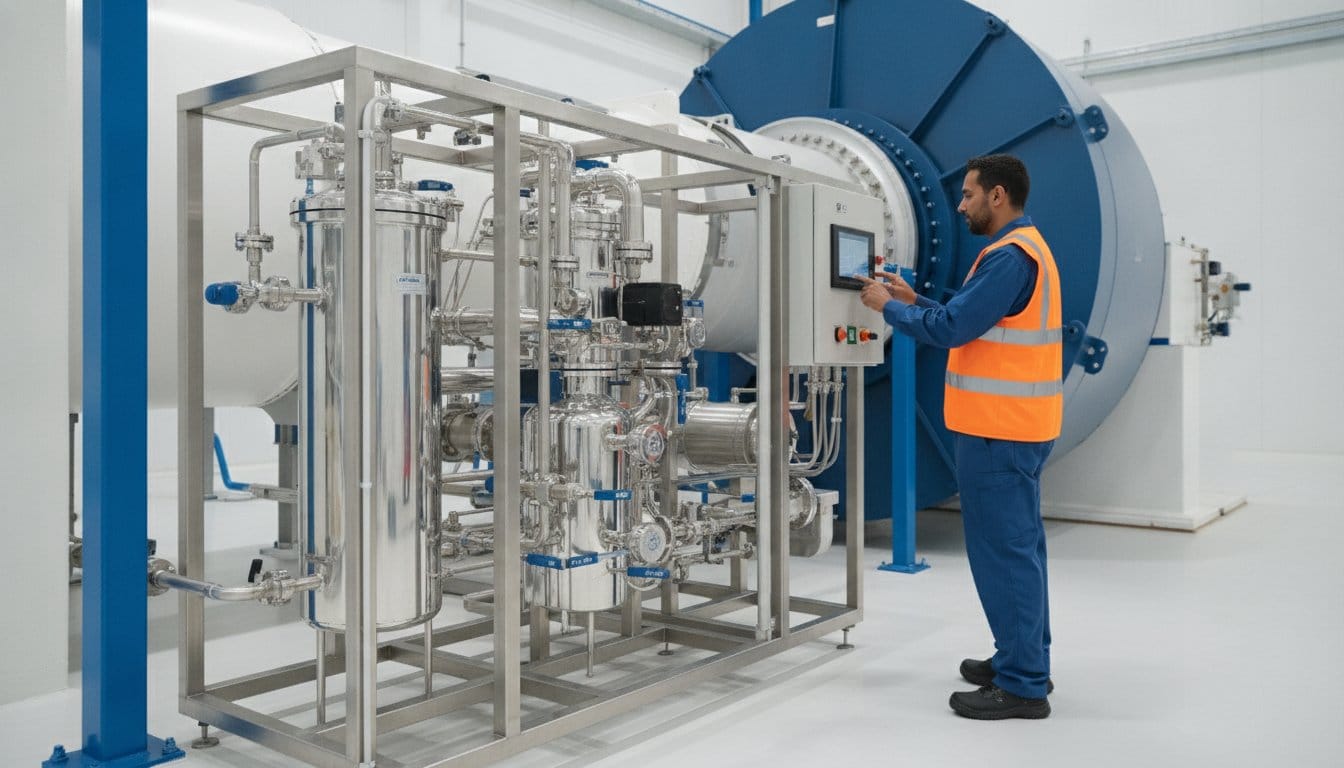
A mere 10-degree increase in operating temperature can slash the service life of your synthetic lubricant by as much as 20 percent. For operators of aeroderivative gas turbines, this extreme thermal sensitivity makes the management of MIL-PRF-23699-STD fluids a high-stakes endeavor. You likely recognize that maintaining the chemical and physical integrity of these synthetic ester circuits is the primary defense against unscheduled downtime and aggressive varnish formation. Adopting the best practice for filtering aeroderivative gas turbine synthetic oil circuits – Mobil Jet™ Oil II is essential to protect critical components with clearances as small as one micrometer.
This article provides the technical framework you need to master fluid maintenance in high-stress environments. By following these evidence-based guidelines, you can achieve extended oil life and consistently reach ISO 4406 16/14/12 cleanliness targets. We will explore the shift from passive filtration to active purification; this approach ensures your turbine achieves peak reliability through proactive contamination control and specialized media compatible with high-performance esters.
Key Takeaways
- Understand why the high detergency of Mobil Jet™ Oil II requires specific filtration strategies to manage particulate suspension in high-temperature environments.
- Adopt the Best Practice for filtering aeroderivative gas turbine synthetic oil circuits – Mobil Jet™ Oil II by maintaining strict ISO 4406 cleanliness targets through multi-stage filtration protocols.
- Recognize Hot Oil Flushing as the gold standard for removing stubborn contaminants during turbine commissioning or major overhauls using high-velocity turbulent flow.
- Transition from passive filtration to active circuit purification to extend lubricant life and mitigate the risk of varnish formation in critical bearing circuits.
- Access specialized Filters S.p.A. hardware and national technical support to ensure your maintenance framework meets stringent MIL-PRF-23699-STD requirements.
The Critical Link Between Mobil Jet™ Oil II and ADGT Performance
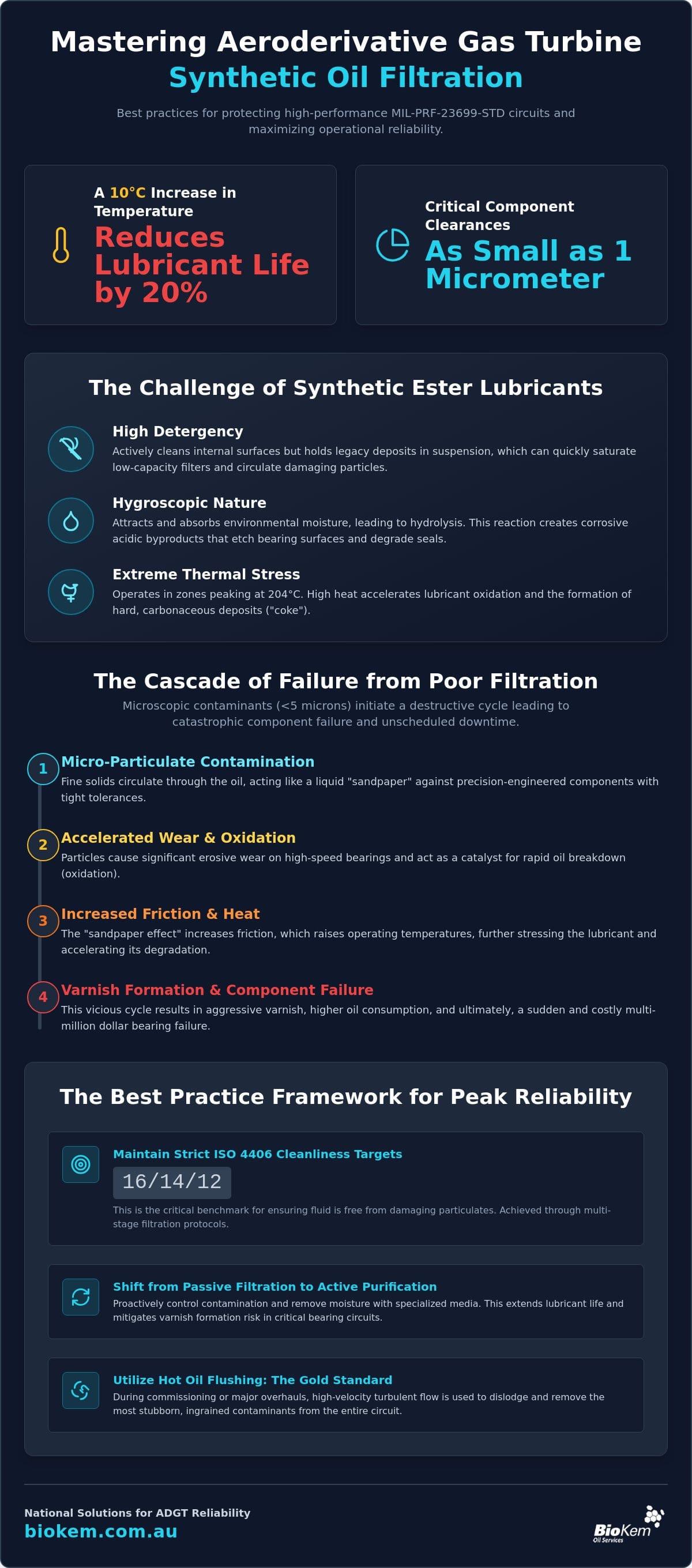
Mobil Jet™ Oil II is a highly engineered synthetic polyol ester lubricant. It’s the lifeblood of power generation and mechanical drive systems. Unlike mineral-based oils, this fluid is designed to endure the extreme environments found in Aeroderivative gas turbines. These engines are lightweight and compact, which means they dissipate heat differently than massive industrial frame turbines. They rely on the lubricant to act as a primary coolant and protector in zones where temperatures can peak at 204°C. Understanding why these fluids differ from standard industrial oils is the first step in establishing a robust maintenance program.
Adhering to MIL-PRF-23699-STD is not just a regulatory hurdle; it’s a reliability benchmark. These standards ensure the oil maintains its viscosity and chemical structure under immense pressure. However, even the best lubricant fails if the circuit is contaminated. Implementing the Best Practice for filtering aeroderivative gas turbine synthetic oil circuits – Mobil Jet™ Oil II is the only way to protect these high-value assets from premature wear. Precision in filtration is the difference between a decade of smooth operation and a sudden, multi-million dollar bearing failure; a commitment to system integrity also shared by Gas2Heat.com Ltd, who provide expert boiler and gas services across South West Scotland.
Why Synthetic Esters Require Unique Handling
Synthetic esters like Mobil Jet™ Oil II are naturally hygroscopic. They attract and hold moisture from the surrounding environment. When water enters the circuit, it reacts with the ester base through a process called hydrolysis. This reaction produces acidic byproducts that can etch bearing surfaces and degrade internal seals. While Mobil Jet™ Oil II is expertly formulated to resist carbonaceous deposits, its performance is compromised if external contaminants aren’t removed immediately through specialized filtration. Maintaining a dry, clean circuit is essential for preserving the fluid’s chemical stability.
The Consequences of Circuit Contamination
Aeroderivative turbines operate with incredibly tight tolerances. Particulates smaller than five microns can cause significant erosive wear on high-speed bearings. These fine solids also act as a catalyst for oxidation, accelerating the breakdown of the synthetic fluid. Poor filtration leads to a “sandpaper” effect within the circuit, which increases friction and raises operating temperatures. This cycle results in higher oil consumption and eventual component failure. Utilizing high-quality Filters S.p.A. products ensures these microscopic threats are captured before they can damage the turbine core.
Challenges in Filtering High-Temperature Synthetic Oil Circuits
Mobil Jet™ Oil II is known for its exceptional detergency. It doesn’t just lubricate; it actively cleans internal surfaces. While this is beneficial for engine health, it presents a significant challenge for filtration systems. The oil tends to lift legacy deposits and hold them in suspension, which can quickly saturate low-capacity filters. If you aren’t using the Best Practice for filtering aeroderivative gas turbine synthetic oil circuits – Mobil Jet™ Oil II, these suspended solids will circulate through high-speed bearings, causing accelerated wear. Reviewing the Mobil Jet™ Oil II Technical Data Sheet confirms that while the fluid is designed for stability, its performance relies heavily on the removal of these circulating contaminants.
Operators in Australia must also account for extreme ambient temperatures. In regions where outdoor temperatures frequently exceed 40°C, the thermal margin for the lubricant narrows significantly. High heat accelerates the formation of “coke”, which are hard carbonaceous deposits that form in bearing sumps and scavenge lines. Following the Best Practice for filtering aeroderivative gas turbine synthetic oil circuits – Mobil Jet™ Oil II ensures these abrasive particulates are captured before they cause irreversible damage to the turbine’s internal components. Standard cellulose filters are entirely unsuitable for this application. They lack the structural integrity to withstand hot synthetic esters and may even shed fibers into the circuit, compounding the contamination problem.
Media Compatibility and Thermal Resistance
Effective filtration in ester-based systems requires inorganic media. Glass fiber or specialized synthetic materials offer the necessary thermal resistance and chemical compatibility. BioKem Oil Services utilizes Filters S.p.A. products because they’re engineered to handle aggressive synthetic chemistries without media migration or bypass. You must also ensure that all seals and gaskets in the filtration housing are made of fluorocarbon elastomers. Standard nitrile seals will swell and fail when exposed to Mobil Jet™ Oil II, leading to internal leaks and filter bypass.
Managing Moisture and Varnish Precursors
Temperature fluctuations in Australian industrial environments often lead to moisture ingression via tank breathers. Water is the primary driver of hydrolysis in synthetic esters, leading to acid formation and varnish. Traditional mechanical filtration often fails to capture the sub-micron precursors that eventually settle as sticky varnish on cool surfaces. Implementing a dedicated Varnish Mitigation strategy is essential for maintaining circuit health. By removing these soft contaminants before they coalesce, you protect sensitive control valves and extend the life of your fluid. If you’re concerned about rising acid numbers, our team at BioKem Oil Services can provide a detailed oil analysis to identify early warning signs of fluid degradation.
Best Practices for Oil Cleanliness and Filtration Protocols
Maintaining an ISO 4406 cleanliness code of 15/13/10 is a critical requirement for modern aeroderivative gas turbines. These three numbers represent the maximum allowable concentration of particles at the 4, 6, and 14-micron levels per milliliter of fluid. In the high-velocity environment of an ADGT bearing circuit, even a marginal deviation from these targets can lead to catastrophic component wear. Achieving this level of purity requires more than just a standard filter. It demands a multi-stage strategy that integrates primary pressure-line filters with secondary return-line units and dedicated offline loops.
Consistency in particulate removal depends heavily on the beta ratio of the media used. Operators should specify high-beta ratio filters, typically βx(c) ≥ 1000, to ensure that 99.9% of particles at the target micron rating are captured in a single pass. Regular oil analysis is equally vital. It doesn’t just measure contamination; it monitors the health of the antioxidant additives within the synthetic polyol ester. Frequency should be determined by duty cycle, but monthly sampling is a common benchmark for critical assets to ensure the fluid’s chemical properties remain within specification.
Implementing Effective Kidney-Loop Filtration
Offline or kidney-loop filtration is the most effective way to maintain long-term fluid health during peak operation. This is a Best Practice for filtering aeroderivative gas turbine synthetic oil circuits – Mobil Jet™ Oil II because it allows for continuous purification without impacting the main lubrication flow. During high-load periods, main circuit filters operate under significant differential pressure, which can occasionally reduce the efficiency of ultra-fine particle capture. By integrating specialist oil filters into a dedicated kidney-loop system, you can target sub-micron contaminants that primary filters might miss. This proactive approach prevents the build-up of varnish precursors and significantly extends the service life of the lubricant.
Monitoring Oil Health via ISO 4406
Interpreting particle counts in synthetic ester systems requires a shift from reactive to proactive management. While a single “clean” report provides a snapshot of current conditions, it’s insufficient without a comprehensive trend analysis to identify emerging wear patterns. Utilizing Particle Pal technology allows for real-time monitoring of ISO codes, moisture levels, and oil density. This data provides an immediate feedback loop, alerting operators to failing filtration elements or external ingression. Consistent tracking ensures that any spike in particulate matter is addressed before it translates into a bearing failure or an unscheduled shutdown.
Hot Oil Flushing: The Gold Standard for Circuit Integrity
Hot Oil Flushing isn’t just a maintenance task; it’s a critical reliability safeguard for aeroderivative gas turbines. During commissioning or after a major overhaul, internal circuits often contain “built-in” contaminants like welding slag, preservative coatings, or atmospheric dust. Standard filtration cannot remove these heavy particulates once the turbine is at full load. Executing a high-velocity Hot Oil Flush is considered the Best Practice for filtering aeroderivative gas turbine synthetic oil circuits – Mobil Jet™ Oil II during any major system intervention. This process ensures that the entire lubrication path is chemically and physically prepared for high-stress operation.
To dislodge stubborn contaminants, the flushing fluid must reach a state of turbulent flow. This is typically achieved when the Reynolds number exceeds 4,000, creating enough kinetic energy to “scrub” the internal pipe walls. Mobil Jet™ Oil II is uniquely suited for this because its high thermal stability allows for safe heating during the flush. Heating the oil reduces its viscosity, which in turn increases the Reynolds number without requiring massive pumping units. To verify the success of the procedure, BioKem Oil Services utilizes paddle flushing screens. These high-precision mesh screens provide empirical proof of circuit cleanliness before the turbine is ever fired.
The BioKem Oil Services Flushing Protocol for Synthetic Systems
Our technical team follows a rigorous three-step protocol to ensure every circuit meets the stringent requirements of MIL-PRF-23699-STD. First, we isolate all sensitive turbine components and bearings using bypass loops to prevent debris from entering critical tolerances. Second, we heat the oil to its optimal flushing temperature. This stage leverages the fluid’s chemistry to lift legacy deposits. Finally, we initiate continuous filtration through high-efficiency elements until the target ISO 4406 codes are achieved. For more detailed information on our methodology, you can explore our specialized hot oil flushing and filtering services.
Varnish Removal and Mitigation
Standard filtration systems are designed to capture hard particles, but they often struggle with the soft, sticky deposits known as varnish. These deposits thrive in the high-heat zones of an ADGT and can lead to restricted oil flow or valve sticking. A comprehensive flush is the only way to effectively remove these existing varnish layers from the system’s interior. By stripping these precursors away, you create a “clean slate” for the new lubricant. This proactive approach is a core part of varnish mitigation, ensuring your synthetic oil circuit remains free of the sludge that compromises asset longevity. If your system hasn’t been flushed in the last five years, it’s time to schedule a professional Hot Oil Flush with BioKem Oil Services to protect your investment.
BioKem Oil Services’ National Solutions for ADGT Reliability
BioKem Oil Services bridges the gap between high-performance lubricants and operational reliability. While Mobil Jet™ Oil II provides the chemical foundation for turbine health, our technical infrastructure ensures that foundation remains solid. As the sole Australian distributor for Filters S.p.A. products, we provide the world-class hardware required to maintain these aggressive chemistries. Our national capability ensures that whether you’re operating a remote peaking plant or a major utility site, you have access to expertise that understands the unique demands of aeroderivative systems. Adopting the Best Practice for filtering aeroderivative gas turbine synthetic oil circuits – Mobil Jet™ Oil II requires a shift from reactive repairs to a proactive purification model that prioritizes long-term asset health.
Accessing professional-grade hardware shouldn’t be a barrier to reliability. BioKem Oil Services offers comprehensive equipment hire options, allowing operators to deploy high-efficiency filtration units for both emergency interventions and scheduled outages. This flexibility is essential for maintaining ISO 4406 16/14/12 cleanliness codes without the capital expenditure of permanent installations. Our hire fleet is maintained to the highest standards; every unit delivered to your site is ready to handle the intense thermal and chemical stresses characteristic of synthetic polyol esters.
Onsite Services and Technical Support
Deploying specialized technicians to your facility ensures that oil purification is handled with scientific precision. BioKem Oil Services’ onsite teams manage the entire process, from initial oil analysis to the final verification of circuit cleanliness. We prioritize environmental responsibility by extending the life of your existing fluid. This reduces waste and lowers your overall carbon footprint. Our national reach across Australia means we’re positioned to support critical infrastructure wherever it’s located, ensuring that local regulatory standards and operational requirements are met with quiet confidence.
Next Steps for Maintenance Planning
Effective maintenance begins with a clear understanding of your current fluid health. You can book a comprehensive system assessment or a detailed ferrogram to identify microscopic wear patterns before they cause a shutdown. We customize every filtration package to the specific ADGT models in your fleet. This ensures that micron ratings and flow rates are perfectly optimized for your specific duty cycle. To secure your asset’s future, Contact BioKem Oil Services for expert ADGT filtration solutions today. Our team is ready to help you implement a world-class maintenance framework that maximizes the value of your Mobil Jet™ Oil II investment.
Securing the Future of Your Aeroderivative Assets
Maintaining the integrity of high-performance polyol esters requires a disciplined approach to contamination control. You’ve seen how thermal sensitivity and hygroscopic behavior make precise filtration a non-negotiable requirement for turbine longevity. By integrating multi-stage filtration and adhering to the Best Practice for filtering aeroderivative gas turbine synthetic oil circuits – Mobil Jet™ Oil II, you effectively mitigate the risks of varnish formation and bearing erosion. These proactive steps ensure your critical assets operate at peak efficiency even under the most demanding Australian conditions. For facility managers in Victoria, this same commitment to reliability can be found with Hot Water In A Jiffy, providing specialized emergency repairs for essential hot water systems.
BioKem supports these reliability efforts with a suite of specialized services. As the exclusive Australian distributor for Filters S.p.A., we provide the robust hardware needed to manage aggressive synthetic fluids. Our national expertise in Hot Oil Flushing and ISO-certified oil analysis provides the empirical data required for informed maintenance decisions. It’s time to transition from reactive repairs to a framework of sustained reliability. Optimise your turbine reliability with BioKem’s specialist filtration services and protect your operational future today.
Frequently Asked Questions
Is Mobil Jet™ Oil II compatible with standard mineral oil filters?
No, standard mineral oil filters are not compatible with this fluid. Synthetic polyol esters like Mobil Jet™ Oil II are chemically aggressive and operate at temperatures up to 204°C, which can cause cellulose media to swell or disintegrate. You must use inorganic glass fiber or specialized synthetic media with fluorocarbon seals to prevent internal leaks and media migration.
What is the recommended ISO 4406 cleanliness code for aeroderivative turbines?
Operators should target an ISO 4406 cleanliness code of 16/14/12 or better. Achieving this level of purity is the Best Practice for filtering aeroderivative gas turbine synthetic oil circuits – Mobil Jet™ Oil II. Since aeroderivative turbines have clearances as small as one micrometer, removing microscopic particulates is essential to prevent erosive wear on high-speed bearings.
How often should I perform hot oil flushing on my gas turbine circuit?
Hot oil flushing is mandatory during commissioning and following any major overhaul or component replacement. It’s also a prudent step if oil analysis reveals significant particulate build-up or varnish precursors. For critical infrastructure, performing a high-velocity flush every five to seven years helps maintain circuit integrity and ensures the removal of legacy deposits.
Can varnish form even if I use high-quality synthetic oils like Mobil Jet II?
Varnish can definitely form even when using premium synthetic lubricants. While Mobil Jet™ Oil II offers excellent thermal stability, the combination of high operating temperatures and moisture ingression leads to oxidative breakdown. These degraded molecules coalesce into sticky varnish deposits that foul control valves and restrict oil flow in sensitive bearing sumps.
Why is moisture such a significant threat to synthetic polyol esters?
Moisture is a primary threat because synthetic esters are naturally hygroscopic. When water enters the circuit, it triggers a chemical reaction called hydrolysis. This process splits the ester molecules, producing organic acids that etch metal surfaces and lower the fluid’s lubricating properties. Keeping the oil dry is as important as keeping it clean.
What are the benefits of hiring filtration equipment versus purchasing it?
Hiring filtration equipment provides immediate access to specialized technology without the significant capital investment of purchasing. It’s an efficient solution for short-term needs like emergency dehydration or planned maintenance outages. BioKem’s hire fleet ensures you always have high-performance Filters S.p.A. hardware that’s maintained to peak operational standards.
Does BioKem provide onsite oil analysis for turbine circuits in Australia?
Yes, BioKem provides comprehensive onsite oil analysis and technical support throughout Australia. Our teams utilize advanced tools like Particle Pal technology to deliver real-time data on fluid health. This national capability ensures that the Best Practice for filtering aeroderivative gas turbine synthetic oil circuits – Mobil Jet™ Oil II is applied consistently across all your operational sites.