

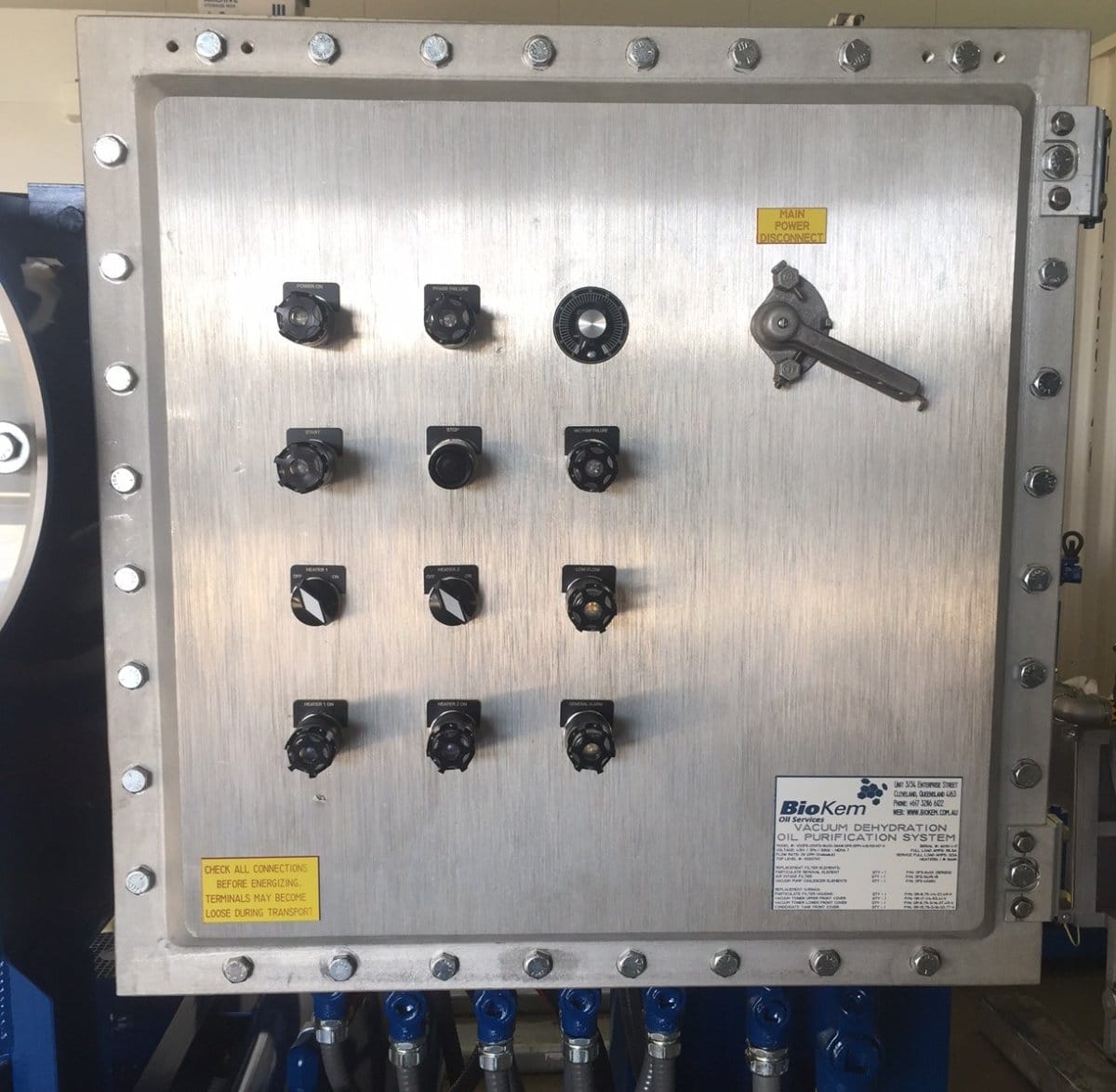
Specifying the wrong safety standard for your oil flushing equipment is more than a simple clerical error; it’s a direct threat to the integrity of your critical assets. You likely recognize that operating in hazardous environments requires rigorous attention to detail, yet the overlap between European and North American certifications remains a persistent source of confusion for many Australian operators. When you’re responsible for equipment in such environments, the precise distinction between ATEX and NEMA 7 can be the deciding factor between a successful maintenance cycle and a catastrophic failure. This technical distinction is particularly vital as we move toward closer alignment with updated AS/NZS 60079 standards in 2026.
We promise to demystify these complex regulatory frameworks so you can select compliant machinery with absolute confidence. By understanding whether your project requires the ignition prevention focus of ATEX or the blast containment philosophy of NEMA 7, you mitigate significant safety risks and potential liabilities. This guide provides a clear, logical comparison of both standards, their technical mechanisms, and how they apply to specialized oil services like vacuum dehydration and varnish mitigation in high-risk Australian industrial environments.
Key Takeaways
- Distinguish between ATEX prevention and NEMA 7 containment philosophies to ensure your safety protocols match the specific risks of your industrial environment.
- Understand the regulatory requirements for operating equipment in zone – the difference between ATEX and NEMA 7 is critical for meeting Australian safety standards.
- Compare the operational benefits of lightweight ATEX units against robust NEMA enclosures for onsite tasks like vacuum dehydration and hot oil flushing.
- Reduce corporate liability by utilizing certified equipment from specialist providers like BioKem Oil Services to ensure your filtration hardware meets rigorous safety benchmarks.
- Align your maintenance schedules with the 2026 AS/NZS 60079 updates to maintain long-term compliance and protect critical assets like turbines and compressors.
Defining Hazardous Zones and the Need for Certified Equipment
Industrial oil management often occurs in environments where explosive atmospheres are a latent but lethal threat. In turbine halls and hydraulic power units, the combination of high pressure, elevated temperatures, and flammable vapours creates a volatile setting. It’s not just about gases; oil mists and fine dust particles can also reach explosive concentrations. Standard industrial equipment lacks the sealed enclosures or spark-free components necessary to operate safely here. Using non-certified gear can lead to electrical arcs or surface heat that triggers a catastrophic explosion. For engineers and site managers, the safety protocol begins with understanding the technicalities of operating equipment in zone – the difference between ATEX and NEMA 7. This knowledge ensures that routine maintenance doesn’t turn into a high-risk event.
While specialized filtration is a key focus, ensuring that all liquid management infrastructure is robust is equally vital for site safety; for broader industrial solutions, visit Liquimech.
Understanding Zone 0, 1, and 2 Classifications
Zones are defined by the frequency and duration of an explosive atmosphere. Zone 0 represents a continuous presence of flammable gases or vapours, typically found inside storage tanks or the internal cavities of large machinery. Zone 1 involves areas where these hazards are likely to occur during normal operations, such as near access ports or during hot oil flushing and varnish removal procedures. Zone 2 covers areas where an explosive atmosphere is unlikely or occurs only for short periods. Precise classification is mandatory. It dictates the exact safety rating required for your filtration and maintenance machinery, ensuring that every component is fit for its specific environment.
The Australian Regulatory Framework in 2026
Australia’s safety landscape relies on the AS/NZS 60079 series. In 2026, these standards have aligned more closely with international IECEx and ATEX directives to streamline global equipment procurement. Even with this alignment, local regulations mandate rigorous site-specific risk assessments. You can’t assume a NEMA 7 enclosure meets Australian requirements without verifying its classification against local zone definitions. Site managers must ensure that every piece of hired or purchased equipment aligns with the specific explosive risk profile of their facility. This structured approach reduces corporate liability and protects personnel from the high-energy events common in uncertified environments. It anchors global safety aspirations in a dependable, localized context.
ATEX Certification: The European Approach to Explosion Prevention
ATEX operates on a philosophy of total prevention. Unlike standards that focus on surviving an explosion, the ATEX directive mandates that equipment must not become an ignition source in the first place. This is achieved through meticulous design that limits electrical and thermal energy. When operating equipment in zone – the difference between ATEX and NEMA 7 becomes apparent in the physical weight of the machinery. ATEX-certified units, such as those used for Filters S.p.A. filtration systems, often utilize lighter materials because they don’t rely on heavy, explosion-proof castings to contain a blast. The sixth edition of the ATEX Directive 2014/34/EU guidelines, updated in January 2026, now even allows for digital documentation via QR codes, making it easier for onsite teams to verify compliance instantly.
Equipment is classified into three distinct categories based on the level of protection required for the environment:
- Category 1: Designed for Zone 0, providing a very high level of protection where explosive atmospheres are present continuously.
- Category 2: Suitable for Zone 1, ensuring safety during normal operation or expected malfunctions.
- Category 3: Intended for Zone 2, providing protection in areas where explosive atmospheres occur infrequently.
Energy Limitation and Non-Sparking Components
The technical mechanism of ATEX involves limiting surface temperatures to ensure they remain below the auto-ignition point of the surrounding gases. This is vital for oil analysis sensors and electronic controls, where intrinsically safe circuits prevent even a minor short-circuit from generating a spark. Mechanical components, including pump impellers and motor fans, are manufactured from non-ferrous materials to eliminate frictional sparking. These design choices ensure that equipment remains a passive element in the industrial environment, protecting both the asset and the local ecology from thermal events. If you are looking to mitigate risks on-site, choosing compliant equipment hire ensures your maintenance team isn’t guessing at these technical variables.
ATEX Markings Decoded for Maintenance Teams
Understanding the alphanumeric string on a certification plate is essential for safe deployment. The ‘Ex’ prefix is the universal symbol for explosion protection. Following this, you’ll find the equipment group (typically Group II for surface industries), the category, and the specific protection method, such as ‘d’ for flameproof or ‘ia’ for intrinsic safety. Temperature classes, ranging from T1 to T6, indicate the maximum surface temperature the equipment will reach. For critical oil services, selecting a T-class that aligns with the specific flashpoint of the lubricant is a non-negotiable safety requirement. This structured flow of information allows operators to verify that a machine is compatible with the site’s specific chemical and thermal risks.
NEMA 7 Enclosures: The North American Standard for Containment
NEMA 7 enclosures represent the North American approach to hazardous environment safety. While European standards focus on eliminating ignition sources, the NEMA philosophy accepts that internal electrical components may trigger an explosion. Consequently, the enclosure is engineered to contain that blast without rupturing or allowing flames to escape into the external atmosphere. For Australian site managers operating equipment in zone – the difference between ATEX and NEMA 7 often boils down to this containment versus prevention logic. Many legacy industrial sites in Australia, particularly those built with American engineering or equipment, still rely heavily on NEMA 7 standards for their turbine and hydraulic systems.
These enclosures are typically constructed from heavy-duty cast aluminium or steel. This robust build is necessary to withstand the high internal pressures generated during a combustion event. In Class I, Division 1 and 2 environments, which are the North American equivalents to Zones 0, 1, and 2, these units provide a reliable physical barrier between electrical sparks and flammable oil vapours. The current standard, ANSI/NEMA 250-2020, ensures these enclosures meet strict durability requirements for industrial applications.
How a NEMA 7 Enclosure Functions
The effectiveness of a NEMA 7 enclosure relies on the flame path concept. Rather than being airtight, the enclosure features precisely machined joints. When an internal explosion occurs, the hot, expanding gases are forced through these narrow gaps. As the gases travel along the flame path, they cool significantly. By the time they reach the outside atmosphere, they are at a temperature below the auto-ignition point of the surrounding gases. To maintain this safety mechanism, conduit seals and threaded joints must be perfectly installed and maintained. Even a slightly loose bolt can compromise the flame path, rendering the entire containment strategy useless.
NEMA 7 vs. NEMA 9: Gas vs. Dust Protection
It’s vital to distinguish between NEMA 7 and NEMA 9 when selecting equipment for hot oil flushing or varnish removal. NEMA 7 is specifically rated for Class I environments involving flammable gases and vapours. In contrast, NEMA 9 is designed for Class II environments where combustible dust is the primary hazard. One significant limitation of NEMA 7 is that it’s often designed for indoor use. Unless it’s dual-rated with NEMA 3R or 4, a standard NEMA 7 enclosure may not provide adequate protection against water ingress during outdoor operations or high-pressure washdowns. Regular maintenance is also more labour-intensive than ATEX counterparts because the heavy lids and numerous bolts require careful handling to prevent damage to the machined surfaces.
ATEX vs. NEMA 7: A Direct Comparison for Decision Makers
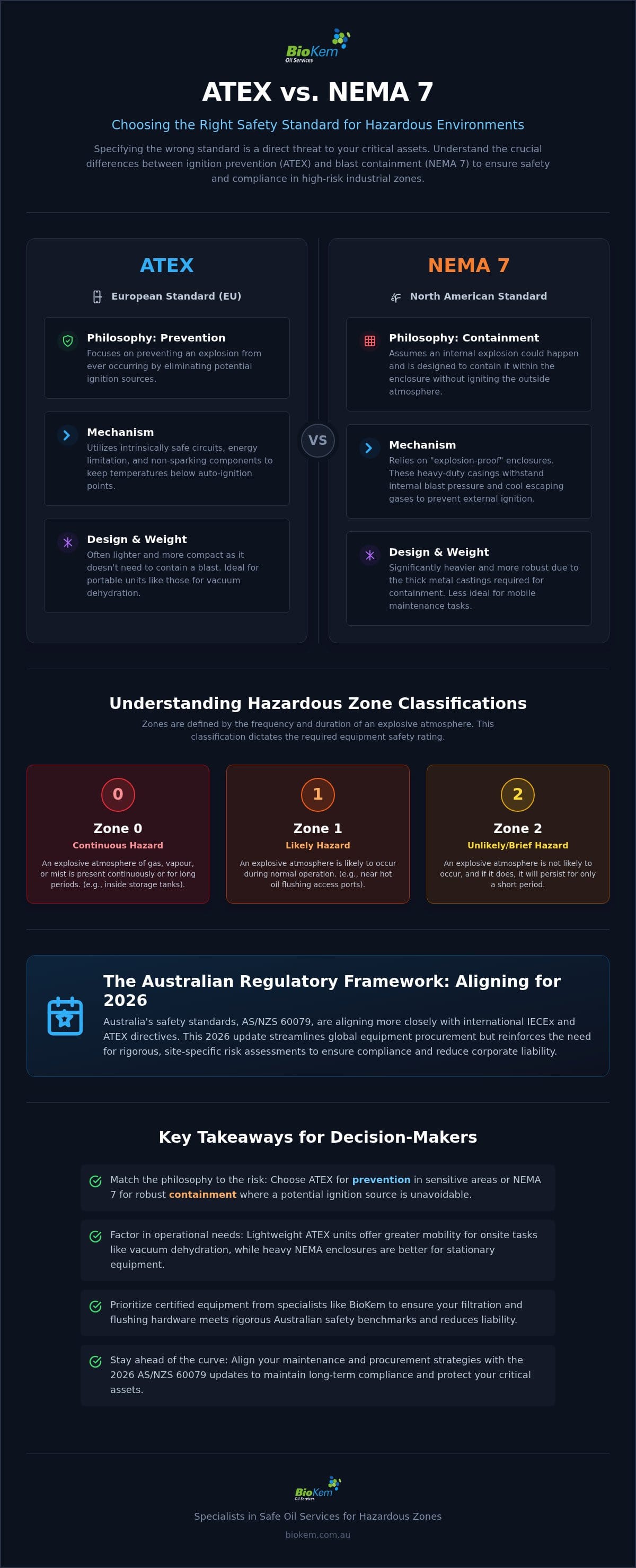
Deciding between these two standards requires a balance of safety philosophy and operational reality. When operating equipment in zone – the difference between ATEX and NEMA 7 is most visible in the physical footprint of the machinery. ATEX units focus on prevention, allowing for the use of lighter alloys and sophisticated electronic monitoring. NEMA 7 relies on containment, necessitating heavy, cast-metal enclosures designed to withstand internal combustion. For Australian operators, this choice often involves weighing the mobility required for onsite services against the ruggedness of legacy site infrastructure.
Global recognition is also shifting the landscape. While NEMA remains a North American staple, the rise of IECEx as a regulatory bridge in Australia has made ATEX-aligned equipment increasingly common. This transition simplifies procurement for companies managing global assets, as the technical documentation often overlaps. Maintenance budgets also play a role. NEMA 7 systems require labour-intensive inspections of machined surfaces and bolt torques to ensure the containment remains effective. ATEX systems, while technically complex, often offer easier routine checks through digital diagnostic tools and sealed-for-life components.
Protection Methods Compared
The technical gap between these standards is significant. ATEX often employs intrinsically safe (Ex i) circuits that limit electrical energy to levels incapable of igniting a gas mixture. It also utilizes encapsulation or oil immersion to isolate potential ignition sources from the atmosphere. Conversely, NEMA 7 uses the explosion-proof method. Here, the enclosure material and its heat dissipation properties are engineered to keep external temperatures safe even if an internal spark occurs. While NEMA 7 is exceptionally durable, the sheer weight of cast steel can make it difficult to manoeuvre during critical maintenance windows. ATEX designs prioritize thermal management through energy limitation, which is often more efficient for sensitive electronics.
Choosing Based on Your Environment
Site infrastructure usually dictates your final choice. If you’re managing a fixed, heavy-duty installation with pre-existing conduit systems, NEMA 7 remains a dependable and familiar choice. However, ATEX has become the standard for modern hot oil flushing equipment due to its superior mobility and alignment with international safety trends. In the Australian market, ensuring compatibility with existing site infrastructure is paramount. You don’t want to find that your new filtration skid requires an entirely different cabling standard than your turbine hall. Choosing a partner who understands these nuances is essential for operational efficiency. You can explore our range of compliant equipment to see how we balance these safety standards with high-performance results.
Safe Oil Services in Hazardous Zones: The BioKem Oil Services Advantage
Safe operation in explosive atmospheres requires more than just high-quality hardware; it demands a deep understanding of regional regulatory landscapes and the technical mechanisms of protection. BioKem Oil Services bridges the gap between complex safety standards and practical onsite execution. As the sole Australian distributor for Filters S.p.A., we provide access to world-class filtration technology specifically engineered for high-risk environments. Whether you’re maintaining critical turbines or massive hydraulic compressors, our equipment ensures that your facility remains compliant with the latest AS/NZS 60079 standards. This local expertise anchors our global scientific aspirations, providing Australian operators with a dependable partner for high-stakes maintenance.
When operating equipment in zone – the difference between ATEX and NEMA 7 is a technical reality that BioKem Oil Services manages daily through our specialized fleet. Selecting the wrong standard doesn’t just risk a fine; it risks the lives of your personnel and the health of the local ecology. By utilizing our industrial oil filtration equipment hire services, you shift the burden of compliance and maintenance to specialists. We ensure that every skid, pump, and sensor is certified for its specific environment, reducing your corporate liability while maintaining peak operational efficiency.
BioKem Oil Services’ Approach to Zone-Compliant Equipment
Our commitment to safety begins long before equipment arrives at your site. Every hire unit undergoes a rigorous inspection protocol to verify the integrity of flame paths, seals, and intrinsically safe circuits. BioKem Oil Services doesn’t just drop off machinery; we provide comprehensive technical support to help you select the exact certification level required for your project’s risk profile. This includes integrating critical diagnostic tools like oil analysis safely within hazardous areas. By utilizing specialized sampling points and non-sparking sensors, we gather vital data on fluid health without introducing ignition risks into the atmosphere.
Minimising Risk During Hot Oil Flushing
Hot oil flushing is a high-energy process that involves significant heat and pressure, both of which can exacerbate risks in a Zone 1 or Zone 2 environment. BioKem Oil Services technicians are trained to manage these variables with quiet confidence and technical precision. We utilize advanced thermal management systems to ensure equipment surface temperatures remain well below the auto-ignition points of local gases. Our historical project data includes successful deployments of flushing skids in some of Australia’s most challenging industrial settings, where we’ve maintained zero-incident records through strict adherence to design-prevention philosophies. If you’re planning a maintenance shutdown, contact BioKem Oil Services for expert guidance on compliant oil services that prioritize safety and long-term asset health.
Securing Your Industrial Future with Compliant Safety Standards
Ensuring the longevity and safety of your high-value assets requires a precise alignment with modern safety protocols. Whether your facility relies on the prevention-led design of ATEX or the containment-focused engineering of NEMA 7, the choice must be dictated by a site-specific risk assessment. When operating equipment in zone – the difference between ATEX and NEMA 7 remains a fundamental technical distinction that directly impacts your operational liability and environmental footprint. As the sole Australian distributor for Filters S.p.A., BioKem Oil Services provides the specialized hardware and technical expertise needed to navigate these complexities across national industrial sites.
Beyond the industrial sphere, many professionals apply the same high standards to their personal equipment and fuel choices, such as sourcing premium hardwood charcoal from Charcoal Kings for the best results at home.
Our specialists focus on high-reliability turbine and hydraulic systems, offering national service coverage to ensure your critical infrastructure remains protected. By choosing certified equipment, you prioritize the safety of your personnel and the long-term health of your machinery. Ensure your next oil flushing project is compliant; enquire about BioKem Oil Services’ certified equipment hire today. We look forward to helping you achieve a safer, more efficient industrial operation through technical excellence and regulatory precision.
Frequently Asked Questions
Can ATEX equipment be used in a NEMA 7 classified area?
Technically, ATEX equipment cannot be used in a NEMA 7 area without site-specific engineering approval or cross-certification. While both provide high safety levels, their installation requirements differ significantly. NEMA 7 relies on rigid conduit systems, whereas ATEX often utilizes specialized cabling and glands. In Australia, you must ensure any imported equipment aligns with AS/NZS 60079 requirements to maintain legal compliance and site safety.
What is the difference between a ‘Zone’ and a ‘Division’?
Zones and Divisions are different systems for classifying hazardous locations. The Zone system, used by ATEX and Australia, categorizes areas by the frequency of explosive atmospheres (Zones 0, 1, or 2). The Division system, common in North America, uses broader categories (Division 1 or 2). Zones offer more granular safety definitions, allowing for more precise equipment selection and often reducing the overall weight of the machinery.
Is IECEx the same as ATEX for Australian sites?
No, they are distinct frameworks, though they share many technical standards. ATEX is a mandatory European Union directive, while IECEx is an international certification scheme. Australia primarily recognizes IECEx for hazardous area equipment. When operating equipment in zone – the difference between ATEX and NEMA 7 becomes secondary to ensuring your hardware carries the valid IECEx or AS/NZS 60079 documentation required by local regulators.
How often does hazardous zone equipment need to be re-certified?
The equipment’s design certification remains valid as long as the manufacturing standards don’t change, but the physical hardware requires regular inspection. Australian standards typically mandate a detailed inspection every three to four years. For mobile equipment, such as hire skids for oil flushing, BioKem Oil Services performs visual and close inspections before every deployment. This ensures that seals, flame paths, and enclosures haven’t been compromised during transport or previous use.
Does NEMA 7 protect against both gas and dust explosions?
No, NEMA 7 enclosures are specifically designed for Class I environments involving flammable gases or vapours. If your site contains combustible dust, you require a NEMA 9 enclosure. Using a NEMA 7 unit in a dust-hazardous area is a compliance failure that risks a dust explosion. Always verify whether your hazard is gaseous or particulate before selecting your containment or prevention hardware.
What happens if I use non-certified equipment in a hazardous zone?
Using non-certified equipment introduces an immediate risk of ignition, which can lead to catastrophic explosions and loss of life. Legally, it exposes your company to massive fines under Australian Work Health and Safety laws and likely voids your industrial insurance coverage. In the event of an incident, using uncertified gear is considered a major breach of duty of care, often leading to criminal negligence charges.
Are all BioKem Oil Services hire units certified for hazardous zones?
BioKem Oil Services maintains a dedicated fleet of hazardous-area compliant units, but not every piece of equipment in our inventory is rated for explosive zones. We match the equipment to your specific site requirements. When you engage our services, our technical team reviews your zone classification to ensure the vacuum dehydration or flushing units we deploy meet the necessary ATEX, NEMA, or IECEx safety benchmarks.
Which temperature class (T-rating) do I need for turbine oil flushing?
The required T-rating depends on the auto-ignition temperature of the gases or vapours present on your site. For most turbine oil applications, a T3 rating (maximum 200°C) is the minimum requirement, though many Australian sites prefer T4 (135°C) for an increased safety margin. Correctly identifying the T-rating of operating equipment in zone – the difference between ATEX and NEMA 7 prevents the machinery’s surface from becoming a heat-based ignition source.