

Maintenance is more than an operating cost: it helps control the wear that shortens equipment life. Extending industrial equipment lifespan starts with routine inspections, effective lubrication and prompt attention to changes in vibration, temperature or performance.
When unexpected failures can disrupt production, maintenance helps prevent manageable wear from developing into costly repairs. This article explains how friction and contamination affect machinery, which practices can reduce mechanical wear, and how condition monitoring can inform repair and replacement decisions. It also covers signs that lubrication or oil condition needs attention, helping maintenance teams support reliability and avoid unnecessary waste.
Key Takeaways
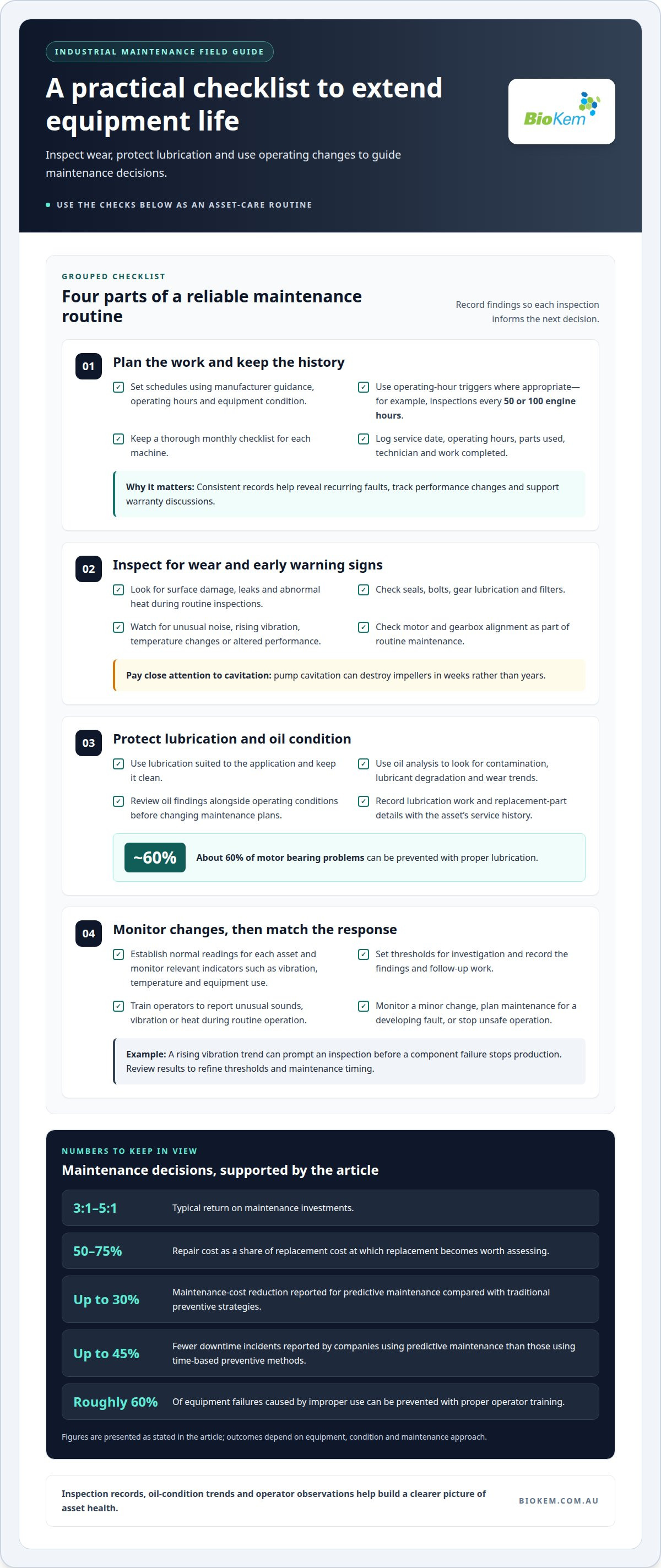
- Build maintenance schedules around equipment use and manufacturer guidance, then keep records of inspections, servicing and recurring faults.
- Track early signs of performance changes to address developing issues before they lead to unplanned downtime.
- Reduce friction-related wear by maintaining suitable lubrication and watching for contamination, heat and abnormal vibration.
- When specialised equipment is needed for oil maintenance work, BioKem Oil Services offers Equipment Hire alongside services such as Hot Oil Flushing and Vacuum Dehydration.
1. Why is industrial equipment maintenance crucial?
Maintenance protects assets from preventable failure by catching wear, contamination and lubrication problems before they escalate. A structured program can extend equipment life, reduce repair needs and support more reliable production. Maintenance investments typically return 3:1 to 5:1, while replacement becomes worth assessing when repair costs reach 50-75% of replacement cost.
In Australia, workplace health and safety requirements depend on the state or territory and the risks associated with the equipment. Relevant Australian Standards also vary by machinery and task, so maintenance procedures should address the hazards, controls and technical requirements for each asset.
Set schedules using manufacturer recommendations, operating hours and equipment condition. For example, inspections may be triggered every 50 or 100 engine hours, rather than only by calendar dates. Keep a thorough monthly checklist for each machine, then record the service date, operating hours, parts used, technician and work completed. Consistent records reveal recurring faults and help teams plan repair or replacement before disruption grows.
Training matters too. Operators who understand correct use, warning signs and maintenance procedures can report unusual noise, vibration or heat early. Ageing machinery may remain operational, but worn components, repeated failures and longer downtime can increase safety and operating risks. Assess its condition alongside maintenance costs before extending its service life.
Accurate service records can support warranty discussions and give prospective buyers evidence of how equipment has been cared for. Keep inspection findings, lubrication work and replacement-part details together so technicians can follow the asset’s history and spot changes in performance.
2. How to Extend Industrial Equipment Lifespan (and Stop Bleeding Money)?
Unplanned downtime affects 82% of companies annually. A reactive fix-it-when-it-breaks approach lets small faults interrupt production and create operational inefficiencies. Preventive checks reduce repair risk, while predictive maintenance uses operating data and analytics to anticipate failures. It can reduce maintenance costs by up to 30% compared with traditional preventive strategies. Companies using predictive maintenance report up to 45% fewer downtime incidents than those using time-based preventive methods.
A condition-based program starts by establishing normal operating readings for each asset. Monitor relevant indicators, including vibration, temperature and equipment use, and set thresholds for investigation. If readings change, a technician can identify a developing fault, schedule corrective work and record the result. Reviewing these findings helps refine thresholds and maintenance timing.
Operators also provide an important early-warning system. Train staff to use equipment correctly and recognise unusual sounds, vibration or temperature changes during routine operation. Proper operator training can prevent roughly 60% of equipment failures caused by improper use. Clear reporting procedures help maintenance teams act on observations before a breakdown escalates.
For example, a rising vibration trend can prompt inspection before a component failure stops production. Match the response to the finding: monitor a minor change, plan maintenance for a developing fault, or stop unsafe operation. Consistent follow-up helps protect equipment life and makes downtime easier to manage. For oil-system concerns, discuss maintenance needs with the team.
3. Mechanical wear, friction and equipment efficiency
Moving parts wear through repeated contact, as friction gradually damages their surfaces. Vibration, shock, pressure, heat and cyclic loading can speed up the process. As clearances change, a machine may become less efficient, use more energy and produce less. Routine inspections can reveal surface damage, leaks or abnormal heat before they affect other components.
Lubrication reduces friction when the lubricant suits the application and remains clean. Proper lubrication prevents about 60% of motor bearing problems. Oil analysis can identify contamination, lubricant degradation and wear trends, giving maintenance teams evidence to adjust preventive maintenance. Monitoring results alongside operating conditions helps distinguish a developing fault from normal variation.
Pump cavitation requires prompt attention because it can destroy impellers in weeks rather than years. Pressure changes and impacts can erode impeller surfaces, while damaged seals may allow leakage or contaminants into the system. Include seals, bolts, gear lubrication and filters in routine checks. Rising vibration, leakage or unusual operating noise can indicate that closer assessment is needed.
Practical strategies combine inspections, condition monitoring and operator training. Check motor and gearbox alignment as part of routine maintenance, and investigate vibration or temperature changes after maintenance. Record findings so technicians can track recurring wear and assess whether corrective work restored performance. For oil-related contamination or wear concerns, discuss equipment maintenance options with BioKem Oil Services.
BioKem Oil Services: Equipment Hire
BioKem Oil Services offers Equipment Hire for maintenance projects that need specialised equipment without adding a permanent asset to the site. Hiring can suit planned oil-system work when equipment is required for a specific task.
For lubrication systems affected by deposits, varnish or moisture, Hot Oil Flushing, Varnish Mitigation and Vacuum Dehydration address different oil-maintenance needs. The appropriate approach depends on the condition and the work required. Matching the service or equipment to the maintenance objective can support cleaner oil systems and more considered asset care.
Share your equipment maintenance requirements with BioKem Oil Services to discuss the next step.
Make the Next Maintenance Decision Count
Long-term asset care works best when each maintenance decision informs the next. Use inspection findings and oil-condition trends to set priorities instead of treating every intervention as an isolated task. This gives teams a clearer basis for allocating resources and extending industrial equipment lifespan responsibly.
When oil condition is part of the maintenance challenge, BioKem Oil Services offers Hot Oil Flushing, Varnish Mitigation and Vacuum Dehydration. Each addresses different system needs and can support a considered maintenance plan.
Discuss the requirements of your equipment and plan your next maintenance step with BioKem Oil Services. A well-informed decision today can help build a more dependable approach to asset care over time.
Frequently Asked Questions
Why is industrial equipment maintenance crucial?
Industrial equipment maintenance helps keep assets dependable, safe to operate and suited to their intended duty. A worn coupling, for example, can affect connected components if left unresolved. Planned maintenance also lets teams coordinate work with production schedules, limit disruption and protect the value of equipment already in service.
How to Extend Industrial Equipment Lifespan (and Stop Bleeding Money)?
Extend equipment life by matching maintenance to operating conditions and responding to emerging faults. Review recurring work orders to identify components that repeatedly need attention, then investigate the cause instead of replacing the same part without analysis. Coordinating repairs with production windows and keeping suitable replacement parts available can reduce delays and avoidable disruption. During scheduled overhauls or extensive repairs, bringing in temporary machinery from plant hire providers like Rocket Rentals Ltd ensures operational continuity while existing equipment is serviced.
What maintenance strategies extend industrial equipment lifespan?
Combine preventive maintenance with condition monitoring and oil analysis when lubrication is critical. For example, turbine operators can use oil test results to distinguish contamination from lubricant degradation and direct the response accordingly. Consider technical findings alongside operator observations and component history. This helps teams prioritise work based on the asset’s condition rather than relying on a single indicator.
How often should industrial equipment be inspected and serviced?
Set inspection and service intervals using the manufacturer’s guidance, operating hours, duty cycle and environment. A heavily loaded pump exposed to contaminants may need closer attention than a lightly used unit in a clean setting. Reassess the schedule after a major repair, process change or recurring fault, and record the reasons for adjustments so future decisions reflect the asset’s operating history.
What are the typical costs of preventive maintenance versus equipment replacement in Australia?
Preventive maintenance programs typically cost 25-30% of the cost of repairing equipment after it breaks. For an Australian asset, compare its maintenance history, downtime impact, remaining service potential and replacement requirements. Estimate the full lifecycle cost, including installation and commissioning, rather than weighing the repair bill against the purchase price alone. This provides a more useful basis for a repair-or-replace decision.

Article by
James McAllister
James McAllister is an industry professional with BioKem Oil Services, specialising in lubrication reliability, oil filtration, contamination control and asset performance. Drawing on BioKem's extensive field experience across turbines, compressors, hydraulic systems and critical rotating equipment, James writes practical, insight-driven articles that help maintenance and reliability teams improve equipment performance, extend asset life and reduce operational risk.