

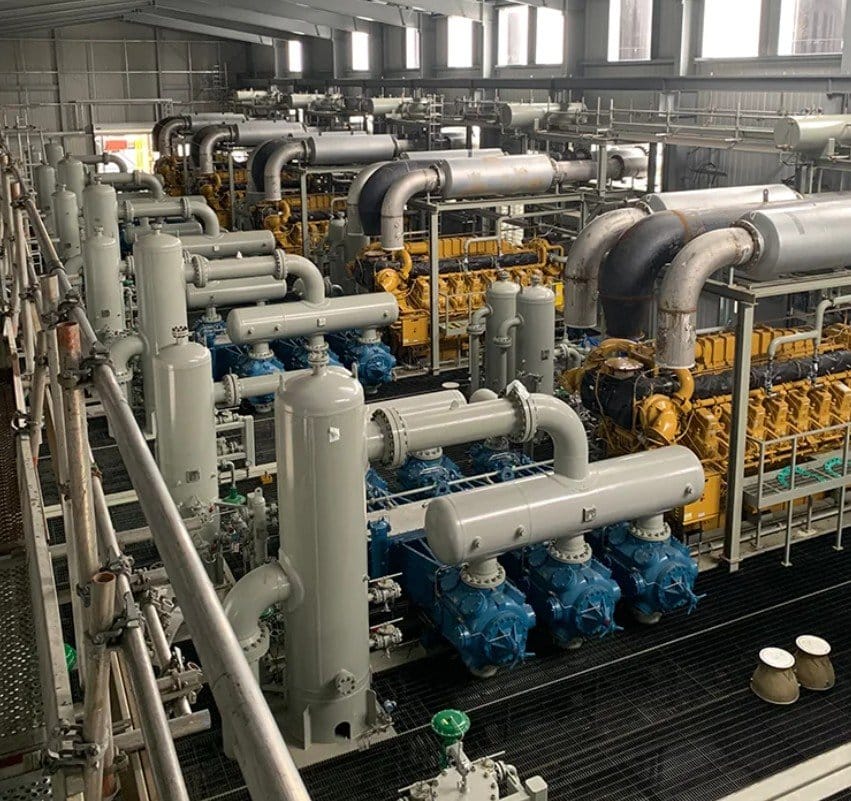
What if the difference between a decade of reliable service and a catastrophic bearing failure on day one is simply the temperature and velocity of your flushing oil? For operators managing remote Australian industrial sites, the margin for error during commissioning is virtually nonexistent. We understand the immense pressure to reduce timelines without sacrificing the technical integrity of your machinery. Understanding why lube oil commissioning flushing for Ariel compressors to OEM procedure ER-56.06 in Australia is important isn’t just about ticking a box; it’s about protecting a high-value asset from the microscopic contaminants that bypass standard filtration.
Adhering to the Ariel ER-56.06 procedure, which saw its latest revision on January 30, 2025, is critical for maintaining your OEM warranty and ensuring compressor longevity. By utilizing specialized hot oil flushing, you can achieve verified system cleanliness to ISO 4406:2021 standards before the first start. This article explores how to navigate warranty requirements and prevent unscheduled downtime in demanding environments. You’ll discover why high-velocity, heated oil is the only reliable method to remove particulate matter that threatens your bearings and keeps your Australian operations running efficiently.
Key Takeaways
- Understand the technical specifications of the Ariel ER-56.06 Engineering Reference and its role in removing “built-in” contaminants like welding slag and mill scale.
- Discover why lube oil commissioning flushing for Ariel compressors to OEM procedure ER-56.06 in Australia is important for protecting high-value assets in remote, dust-prone environments.
- Learn the physics behind successful scouring, including how to calculate and achieve the target Reynolds Number of 4000 to ensure turbulent flow.
- Identify the critical preparation steps for a compliant flush, from isolating sensitive components to maintaining optimal oil temperature and velocity.
- Explore how specialized high-flow pumping units and onsite oil analysis provide the verified cleanliness data required for full OEM warranty activation.
What is Ariel ER-56.06 and Why is it the Gold Standard for Commissioning?
The Ariel ER-56.06 Engineering Reference serves as the definitive technical standard for ensuring the internal cleanliness of lubrication systems. It isn’t a mere suggestion; it’s a rigorous framework designed to protect the high-tolerance components of a Reciprocating compressor. During the construction and assembly of large-scale industrial units, “built-in” contaminants such as welding slag, mill scale, and abrasive dust inevitably enter the oil galleries. Relying on the unit’s onboard filtration to capture these particles during the first start is a gamble that often results in permanent damage to precision surfaces.
This is precisely why lube oil commissioning flushing for Ariel compressors to OEM procedure ER-56.06 in Australia is important. Local environmental factors, including high ambient temperatures and pervasive fine dust in remote regions, exacerbate the risk of particulate ingress during site assembly. By following this specific OEM procedure, operators ensure the system is scoured using turbulent flow before the engine ever turns over. This process is the only way to validate that the entire circuit is free of debris that could otherwise compromise the manufacturer’s warranty or lead to premature mechanical failure.
To better understand the complexities of these lubrication systems, watch this technical overview from the manufacturer:
The Core Objectives of OEM Lube Oil Flushing
The primary goal of ER-56.06 is the total elimination of particulate matter before it reaches the critical frame bearings. A successful flush validates the integrity of every pipe, valve, and junction within the lubrication circuit. This process also allows operators to establish a clean baseline for future oil analysis. Having a verified starting point ensures that subsequent reports accurately reflect the machine’s health rather than residual construction debris or initial wear-in particles.
Ariel’s Stance on System Cleanliness
Ariel’s pressure-lubricated systems rely on high-precision surfaces where even minute particles can cause significant scoring. These micro-abrasions lead to increased friction, heat, and eventual component fatigue. Standard industrial filters are designed to maintain oil quality during normal operation, but they lack the capacity and velocity required to dislodge heavy contaminants trapped in dead legs or low points of the system during commissioning. Adhering to the January 30, 2025, revision of the Ariel Application Manual ensures your flushing protocol meets the latest engineering requirements for maximum equipment life.
The Technical Rigor: Why Standard Flushing Fails Ariel Requirements
Standard industrial flushing often fails because it ignores the fundamental physics of fluid dynamics. In many commissioning scenarios, technicians simply circulate oil at ambient temperatures using the machine’s internal pump. This creates laminar flow, where fluid moves in parallel layers. While the oil might appear clean in a sight glass, the pipe walls remain coated with built-in debris. To effectively scour the system, you must achieve turbulent flow, characterized by chaotic eddies and high-velocity vortices. This transition occurs when the Reynolds Number exceeds 4000. Understanding this threshold is a core reason why lube oil commissioning flushing for Ariel compressors to OEM procedure ER-56.06 in Australia is important. Without reaching this technical benchmark, the flush is merely a cosmetic exercise.
Understanding Turbulent Flow and Particle Dislodgement
When fluid reaches a turbulent state, it possesses enough kinetic energy to strip microscopic particles from the internal surfaces of oil galleries. These contaminants are then kept in suspension, preventing them from settling in low points or dead legs of the circuit. This mechanical scouring is essential for Mitigating Operational Risks such as premature wear on piston rods and crankcase bearings. BioKem Oil Services’ hot oil flushing services utilize external high-flow pumping units specifically designed to hit these Reynolds Number targets, ensuring no debris remains to threaten the compressor’s high-precision components.
Thermal Expansion and Contaminant Release
Temperature is the second critical pillar of the ER-56.06 standard. Hot oil flushing isn’t just a descriptive term; it’s a technical requirement. Heating the oil serves two vital purposes. First, it significantly reduces the lubricant’s viscosity. This reduction is necessary to reach the high velocities required for turbulent flow without exceeding the system’s pressure limits. Second, the heat induces thermal expansion in the metal piping. As the pipes expand and contract during the flushing cycle, trapped debris in joints, crevices, and threaded connections is loosened and swept away into the flow.
On Australian sites, managing these temperatures requires precision to ensure safety while maintaining the 60°C to 80°C range typically required for optimal results. If you’re preparing for a new installation, exploring specialized flushing equipment from BioKem Oil Services can provide the necessary thermal control to meet these OEM specifications reliably. This methodical approach ensures that every micron of contamination is captured by high-efficiency filtration units before the system is handed over for operation. By prioritizing these technical parameters, you protect both the machinery and the long-term viability of the project.

Mitigating Operational Risks in the Australian Industrial Landscape
Australia’s industrial landscape presents unique challenges that make the commissioning phase of heavy machinery particularly hazardous. In remote mining and gas operations, the environmental conditions are often hostile to sensitive equipment. Fine silica dust and variable humidity levels significantly increase the likelihood of atmospheric contamination during site assembly and pipe fitting. This reality underscores why lube oil commissioning flushing for Ariel compressors to OEM procedure ER-56.06 in Australia is important. It acts as a final, critical barrier against the environmental particulates that inevitably find their way into open systems during the construction and installation phase.
Engineers often refer to the “one-chance” rule for compressor start-ups. The moment the crankshaft first rotates, the lubrication system must be pristine. If microscopic welding slag or abrasive dust remains in the galleries, it is immediately injected into the high-load bearing surfaces under pressure. By the time an operator notices a temperature spike or a vibration alarm, the damage to precision surfaces is already permanent. Investing in the ER-56.06 procedure isn’t just a technical preference; it’s a risk mitigation strategy that acknowledges the catastrophic consequences of a failed start-up in a high-stakes environment.
The Financial Impact of Premature Bearing Failure
The cost of a single day of downtime in a major Australian gas field can reach hundreds of thousands of dollars in lost revenue. However, the direct repair costs in remote locations are equally staggering. Sourcing specialized components and mobilizing expert technicians to the Pilbara or the Bowen Basin involves significant logistical hurdles and inflated emergency transport fees. Establishing proactive maintenance strategies begins with this very first step: ensuring the asset enters its service life in an optimal state of cleanliness. The cost of a professional flush is a fraction of the expense associated with an early bearing replacement and the subsequent production loss.
Warranty Protection and Regulatory Compliance
Ariel Corporation maintains stringent standards for warranty activation. Without documented evidence of compliance with the ER-56.06 procedure, including verified oil cleanliness reports and flow data, a manufacturer’s warranty may be voided before the machine even reaches its first service interval. In the Australian regulatory environment, project managers must also consider the requirements of industrial insurers. Documented compliance provides a clear audit trail, demonstrating that all reasonable steps were taken to ensure equipment integrity. This level of technical transparency protects contractors and asset owners alike from the legal and financial fallout of preventable mechanical failures.
Executing the Flush: Achieving Reynolds Numbers and ISO Cleanliness
Transitioning from technical theory to onsite execution requires a disciplined, step-by-step approach. Before the first litre of oil circulates, technicians must isolate sensitive components like bearings and control valves to prevent damage from the very debris the flush is designed to remove. Installing temporary bypasses ensures the high-velocity fluid reaches every corner of the external piping. This preparation phase is where the technical rigor of the January 30, 2025, Ariel Application Manual revision is put into practice. Executing a compliant flush demonstrates exactly why lube oil commissioning flushing for Ariel compressors to OEM procedure ER-56.06 in Australia is important, particularly when dealing with the high-stakes commissioning of multi-million dollar assets.
During the circulation phase, maintaining the target Reynolds Number of 4000 is paramount. This requires specialized external pumps that far exceed the capacity of the compressor’s own lubrication pump. As the oil reaches temperatures between 60°C and 80°C, the system undergoes thermal cycling to help dislodge stubborn mill scale. Verification isn’t left to guesswork. Technicians from BioKem Oil Services use paddle flushing screens as the primary physical evidence of cleanliness. These screens capture any remaining solids, providing a tangible metric of the flush’s success before moving to the final stage of filtration.
The Verification Process: Paddle Screens vs. Particle Counts
Ariel insists on physical screen inspections because electronic particle counters can occasionally miss larger, heavier debris that hasn’t yet been pulverized into smaller particles. A pass is only achieved when the screens remain free of visible metallic and non-metallic particles after a specified circulation period at full velocity. While physical screens catch the larger contaminants, we simultaneously monitor ISO 4406 oil cleanliness levels using laser counters. This dual-verification method ensures the fluid meets both the OEM’s physical debris standards and the microscopic cleanliness codes required for modern high-pressure lubrication systems.
Post-Flush System Restoration
Once the system is certified clean, the restoration process begins. This is a high-risk window where improper handling can re-contaminate the entire circuit. Bypasses are removed, and sensitive components are reconnected under strict clean room conditions. The final charge of service oil must be filtered as it enters the tank to ensure it meets the initial baseline. Sealing the system marks the Clean-to-Start milestone, providing the documented certification needed for the commissioning record. If you require expert assistance in meeting these technical benchmarks, you can book a specialist hot oil flush with BioKem Oil Services to ensure your asset is protected from day one.
BioKem Oil Services’ Specialised Approach to Ariel ER-56.06 Compliance
BioKem Oil Services delivers the precision required to meet Ariel’s most stringent commissioning standards. We provide high-flow pumping units specifically sized to match the internal diameters of Ariel frames, ensuring the fluid reaches the necessary velocity for turbulent scouring. This technical capability is a fundamental reason why lube oil commissioning flushing for Ariel compressors to OEM procedure ER-56.06 in Australia is important. Without correctly sized external pumps, reaching the mandatory Reynolds Number is impossible. Our approach combines this mechanical power with onsite oil analysis and reporting, allowing for immediate verification of cleanliness levels without the delays associated with offsite laboratory testing.
For companies managing project-based commissioning, our industrial oil filtration equipment hire services offer a flexible solution. This allows operators to utilize high-specification rigs designed for the rigors of the Australian outback without significant capital investment. BioKem Oil Services has established a strong track record with major Australian oil and gas operators, consistently delivering ER-56.06 compliance on critical Ariel assets in remote locations. This experience ensures that we understand the logistical and environmental hurdles unique to the region.
Specialised Equipment for Superior Results
BioKem Oil Services utilizes high-micron efficiency Filters S.p.A. products during every flushing operation. These filters are capable of capturing the fine particulates that standard onsite filtration often misses. To provide real-time verification, we employ high-accuracy particle pal technology. This laser-based monitoring system gives our technicians and the client’s engineers instant data on ISO 4406 cleanliness codes. Our custom-built flushing rigs are engineered to operate reliably in the extreme heat and dust of regional Australia, ensuring the flush remains consistent from the first circulation to the final certification.
Expert Technicians and OEM Protocol Knowledge
The success of an Ariel commissioning project depends as much on the technician as it does on the equipment. Our team understands the nuances of the ER-56.06 procedure, including the latest January 30, 2025, updates to the Ariel Application Manual. In a recent project for a major gas field in the Surat Basin, BioKem Oil Services technicians successfully cleared significant construction debris from a three-unit compressor station, achieving the “Clean-to-Start” milestone ahead of the client’s tight schedule. This level of expertise prevents the catastrophic start-up failures discussed in previous sections. Contact BioKem Oil Services for a technical consultation on your Ariel commissioning project to ensure your assets are protected by the industry’s highest standards.
Securing Your Asset’s Future Through Technical Precision
Maintaining the integrity of a high-pressure lubrication system requires a commitment to engineering standards that go beyond basic maintenance. As established, achieving a Reynolds Number above 4000 and utilizing thermal expansion are the only verified ways to ensure a system is truly clean before its first start. This technical rigor is precisely why lube oil commissioning flushing for Ariel compressors to OEM procedure ER-56.06 in Australia is important. It’s the most effective method to bridge the gap between site construction and long-term operational reliability in our most demanding regional environments.
BioKem supports these requirements with specialized high-velocity hot oil flushing rigs and our status as an authorized distributor for Filters S.p.A. products. Our national Australian service coverage includes onsite lab reporting, providing the immediate data needed to satisfy OEM warranty conditions and project timelines. By prioritizing these precision methods today, you eliminate the risk of catastrophic bearing failure tomorrow. Request a technical quote for Ariel ER-56.06 compliant flushing to protect your industrial assets with confidence.
Frequently Asked Questions
What is the primary difference between a standard flush and Ariel ER-56.06?
The primary difference lies in the mandatory achievement of turbulent flow with a Reynolds Number exceeding 4000. While a standard flush often relies on simple circulation at ambient temperatures, the ER-56.06 standard requires high-velocity, heated oil to mechanically scour the internal pipe walls. This process ensures that “built-in” contaminants like mill scale and welding slag are dislodged rather than just circulating in parallel layers.
How long does a typical lube oil commissioning flush take for an Ariel compressor?
A typical flush usually takes between 24 and 72 hours of active circulation to reach the required cleanliness benchmarks. This timeline varies based on the frame size of the Ariel compressor and the initial state of the onsite piping. It’s essential to factor in the time needed for system preparation, thermal cycling, and the final verification phases using paddle screens and oil analysis.
Can we perform the ER-56.06 flush using the compressor’s own lube oil pump?
No, you cannot use the compressor’s internal lube oil pump to perform an ER-56.06 compliant flush. Internal pumps are designed for lubrication under operating conditions, not for the high-velocity scouring required during commissioning. External high-flow pumping units are necessary to reach the turbulent flow thresholds that define why lube oil commissioning flushing for Ariel compressors to OEM procedure ER-56.06 in Australia is important.
What ISO 4406 cleanliness level is required for Ariel compressor commissioning?
Ariel generally requires a final oil cleanliness level of ISO 4406 13/10/9 or better before the commissioning phase is considered complete. This standard ensures that the microscopic particle count is low enough to prevent premature scoring on high-precision bearing surfaces. Achieving this level requires high-efficiency filtration units capable of removing particles down to the 3-micron range during the final polishing phase.
Why are paddle screens used instead of just relying on oil analysis?
Paddle screens are used because they provide physical evidence of large debris that electronic particle counters might overlook. Laser-based analysis is excellent for quantifying microscopic particles, but it doesn’t effectively identify large chunks of welding slag or metal shavings. The ER-56.06 protocol insists on physical screen inspections to ensure no “catastrophic” debris remains in the system to damage critical components on start-up.
Is hot oil flushing required after a major compressor overhaul or just for new installs?
Hot oil flushing is required for both new installations and major overhauls where the oil circuit has been opened or modified. Any time the integrity of the lubrication system is breached, there’s a risk of introducing environmental contaminants or construction debris. Performing a flush after an overhaul ensures that the machine starts its new service interval with a pristine system, protecting the investment made in the repair.
What happens if we fail to provide documentation of an ER-56.06 compliant flush?
Failing to provide documentation can result in the immediate voiding of the Ariel OEM warranty. Without a certified record of the flush, including flow data and cleanliness reports, the manufacturer won’t accept liability for bearing failures or premature wear. This lack of documentation is a key reason why lube oil commissioning flushing for Ariel compressors to OEM procedure ER-56.06 in Australia is important for project risk management.
Does BioKem provide the specialized bypasses and jumpers required for the Ariel flush?
Yes, BioKem provides a comprehensive turnkey service that includes the design and installation of all necessary bypasses, jumpers, and temporary pipework. Our technicians ensure that sensitive components are isolated according to the Ariel Application Manual while creating a complete circuit for high-velocity circulation. This specialized equipment is essential for maintaining the integrity of the flush and protecting the compressor’s internal galleries during the process.