

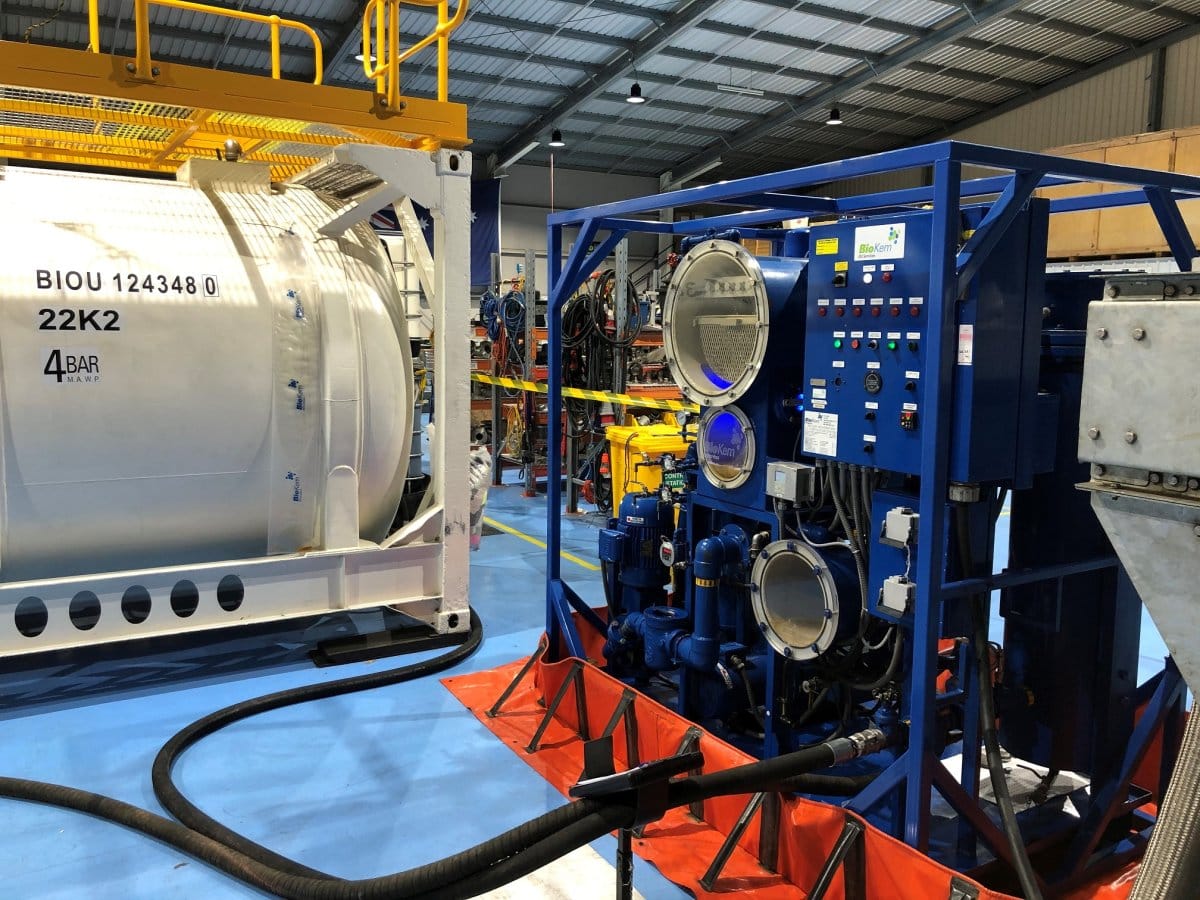
Did you know that 80% of hydraulic system failures stem directly from particle contamination? For Australian industrial operators, this statistic often manifests as costly unscheduled downtime and stubborn valve sticking that halts production. Understanding specific Oil Filtration Methods: Key Techniques for Cleaner Oil is no longer just a routine maintenance task; it’s a strategic necessity for asset survival. We understand the frustration of rising operational costs and the pressure to reduce frequent oil replacements that impact your bottom line and sustainability goals.
This guide will help you master the technical landscape of industrial oil purification to eliminate harmful contaminants and prevent the varnish buildup that threatens your most critical assets. You’ll learn how to achieve ISO 4406:2021 cleanliness targets while safely extending your oil drain intervals. We’ll examine essential strategies such as vacuum dehydration, varnish mitigation, and hot oil flushing to help you improve equipment reliability and meet evolving ESG metrics. From leveraging advanced filtration media to adopting proactive oil analysis, you’ll gain the insights needed to transform your lubrication program into a high performing, environmentally responsible operation.
Key Takeaways
- Transition from reactive repairs to a continuous reconditioning model to mitigate the high cost of microscopic particle wear.
- Master various Oil Filtration Methods: Key Techniques for Cleaner Oil by identifying the specific roles of nominal and absolute micron ratings.
- Understand why vacuum dehydration is essential for removing dissolved moisture that traditional barrier filters can’t address.
- Identify varnish as a primary threat to hydraulic reliability and learn the specialized mitigation strategies required to eliminate it.
- Assess the operational benefits of equipment hire versus managed onsite services to achieve your facility’s ISO 4406 cleanliness targets.
The Science of Industrial Oil Filtration: Why Cleanliness is Strategic
Industrial oil maintenance is shifting away from the traditional view of a “consumable” service. Instead, forward-thinking Australian operations treat it as a continuous reconditioning process. This approach moves beyond the simple act of replacing a filter element; it focuses on maintaining the fluid’s chemical and physical integrity indefinitely. By understanding The Science of Filtration, engineers can see that removing microscopic debris is the only way to stop the “chain reaction of wear.” When a single particle enters a high-pressure hydraulic system, it creates more particles through abrasion, leading to exponential component degradation.
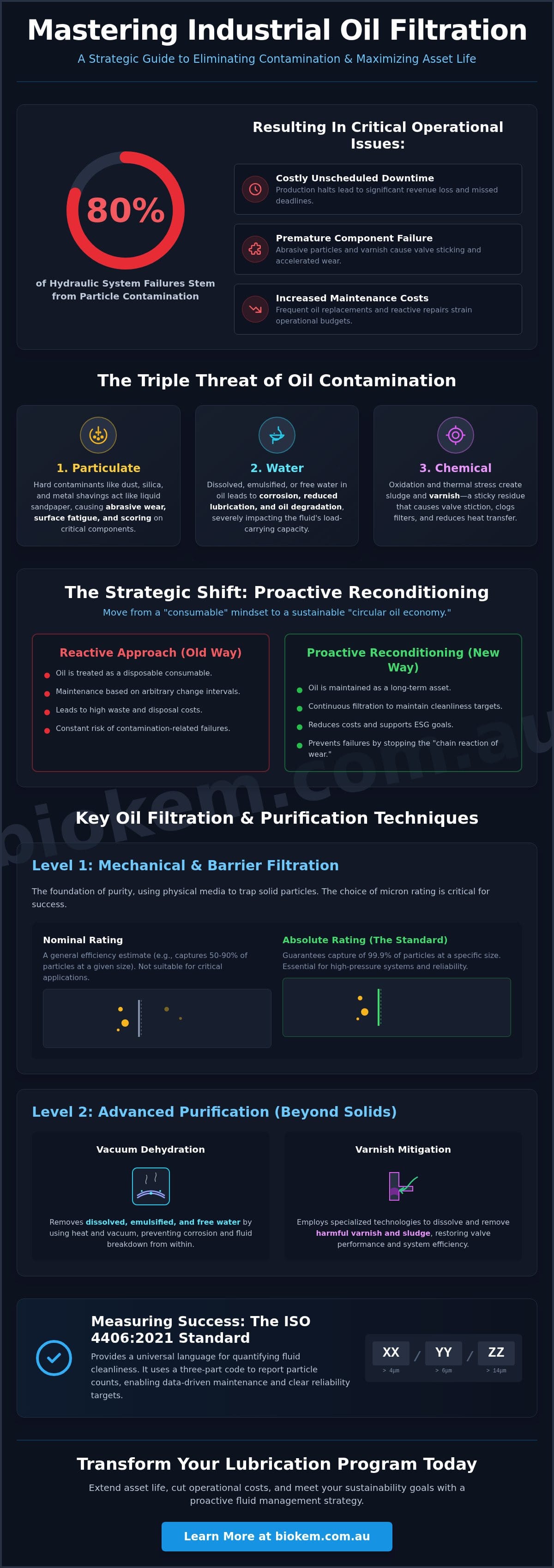
Implementing advanced Oil Filtration Methods: Key Techniques for Cleaner Oil ensures that these microscopic threats are neutralized before they cause catastrophic failure. The ISO 4406:2021 standard provides the universal language for this effort. It uses a three-part code to represent the number of particles larger than 4, 6, and 14 microns per millilitre of fluid. In 2026, maintenance strategies prioritize achieving these specific cleanliness targets over arbitrary oil change intervals. This shift is driven by both economic pressure and the need to meet modern reliability standards in demanding Australian environments.
To better understand this concept, watch this helpful video:
The Triple Threat: Particulate, Water, and Chemical Contamination
Contamination isn’t just about dirt; it’s a triple threat to your machinery. Hard contaminants like silica dust and metal shavings cause physical scoring and surface fatigue. Moisture is even more insidious. Whether it’s dissolved, emulsified, or free water, it triggers corrosion and drastically reduces the oil’s load-carrying capacity. Finally, chemical breakdown occurs through oxidation and thermal stress. This process creates varnish, a sticky residue that’s the primary cause of valve sticking in modern turbine and hydraulic systems.
Sustainability and the Circular Oil Economy
Extending oil life is a core pillar of the modern circular economy. By utilizing professional hot oil flushing and filtering, companies can reduce their environmental footprint while cutting operational costs. Australian regulations are increasingly focused on reducing hazardous waste disposal. Reconditioning oil rather than disposing of it aligns with these ESG metrics, turning a potential waste liability into a sustainable, long-term asset. This proactive stance on fluid health reduces the need for frequent oil replacements, directly supporting corporate sustainability goals.
Mechanical and Barrier Filtration: The Foundation of Purity
Mechanical and barrier filtration serves as the primary physical defense against the degradation of industrial fluids. These systems utilize a physical mesh or porous media to trap contaminants before they can circulate through sensitive components. When evaluating Oil Filtration Methods: Key Techniques for Cleaner Oil, mechanical barriers remain the essential starting point for any reliability strategy. Selecting the right filter requires a deep understanding of micron ratings. A nominal rating provides a general estimate of efficiency, whereas an absolute rating indicates that 99.9% of particles at that size are captured. In high-stakes Australian industrial environments, relying on absolute-rated elements is the only way to guarantee fluid integrity.
High-flow systems present unique challenges, requiring specialized housing and element designs to manage the volume without compromising capture rates. Monitoring the pressure drop, or differential pressure, across the filter is critical. A sudden increase in pressure indicates the element is saturated, while a drop might suggest a bypass or media rupture. Effective monitoring ensures you replace elements based on actual condition rather than arbitrary schedules. To ensure your system meets these rigorous standards, exploring specialist oil filters can prevent the premature wear that leads to significant asset replacement costs.
Surface vs. Depth Filtration Media
Surface filters are designed with a thin layer of media, such as wire mesh, making them ideal for high-flow applications and consistent particle sizes. However, depth filters offer superior performance for complex contamination. By capturing particles throughout the entire thickness of the media, depth filters provide a much higher dirt-holding capacity. Choosing between cellulose, synthetic, or glass fiber depends on the fluid’s chemical compatibility and the specific lubricant contamination profile of your machinery.
Magnetic Filtration: Capturing Sub-Micron Ferrous Particles
Traditional mechanical elements often struggle with sub-micron ferrous particles that result from gear and bearing wear. Magnetic filtration uses high-intensity magnets to trap these metallic fragments before they reach the primary filter. This pre-filtration step is essential for heavy-duty gearboxes, as it significantly extends the life of mechanical elements. For premium performance, many Australian operators utilize Filters S.p.A. products to ensure even the smallest metallic contaminants are removed from the system. This integration doesn’t just protect the machinery; it reduces the frequency of element changes, lowering your overall maintenance spend.
Advanced Purification: Vacuum Dehydration and Centrifugation
Standard barrier filters effectively trap solid particles, but they’re largely defenseless against moisture. Water exists in three states within oil: free, emulsified, and dissolved. While free water might eventually settle in a tank, dissolved water stays chemically bonded to the oil molecules, easily bypassing traditional mesh. This is where advanced Oil Filtration Methods: Key Techniques for Cleaner Oil become indispensable. These methods don’t just filter; they purify the fluid at a molecular level to restore its original dielectric and lubricating properties. Ignoring moisture leads to accelerated oxidation and the premature depletion of critical additive packages.
In Australia’s humid coastal regions or high-temperature inland mining sites, water ingress is a constant threat to asset health. High-intensity purification methods like vacuum dehydration and centrifugation are the primary tools used to combat this risk during scheduled maintenance or emergency recovery. Choosing the right method depends on the volume of oil and the specific state of the water contamination. While mechanical filters handle the “dirt,” these advanced systems handle the “chemistry,” ensuring the fluid remains fit for purpose over an extended lifecycle.
Vacuum Dehydration for Critical Moisture Control
Vacuum dehydration utilizes the physical principle that the boiling point of water decreases as atmospheric pressure drops. By creating a controlled vacuum, water is boiled off at temperatures as low as 45°C to 50°C, which prevents thermal damage to the oil’s base stock. This process removes 100% of free and emulsified water and up to 90% of dissolved water. Vacuum dehydration is the gold standard for moisture-sensitive systems. It provides essential protection against hydrogen embrittlement in bearings and ensures long-term additive stability. For operators facing sudden water ingress, vacuum dehydration units are often deployed to stabilize the system quickly and prevent a total oil change.
Centrifuges for High-Volume Contaminant Separation
Centrifugal separation relies on density differences rather than pore size. By spinning the oil at high speeds, the centrifuge forces denser impurities, such as bulk water and heavy solids, to the outer wall of the bowl while the lighter oil remains in the center. This method is particularly effective in marine applications and heavy power generation where high volumes of fluid require rapid processing. While vacuum dehydration excels at removing trace dissolved moisture, centrifuges offer a significantly higher throughput for bulk separation. Choosing between these Oil Filtration Methods: Key Techniques for Cleaner Oil depends on whether your primary challenge is chemical moisture saturation or large-scale contamination from external cooling leaks.
Varnish Mitigation: Solving the Chemical Contamination Challenge
Varnish has emerged as the primary threat to modern turbine and high-pressure hydraulic systems. Unlike the hard particulate matter discussed in the foundation of purity, varnish is a chemical byproduct of oil degradation. It’s often invisible to the naked eye and standard mechanical Oil Filtration Methods: Key Techniques for Cleaner Oil, as it remains soluble while the system is at operating temperature. Even 0.1-micron barrier filters fail to capture these dissolved oxidation products. The real danger occurs when the oil cools or experiences pressure changes; this causes the varnish to precipitate out of the solution and coat internal metal surfaces with a sticky, resinous film.
This resinous coating is highly destructive to industrial assets. It acts as a thermal insulator on heat exchangers, causing system temperatures to climb. In servo valves, even a microscopic layer of varnish creates enough “stiction” to cause erratic movement or total valve seizure. For Australian power generation and manufacturing plants, this leads to expensive, unscheduled outages. Managing this risk requires a shift from simple mechanical filtration to advanced chemical management that addresses the root cause of fluid oxidation.
Electrostatic and Adsorptive Technologies
Electrostatic oil cleaners provide a sophisticated solution by applying a high-voltage field to the fluid. This field charges sub-micron oxidation products, causing them to migrate toward collection zones where they’re permanently removed. Ion exchange resins offer another layer of protection by chemically stripping varnish precursors from the oil before they can precipitate. For facilities requiring specialized turbine care, BioKem Oil Services’ varnish removal system provides the necessary technology to maintain chemical stability and prevent the “soft” contamination that mechanical filters miss.
Varnish Potential Testing (MPC)
Effective varnish management is impossible without accurate measurement. The Membrane Patch Colorimetry (MPC) test is the global standard for assessing the risk of varnish formation. This test involves filtering a specific volume of oil through a fine patch and measuring the resulting color intensity. A high MPC score indicates a high concentration of soluble contaminants and an imminent risk of precipitation. Interpreting these scores allows engineers to plan interventions before a failure occurs. Integrating MPC testing into a proactive maintenance strategy ensures that Australian operators can maintain peak reliability while extending the functional life of their expensive lubricants.
If you’re noticing unexplained temperature increases or sluggish valve response, it’s time to evaluate your fluid’s chemical health. You can start by utilizing professional oil analysis and ferrogram services from BioKem Oil Services to identify the specific degradation markers in your system.
Deployment Strategies: Equipment Hire vs. Managed Onsite Services
Selecting the most effective deployment strategy is just as critical as choosing the specific Oil Filtration Methods: Key Techniques for Cleaner Oil for your facility. Technical managers often face a strategic choice between emergency recovery and scheduled preventative maintenance. Emergency interventions are typically triggered by sudden contamination events, such as cooler failures or high-pressure leaks, requiring rapid response to prevent catastrophic asset loss. In contrast, scheduled maintenance focuses on the long-term circularity of the fluid, aiming to meet ISO 4406 targets consistently while reducing the environmental footprint of the operation.
Managed onsite services provide a turnkey solution where specialized technicians from BioKem Oil Services handle the entire purification process from start to finish. This model ensures certified results through high-level technical expertise, which is essential for meeting strict internal ESG metrics and regional regulatory standards. For companies with established internal maintenance teams and the capacity for long-term projects, equipment hire can make financial sense. This allows for flexible, onsite control over filtration cycles without the immediate capital expenditure of a full asset purchase. Regardless of the chosen path, ensuring compliance requires documented oil analysis following every filtration event to verify that the fluid has returned to its required cleanliness specification.
Hot Oil Flushing: The Ultimate System Cleanse
New system commissioning or major overhauls require more than just standard kidney-loop filtration. High-velocity hot oil flushing is necessary to remove “built-in” debris such as welding slag, metal filings, and preservative coatings that can compromise a system from day one. By circulating oil at turbulent flow rates and elevated temperatures, these contaminants are effectively dislodged and captured. BioKem Oil Services provides comprehensive hot oil flushing for national projects across Australia, ensuring that critical assets start their lifecycle in a state of high-purity readiness.
Choosing the Right Partner for Oil Purification
Partnering with an industrial fluid expert requires evaluating their technical credentials and their deep understanding of local Australian regulatory conditions. A reliable provider doesn’t just offer hardware; they offer a scientific approach to asset longevity that includes detailed post-service reporting and ISO-certified processes. BioKem Oil Services integrates sophisticated laboratory analysis with onsite technical interventions to provide a complete picture of fluid health. This holistic approach ensures that every intervention, whether it involves vacuum dehydration or varnish mitigation, is backed by data and results in a measurable improvement in equipment reliability. By prioritizing Oil Filtration Methods: Key Techniques for Cleaner Oil, you don’t just protect your machinery; you secure your facility’s operational future in an increasingly resource-conscious economy.
Securing Your Industrial Future Through Fluid Integrity
Maintaining fluid health is a strategic investment in asset reliability and environmental responsibility. By implementing advanced Oil Filtration Methods: Key Techniques for Cleaner Oil, you move beyond simple maintenance to a model of continuous asset reconditioning. We’ve explored the importance of mechanical barriers, the necessity of moisture removal through vacuum dehydration, and the critical role of varnish mitigation in modern systems. These steps don’t just prevent failure; they extend the functional life of your lubricants and reduce hazardous waste disposal requirements.
BioKem Oil Services serves as a reliable partner for Australian industries navigating these complex technical challenges. As the sole Australian distributor for Filters S.p.A., BioKem Oil Services provides world-class hardware alongside specialist expertise in hot oil flushing and varnish mitigation. The approach is always data-driven, supported by comprehensive laboratory oil analysis and reporting to ensure your fluid meets strict ISO standards. Consult with BioKem Oil Services’ technical experts for a custom oil purification strategy to optimize your operations. Taking a proactive stance today ensures your critical assets remain resilient and efficient for years to come.
Frequently Asked Questions
What is the most effective oil filtration method for hydraulic systems?
High-efficiency absolute-rated barrier filters combined with offline kidney-loop systems are the most effective for hydraulic reliability. This dual approach ensures that the main system flow remains protected while the offline unit continuously polishes the oil to remove fine silts. Integrating magnetic pre-filtration further enhances this by capturing ferrous wear particles before they reach the primary filter elements.
How do I know if my oil requires vacuum dehydration?
You should consider vacuum dehydration if oil analysis reveals water content exceeding the saturation point, typically between 100 and 500 ppm depending on the oil type. Visible cloudiness or a milky appearance indicates emulsified water that standard filters cannot address. In humid Australian coastal regions, regular moisture testing is essential to detect dissolved water before it triggers corrosion or additive depletion.
Can standard oil filters remove varnish from turbine oil?
No, standard mechanical filters cannot remove soluble varnish because it exists at a sub-micron level or is dissolved within the fluid. Varnish is a chemical degradation product that requires specialized mitigation technologies like electrostatic oil cleaners or ion exchange resins. These systems address the chemical precursors of varnish that 0.1-micron barrier filters simply miss.
What is the difference between inline and offline oil filtration?
Inline filtration is integrated into the main system’s pressure or return lines to protect specific components during operation. Offline filtration, often called kidney-loop filtration, operates independently of the main system flow. This allows for slower, more efficient processing and is one of the essential Oil Filtration Methods: Key Techniques for Cleaner Oil for achieving deep cleanliness without affecting system pressures.
How often should industrial oil be analyzed for contamination?
Critical assets should undergo professional oil analysis at least quarterly to monitor contamination trends. For high-stakes Australian mining or power generation sites, monthly testing is often preferred to catch rapid changes in fluid health. This frequency allows maintenance teams to transition from reactive repairs to a proactive model that extends the lifecycle of both the oil and the machinery.
Is it better to hire oil filtration equipment or outsource the service?
Equipment hire is a cost-effective choice for long-term internal projects where your onsite team has the technical expertise to manage the process. Outsourcing to a managed service is superior for complex tasks like hot oil flushing or emergency recovery. Managed services provide technical expertise and certified results, ensuring your system meets ISO targets without requiring internal staff training.
What ISO 4406 cleanliness level should I aim for in 2026?
For modern high-pressure hydraulic systems, you should aim for a target of ISO 16/14/11 as defined by the ISO 4406:2021 standard. Many Australian operators are adopting even tighter targets in 2026 to align with ESG goals and reduce the frequency of oil replacements. Always verify the specific cleanliness requirements provided by your equipment manufacturer to ensure warranty compliance.
How does temperature affect the efficiency of oil filtration methods?
Temperature alters fluid viscosity and the solubility of contaminants like varnish and water. While higher temperatures improve the flow rate through mechanical filters, they also keep varnish dissolved in the oil, making it harder to capture. Understanding these thermal dynamics is vital when selecting Oil Filtration Methods: Key Techniques for Cleaner Oil, as some processes, like vacuum dehydration, require specific temperature ranges to function effectively.