

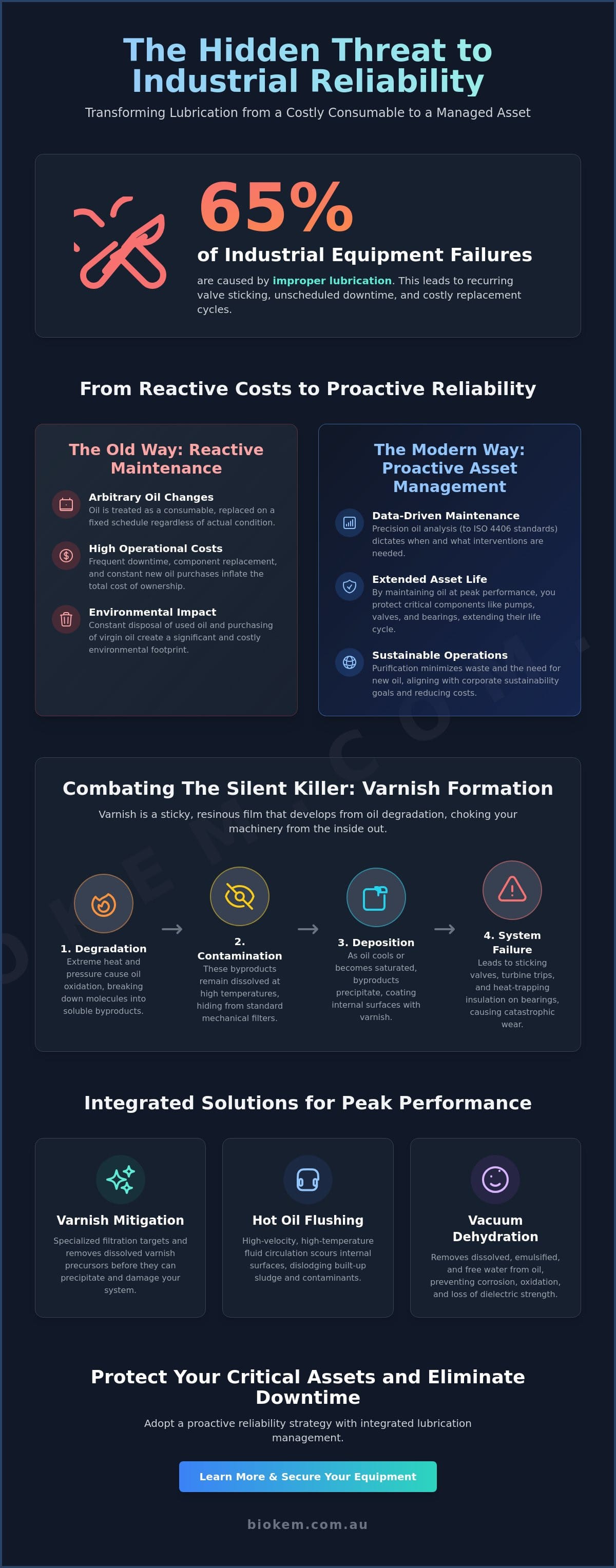
Over 65% of industrial equipment failures are attributed to improper lubrication. This statistic highlights a systemic vulnerability in modern manufacturing and power generation. Most operators view oil as a simple consumable, yet this perspective often leads to recurring valve sticking issues and inefficient oil replacement cycles. True operational reliability requires a shift toward viewing oil as a managed asset through integrated purification and Solutions. By focusing on precision oil analysis and technical interventions, businesses can protect their critical infrastructure from the high costs of unscheduled downtime.
You recognize that maintaining ISO 4406 cleanliness standards isn’t just about regulatory compliance. It’s about the long-term health of your machinery. This article demonstrates how integrated oil purification and solutions protect critical industrial assets and eliminate unscheduled downtime. We’ll examine the technical mechanisms behind hot oil flushing, varnish mitigation, and vacuum dehydration. You’ll discover how these specialized services lower the total cost of ownership while providing a sustainable path to extended asset life.
Key Takeaways
- Learn why moving from reactive oil changes to a proactive asset management model is vital for long-term machinery health.
- Understand the chemical process of oil oxidation and how targeted varnish mitigation prevents systemic failures in high-speed equipment.
- See why onsite technical interventions are essential for maintaining strict oil cleanliness standards in complex industrial systems.
- Compare the operational benefits of equipment hire and Solutions to secure specialized filtration units like Filters S.p.A. products.
- Discover how integrated lubrication management supports regional regulatory compliance and long-term ecological health.
The Evolution of Industrial Lubrication and Solutions in 2026
The industrial landscape in 2026 demands a fundamental shift in how we approach fluid maintenance. Integrated lubrication management is no longer a peripheral task; it’s a core proactive reliability strategy. We’ve moved past the era of reactive oil changes where fluid was simply drained and replaced once it reached a specific hour count. Instead, precision purification and Solutions allow operators to maintain oil at peak performance levels indefinitely. The Evolution of Industrial Lubrication has led us to a point where data-driven oil analysis dictates maintenance schedules rather than arbitrary timelines.
BioKem operates on a philosophy of authority in fluid health and asset protection. By treating oil as a critical component of the machine rather than a separate utility, we ensure that every technical intervention serves the goal of long-term operational stability. This transition toward precision maintenance is essential for facilities looking to eliminate the 65% of equipment failures typically caused by lubrication issues.
To better understand the fundamentals of modern fluid care, watch this technical webinar on maintenance practices:
From Consumables to Managed Assets
Viewing oil as a long-term asset significantly reduces a facility’s environmental footprint. Traditional disposal methods and the constant purchase of virgin oil are both costly and ecologically taxing. Advanced filtration systems, such as those provided through Filters S.p.A., minimize the need for new oil by removing contaminants at the sub-micron level. This approach doesn’t just save money; it aligns with the 2026 push for corporate sustainability and reduced hazardous waste generation. Extending lubricant life cycles is now a financial and environmental imperative.
Key Performance Indicators for Fluid Health
Precision requires measurement. The ISO 4406 cleanliness code stands as the definitive industry standard for fluid purity. Establishing baseline metrics for hydraulic and turbine systems is the first step in any successful reliability program. There’s a direct, documented link between fluid purity and the longevity of mechanical components. By maintaining oil within strict cleanliness parameters, you’re effectively extending the life of pumps, valves, and bearings. This reduces the frequency of component replacement and lowers the total cost of ownership across the asset’s entire life cycle.
Combating System Degradation: Varnish Mitigation and Solutions
Varnish is the primary silent killer of high-speed industrial machinery. It develops through a complex chemical process involving oil oxidation and thermal degradation. When lubricants are exposed to extreme heat and pressure, the base oil molecules break down, creating soluble degradation products. These products remain dissolved in the oil at high temperatures, effectively hiding from standard mechanical filtration. As the oil cools or reaches a point of saturation, these byproducts precipitate out of the fluid, coating internal surfaces with a sticky, resinous film. This process is a major concern for operators of turbines and large hydraulic systems.
This accumulation leads to catastrophic mechanical issues. Sticking valves are the most common symptom, often resulting in turbine trips or hydraulic system failures. Varnish also acts as an insulator on bearings, trapping heat and accelerating component wear. Standard mechanical filters aren’t designed to capture these dissolved contaminants. Therefore, implementing specialized Varnish Mitigation and Solutions is the only effective way to maintain system reliability and prevent the high costs of unscheduled downtime.
The Chemistry of Varnish Formation
Temperature fluctuations play a critical role in how varnish behaves within a system. When machinery shuts down or oil moves to cooler regions, soft contaminants precipitate out of the solution. These sub-micron particles are significantly smaller than the hard debris typically targeted by 10-micron or 25-micron filters. Varnish is a polar contaminant that requires specialized molecular attraction to remove. Because these particles are chemically attracted to metal surfaces, they create a persistent layer that traditional cleaning methods cannot reach without technical intervention.
Implementing Effective Removal Systems
Effective remediation requires technologies designed to work at the molecular level. Varnish removal systems utilize resin-based filtration or electro-physical separation to strip these polar molecules from the oil. For turbine oils, continuous treatment is far superior to batch processing. Continuous systems ensure that varnish levels never reach the saturation point where precipitation begins. In critical hydraulic systems, this proactive approach prevents the valve sticking that leads to unscheduled downtime. Case studies frequently show that consistent varnish removal can eliminate recurring servo-valve failures in power generation facilities.
Operators should consider a comprehensive oil analysis to determine if sub-micron oxidation products are already compromising their system’s efficiency. By addressing these chemical changes early, you can avoid the high costs of component failure and ensure your assets remain compliant with modern reliability standards.
Onsite Technical Interventions and Solutions for Critical Assets
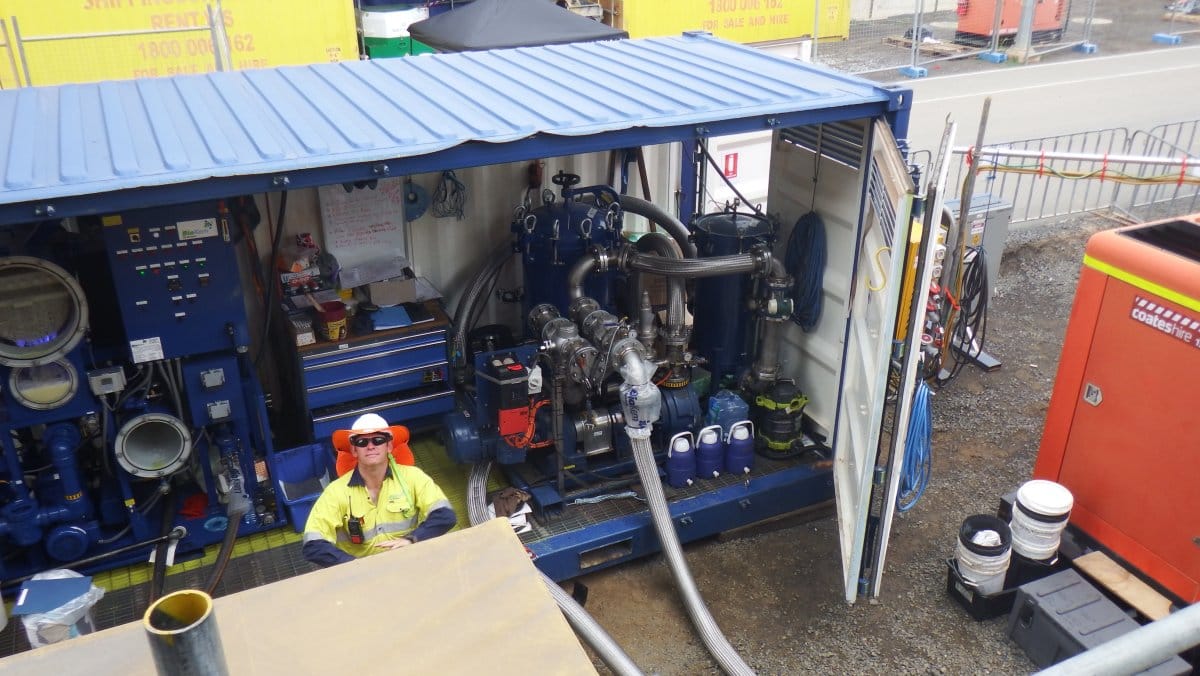
Large-scale industrial projects in Australia face unique logistical constraints. Transporting thousands of liters of hydraulic or turbine oil to a remote processing facility is rarely feasible. Integrated onsite technical interventions and Solutions provide a practical alternative by bringing specialized machinery and expert technicians directly to the asset. This approach minimizes downtime and eliminates the environmental risks associated with the transport of large fluid volumes. By treating the oil within its operational environment, we ensure that the asset returns to service faster and with higher precision.
The BioKem Standard anchors these interventions. It represents a commitment to safety and strict adherence to regional regulatory requirements. Mobilizing specialized equipment to a mine site or power station requires a deep understanding of local compliance and environmental health. Performing maintenance onsite maintains a closed-loop system, which is a core part of our sustainability focus. This method is particularly effective for critical assets where even a few hours of unscheduled downtime result in significant financial loss.
The Hot Oil Flushing Process
Commissioning new equipment or restarting a dormant system requires the total removal of construction debris, scale, and preservatives. The process begins with meticulous system isolation followed by a precise high-velocity flow rate calculation. Technicians must achieve a specific Reynolds number to ensure turbulent flow. This turbulence is necessary to dislodge internal contaminants that standard laminar flow would simply bypass. Utilizing hot oil flushing and filtering is a critical step in ensuring that new commissionings meet strict ISO cleanliness standards before the first startup.
Vacuum Dehydration for Water Removal
Water is a persistent threat to industrial lubricants. It appears in dissolved, emulsified, and free states, each causing different types of system damage. In high-humidity Australian industrial environments, moisture ingress is a constant challenge. Vacuum dehydration offers a sophisticated method for water removal without damaging the oil’s delicate additive package. By lowering the atmospheric pressure inside the dehydration chamber, water boils at a much lower temperature. This allows the moisture to evaporate and be removed as a gas, leaving the oil clean and dry. It’s a vital component of fluid maintenance and Solutions that prevents the oxidation and hydrogen embrittlement typically caused by water contamination.
Strategic Equipment Hire and Solutions for Operational Continuity
Capital expenditure for specialized filtration machinery often strains annual budgets. Strategic equipment hire and Solutions offers a way to bypass these financial barriers while maintaining operational continuity. Instead of waiting for long procurement cycles, facilities can access high-performance hardware immediately. The American Rental Association projects the equipment rental industry to reach $82.3 billion in 2026, reflecting a global trend toward operational flexibility. This approach is particularly vital during plant shutdowns when the demand for filtration capacity exceeds the capability of onsite permanent systems.
Using rental hardware doesn’t mean compromising on quality. It’s essential to use OEM-grade consumables for all hire units to protect the integrity of the host system. High-efficiency glass fibre elements ensure that the fluid returning to the reservoir meets or exceeds the required ISO 4406 standards. This strategy maintains the technical excellence established in previous onsite interventions without the long-term burden of asset ownership. It’s a logical step for managers who prioritize immediate results and environmental responsibility.
When to Choose Equipment Hire
- Emergency contamination events: Rapid response is needed when moisture or particulate ingress threatens to trip a turbine or damage hydraulic pumps.
- Scheduled maintenance outages: Temporary extra capacity allows for faster oil processing during tight turnaround windows, ensuring the plant returns to service on schedule.
- Testing new technologies: Operators can verify the efficacy of resin-based varnish mitigation or specific filtration media before committing to a capital purchase.
Accessing World-Class Hardware
As the Australian distributor for Filters S.p.A., BioKem provides access to some of the most advanced filtration technology available. These units are specifically engineered for high-efficiency performance in demanding industrial environments. The technical superiority of glass fibre elements allows for greater dirt-holding capacity compared to standard cellulose filters. This is especially critical when ensuring compatibility with specialized fluids like Phosphate Esters (EHC) used in steam turbine control systems. Using incorrect filtration media for EHC fluids can lead to chemical instability, making the choice of a technically competent hire partner critical for asset safety.
To ensure your facility maintains its reliability targets during the next shutdown, explore the range of specialized filtration equipment available for hire through BioKem.
BioKem: Australia’s Partner for Integrated Lubrication and Solutions
BioKem serves as a cornerstone for industrial reliability across the continent. We represent a fundamental shift in the industry toward integrated lubrication and Solutions that prioritize asset longevity over short-term fixes. Our role as a national leader is built on a foundation of technical expertise and a firm commitment to environmental health. By providing a localized context for global scientific standards, we help Australian businesses navigate the complexities of modern fluid maintenance with quiet confidence.
Transitioning from a reactive to a proactive asset management model is the most effective way to eliminate unscheduled downtime. We don’t just supply products; we provide a comprehensive framework for fluid health that integrates with your existing operational goals. Whether you’re managing a remote mine site or a metropolitan power station, our team offers the specialized knowledge required to maintain critical systems at peak efficiency. This partnership ensures that your lubrication strategy remains a driver of productivity rather than a source of recurring costs.
Laboratory-Grade Analysis and Reporting
Every successful maintenance program is rooted in empirical data. Professional oil analysis and ferrogram services provide the necessary insights to guide your strategic decision-making. These laboratory-grade reports allow operators to predict potential mechanical failures by identifying microscopic wear debris and chemical degradation early. Interpreting these results requires a deep understanding of fluid dynamics and metallurgy. Our independent, expert recommendations provide a clear roadmap for intervention, ensuring that you only perform maintenance when the data indicates it’s necessary. This precision reduces waste and maximizes the return on your lubricant investment.
Partnering for National Reliability
BioKem serves a diverse array of sectors, including Mining, Power Generation, and Marine operations. We understand that each industry faces unique challenges, from the high-humidity environments of coastal facilities to the extreme dust of inland mines. The synergy between high-performance products, such as Filters S.p.A. hardware, and our expert onsite services allows us to deliver results that synthetic interventions cannot match. We prioritize regulatory compliance and long-term ecological health in every project we scope. This holistic approach is why we’re the preferred partner for organizations looking to secure their operational future.
Ready to optimize your fluid health? Contact BioKem for a comprehensive lubrication audit and discover how our integrated approach can protect your critical assets.
Securing Your Operational Future with Precision Fluid Care
Transitioning from reactive oil changes to a proactive reliability model is the most effective way to eliminate unscheduled downtime. Integrated lubrication management provides a clear path to extending asset life while reducing your facility’s environmental footprint. By maintaining strict ISO 4406 cleanliness standards, you protect critical components from the silent threats of varnish and moisture ingress.
BioKem stands as a dedicated partner in this journey, offering comprehensive onsite technical support nationwide. As the authorized Australian distributor for Filters S.p.A., we combine world-class hardware with specialized expertise in hot oil flushing and vacuum dehydration. This technical synergy ensures your machinery operates at peak efficiency without the need for frequent, costly lubricant replacement. Don’t let improper lubrication compromise your production targets.
Consult with BioKem for Advanced Lubrication and Solutions
Frequently Asked Questions
What are the most common industrial lubrication and solutions for varnish removal?
The most effective methods include resin-based filtration and electro-physical separation systems. These specialized Varnish Mitigation and Solutions target polar contaminants that standard mechanical filters bypass. By stripping these molecules at the sub-micron level, operators prevent the resinous buildup that causes valve sticking and bearing failure.
How does hot oil flushing differ from a standard oil change?
A standard oil change only replaces the fluid in the reservoir, often leaving behind contaminants trapped in the pipework. Hot oil flushing uses specialized pumps to create high-velocity turbulent flow, which physically dislodges scale and debris from the entire system. It’s a technical intervention typically required during commissioning or after a major component failure.
Can vacuum dehydration remove water from oil while the system is online?
Yes, vacuum dehydration units are designed for online integration. These systems circulate oil through a vacuum chamber while the machinery remains operational, removing dissolved, emulsified, and free water. This prevents the need for unscheduled downtime and protects the oil’s additive package from chemical degradation.
What are the benefits of hiring oil filtration equipment in Australia?
Equipment hire allows facilities to access world-class hardware without the burden of capital expenditure. It provides immediate scalability during plant shutdowns or emergency contamination events. In Australia, hiring specialized units ensures that remote sites can maintain fluid health using the latest technology without long-term asset management costs.
How do ISO 4406 cleanliness codes impact asset warranty and longevity?
ISO 4406 cleanliness codes serve as a benchmark for fluid purity that many OEMs use to define warranty conditions. Maintaining oil within these specified particle counts significantly reduces abrasive wear on sensitive components. This leads to a measurable increase in mechanical longevity and a lower total cost of ownership over the asset’s life.
Is BioKem the authorized distributor for Filters S.p.A. in Australia?
BioKem is the authorized Australian distributor for Filters S.p.A. products. This partnership gives local operators direct access to high-efficiency glass fibre elements and specialized filtration units. Using these genuine products ensures that maintenance activities align with global technical standards for fluid purity.
What industries benefit most from proactive oil purification and solutions?
Power generation, mining, and marine sectors see the most significant benefits from integrated lubrication and Solutions. These industries rely on high-speed turbines and complex hydraulic systems where even minor contamination leads to catastrophic failure. Proactive purification ensures these critical assets remain compliant with regional regulatory and safety standards.
How often should industrial oil analysis be performed for critical assets?
Critical assets typically require oil analysis every three to six months as a baseline. However, high-load machinery or systems operating in extreme Australian environments often benefit from monthly sampling. Regular testing identifies chemical degradation and wear debris before they manifest as physical mechanical failures.