

Could a standard hot oil flush actually be the silent catalyst for your next unscheduled outage? You likely understand that maintaining GE LM6000 GLO systems requires more than just circulating fluid. It’s about protecting high-value bearings and ensuring every servo valve responds with precision. That’s why you should adopt Technical Procedure TP7702a when field flushing GE LM6000 GLO systems instead of relying on generic methods that leave sub-micron contaminants behind. While a basic flush might seem sufficient, it often fails to address the varnish and oxidation byproducts that lead to catastrophic valve sticking.
We agree that navigating OEM maintenance requirements is a complex task where the stakes involve millions in potential downtime. This guide explains why TP7702a is the critical benchmark for turbine reliability, utilizing precision-engineered flow dynamics to achieve oil cleanliness levels like ISO 4406 9/8/7. You’ll learn how this procedure implements the July 1, 2023, ASTM D6439-23 standards to keep water levels below 500 ppm and safeguard your GE warranty. We’ll also preview how BioKem’s specialists apply 70 years of combined expertise to deliver long-term bearing protection and optimized turbine availability through advanced varnish mitigation and hydrocarbon management.
Key Takeaways
- Learn how to achieve the specific Reynolds Number required for turbulent flow to ensure stubborn particulates are dislodged from your system.
- Understand why you should adopt Technical Procedure TP7702a when field flushing GE LM6000 GLO systems to interrupt the chemical pathways that cause varnish.
- Identify the 60-70°C temperature “sweet spot” that maximizes flushing efficacy and prevents oil oxidation during the cleaning process.
- Discover the essential specifications for high-flow external flushing rigs and why absolute-rated filtration is non-negotiable for asset protection.
- Explore how BioKem integrates advanced oil analysis with onsite flushing to verify compliance with strict OEM operational standards.
Understanding the TP7702a Standard for GE LM6000 GLO Systems
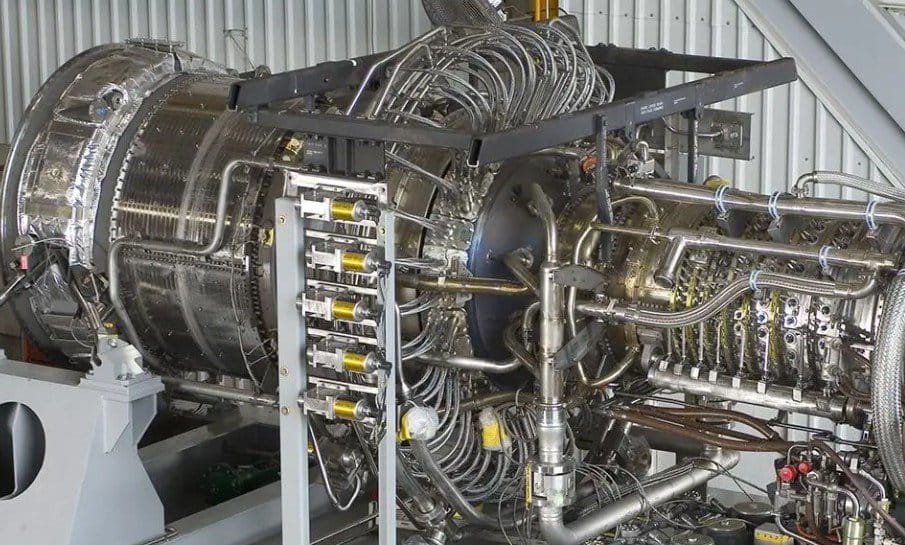
The GE LM6000 is a sophisticated Gas-turbine engine that demands extreme precision in its lubrication protocols. Technical Procedure TP7702a serves as the definitive framework for field flushing these Gas Lube Oil (GLO) systems. It’s not just a set of instructions; it’s a critical safety barrier for high-performance assets. GE updated this procedure to version ‘a’ to specifically address the increasing prevalence of varnish and sub-micron particulates that traditional flushing methods often miss. While industrial frames might tolerate slightly higher contamination, the aeroderivative LM6000 features high-speed bearings and tight clearances that require oil cleanliness levels often exceeding ISO 4406 9/8/7. This procedure applies across the entire lifecycle of the turbine, from initial site commissioning to major overhauls and routine oil changes.
To better understand this concept, watch this helpful video:
The Role of Gas Lube Oil (GLO) in Turbine Health
The GLO system is the lifeblood of the LM6000’s bearings and sumps. It differs significantly from the Hydraulic Control Oil system, which primarily handles valve actuation and requires different pressure profiles. GLO fluid experiences intense thermal stress as it cycles through the turbine core, making it highly susceptible to oxidation and hydrocarbon breakdown. Aeroderivative bearings are particularly sensitive to these changes. Even microscopic metallic debris or soft varnish deposits can lead to catastrophic bearing wipe or restricted oil flow. This makes hot oil flushing a non-negotiable maintenance step during any system opening. BioKem specialists utilize over 70 years of combined experience to ensure these systems remain free of the “seed” contaminants that accelerate fluid aging.
When TP7702a Becomes Mandatory
Adopting this standard isn’t optional for operators who value their OEM warranty or long-term asset health. You should adopt Technical Procedure TP7702a when field flushing GE LM6000 GLO systems whenever oil analysis reveals “distressed” markers. According to ASTM D6439-23 standards, published on July 1, 2023, water contamination exceeding 500 ppm or a rise in the Membrane Colorimetric Patch (MPC) value indicates the need for immediate intervention. High turbine cycling, which is common in peaking plants, accelerates this degradation. The rapid heating and cooling cycles create a “breathing” effect in the tank, drawing in moisture and promoting varnish formation. Only a TP7702a-compliant flush, utilizing specialized equipment, can effectively remediate these risks and restore the system to peak operational readiness.
The Technical Core of TP7702a: Why Velocity and Temperature Matter
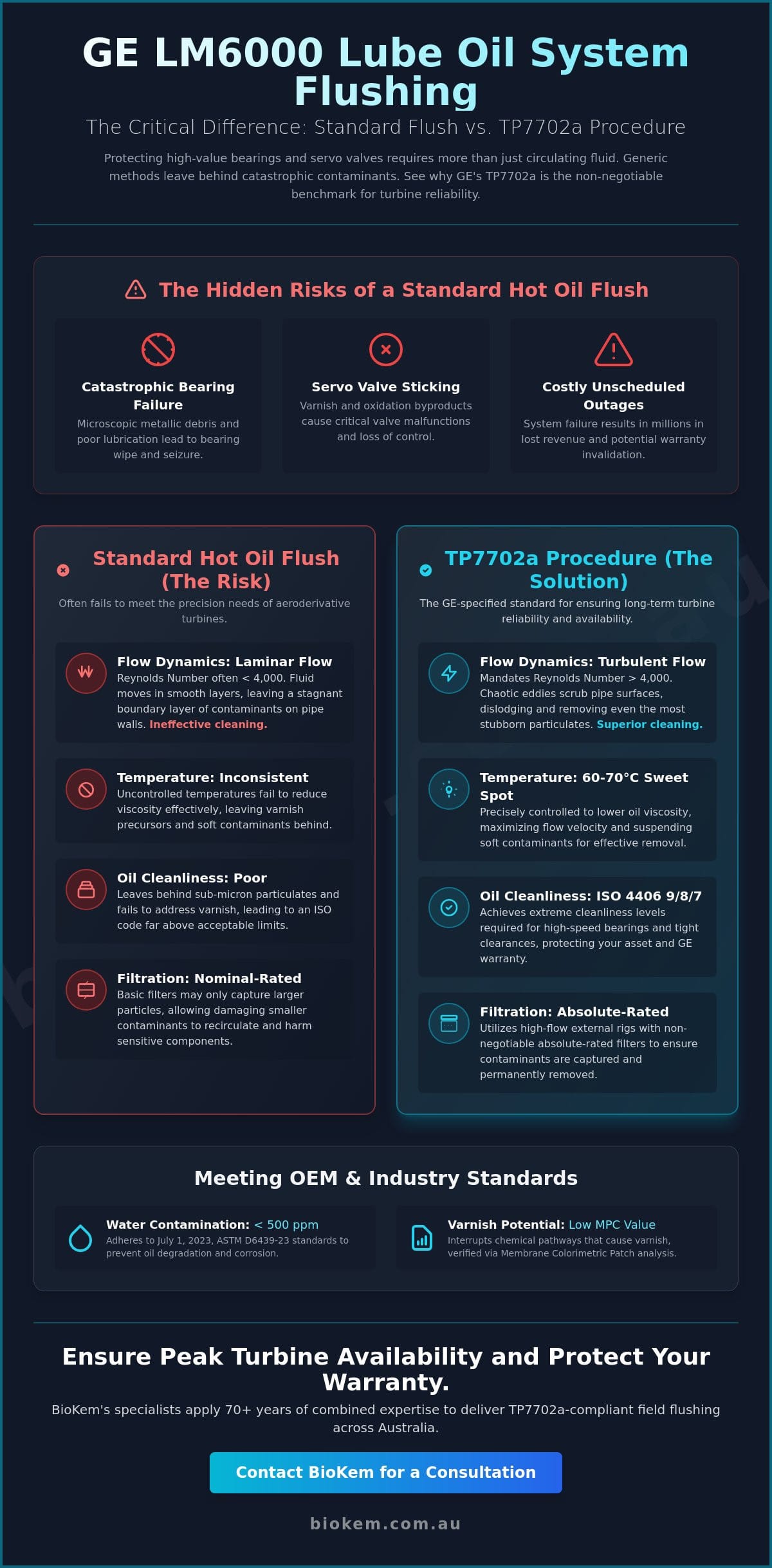
Many technicians equate high pressure with a successful flush. This is a dangerous misconception. Pressure is simply the resistance to flow; velocity is the actual movement of fluid that carries away contaminants. To achieve the cleanliness levels required for reliable operation, the Reynolds Number must exceed 4,000 to transition from laminar to turbulent flow. In a laminar state, oil moves in smooth, parallel layers, leaving a stagnant boundary layer against the pipe wall where particulates remain trapped. Turbulent flow creates the chaotic eddies necessary to scrub these surfaces clean. This physical requirement is a primary reason why you should adopt Technical Procedure TP7702a when field flushing GE LM6000 GLO systems, as it dictates the specific flow rates needed to overcome fluid surface tension.
Temperature serves as the second pillar of this procedure. Maintaining the oil between 60°C and 70°C reduces viscosity, which allows external pumps to achieve higher velocities with less energy. This “sweet spot” also aids in the suspension of soft contaminants like varnish precursors. Adhering to these thermal targets ensures that the flushing medium acts as a solvent and a transport mechanism. Integrating FAA guidance on turbine part approval underscores the necessity of maintaining component integrity through such rigorous cleaning protocols, particularly for high-speed aeroderivative bearings. To verify the efficacy of these parameters, BioKem provides specialized paddle flushing screens that capture remaining debris during the final stages of the procedure.
Achieving Turbulent Flow in LM6000 Circuits
Standard onboard pumps are designed for lubrication, not for the high-volume displacement required for a TP7702a flush. Achieving a Reynolds Number over 4,000 in a 2 inch GLO line requires significantly higher flow rates than the turbine’s internal system can provide. BioKem utilizes external high-flow skids to disrupt the boundary layer, ensuring that even sub-micron particulates are lifted into the stream. If your current maintenance plan doesn’t involve calculating these flow rates for specific pipe diameters, you aren’t truly flushing the system. You can easily browse our range of specialized filtration equipment to see the hardware required for this level of precision.
Thermal Cycling and Particulate Release
TP7702a isn’t a static process; it involves deliberate thermal cycling. By fluctuating the temperature within the approved range, the metallic piping undergoes microscopic expansion and contraction. This mechanical action helps “pop” stubborn scale and oxidation products loose from the internal surfaces. The optimal temperature range for GLO flushing is between 60°C and 70°C to ensure maximum contaminant suspension without compromising the chemical stability of the oil. Monitoring viscosity changes during this heating phase is essential to maintain the turbulent flow profile throughout the entire circuit duration.
The Risks of Non-Compliance: Varnish and Bearing Failure
Skipping the technical rigor of TP7702a isn’t just a minor oversight. It’s a gamble with your turbine’s structural integrity. When a flush is performed inadequately, it leaves behind “seed” contaminants. These microscopic metallic particulates and carbonaceous residues act as catalysts for oil oxidation. Once these seeds are present, they initiate a chemical chain reaction that transforms healthy hydrocarbons into insoluble sludge. This degradation pathway is exactly why you should adopt Technical Procedure TP7702a when field flushing GE LM6000 GLO systems. Unlike a basic procedure for lube oil flushing, TP7702a is designed to remove the precursors of failure before they can bond to internal metal surfaces.
The financial consequences of non-compliance are often staggering. An unscheduled LM6000 shutdown results in massive lost revenue and potential grid instability. This doesn’t include the cost of emergency repairs or the potential for premature bearing replacement. In contrast, a compliant flush is a controlled, predictable investment in reliability. By removing the catalysts that drive fluid breakdown, you’re effectively resetting the chemical clock of your lubricant. BioKem’s specialized varnish mitigation for turbines ensures that even the most stubborn soft contaminants are purged, preventing the “stiction” that leads to catastrophic failures.
Varnish: The Silent Killer of LM6000 Reliability
Sub-micron particles are the primary threat to aeroderivative turbines. These tiny contaminants are small enough to enter the tight clearances of servo-valves but large enough to cause mechanical interference. As oil oxidizes, these particles become coated in a sticky resin, creating “stiction” in critical GLO control components. This leads to erratic valve behavior or complete sticking, which can trigger a turbine trip during a critical load period. TP7702a addresses this by utilizing high-velocity turbulent flow to scrub these resins from the system before they can solidify. This proactive approach is essential for maintaining the operational readiness of your fleet.
Long-term Asset Longevity
Achieving oil cleanliness targets like ISO 4406 9/8/7 is the most effective way to extend the life of your high-speed bearings. Generic flushing often stops at ISO 16/14/11, leaving millions of particles per milliliter in the system. Our specialists, with over 70 years of combined industry experience, have demonstrated that TP7702a compliance consistently results in “better than new” oil conditions. For a deeper dive into these technical benchmarks, consult The Ultimate Guide to Hot Oil Flushing for Industrial Systems. Adhering to these standards ensures that your turbine operates within the safe parameters defined by the July 1, 2023, ASTM D6439-23 update, protecting both your asset and your warranty.
Executing TP7702a: Essential Equipment and Field Methodology
Executing TP7702a demands a specialized equipment suite that exceeds the capabilities of standard maintenance kits. Success hinges on high-flow external flushing rigs (skids) capable of maintaining the turbulent flow profiles required for sub-micron cleaning. These skids must be paired with absolute-rated multi-stage filtration to capture particulates as small as 1 micron. Real-time verification is just as critical as the hardware itself. BioKem specialists perform onsite oil analysis using laser particle counters to confirm ISO codes in the field, ensuring the system meets GE’s stringent requirements before the rig is disconnected. This level of field rigor is a primary reason why you should adopt Technical Procedure TP7702a when field flushing GE LM6000 GLO systems. Without real-time data, you’re essentially flushing blind.
To ensure every particulate is accounted for, we utilize paddle flushing screens for particulate capture. These screens provide a visual and physical confirmation of system cleanliness that electronic sensors alone might miss. This dual-verification method ensures that no large debris remains trapped in dead legs or low-flow zones of the LM6000 circuit.
Step-by-Step Field Execution
The process begins with meticulous system isolation. Technicians install jumpers to bypass critical bearings and sensitive instrumentation, protecting them from the high-velocity debris being dislodged during the initial stages. Once the circuit is established, the initial system heating phase begins. We cycle the oil to the 60-70°C target to maximize contaminant suspension. After the bulk of the debris is captured, the final polishing phase commences. This stage continues until the oil reaches the target ISO 4406 9/8/7 cleanliness level, a benchmark BioKem consistently achieves through our specialized methodology and 70 years of combined industry experience.
Filtration Requirements for GLO Systems
Aeroderivative GLO systems have no room for error. The final stage of a TP7702a flush often requires 1-micron or 3-micron absolute-rated filtration to eliminate the soft contaminants that lead to varnish. We rely on high-performance elements to maintain these standards under high-flow conditions. As the authorized distributor for Filters S.p.A., BioKem provides the technical grade components necessary for TP7702a compliance. These elements offer superior dirt-holding capacity and structural integrity compared to generic alternatives, ensuring they won’t collapse under the pressure of a high-velocity flush.
If you’re preparing for a major overhaul, you can book a technical consultation for your LM6000 flushing requirements to ensure full compliance with the latest industry standards.
BioKem’s Approach to GE LM6000 Field Flushing in Australia
BioKem delivers a comprehensive, turnkey solution for turbine operators across the continent. We recognize that technical compliance isn’t merely about following a checklist; it’s about generating the rigorous documentation and data GE requires to uphold critical equipment warranties. This is a primary reason why you should adopt Technical Procedure TP7702a when field flushing GE LM6000 GLO systems through a certified specialist. Our professional hot oil flushing and filtering services combine high-velocity turbulence with advanced oil analysis to eliminate the root causes of hydrocarbon breakdown. By leveraging our 70 years of combined industry expertise, we ensure your asset returns to service with oil that frequently exceeds original refinery cleanliness specifications.
National Onsite Deployment
We maintain a fleet of specialized industrial flushing rigs designed for rapid deployment to any remote or metropolitan site in Australia. Whether you’re managing a peaking plant in the Pilbara or a base-load facility in Victoria, our technicians arrive with equipment specifically calibrated for aeroderivative turbine protocols. We don’t just supply equipment hire; we provide a complete technical intervention. Our team manages every phase of the TP7702a execution, from initial system isolation to the final absolute-rated polishing phase. This national capability minimizes turbine downtime and ensures that the July 1, 2023, ASTM D6439-23 standards are met with absolute precision in the field.
Beyond the Flush: Proactive Maintenance
A single flush is only one element of a sustainable reliability program. We advocate for integrating TP7702a into a broader proactive maintenance strategy to shift the operational focus from reactive repairs to asset life extension. Once the flushing procedure is complete, we provide detailed post-flush oil analysis and ongoing health monitoring to track varnish precursors and moisture levels. Our commitment to environmental sustainability drives us to focus on restoring oil health rather than simple fluid replacement. This approach reduces the volume of waste hydrocarbons and lowers the total cost of ownership for your LM6000 fleet. Understanding why you should adopt Technical Procedure TP7702a when field flushing GE LM6000 GLO systems allows you to transition toward a maintenance model that prioritizes both operational availability and long-term ecological health.
Securing Your LM6000 Asset Longevity
Adhering to the technical rigor of TP7702a is the only way to ensure your turbine operates within the safe parameters defined by the July 1, 2023, ASTM D6439-23 update. By prioritizing turbulent flow and thermal cycling, you eliminate the microscopic catalysts that trigger varnish formation and bearing failure. This is ultimately why you should adopt Technical Procedure TP7702a when field flushing GE LM6000 GLO systems. Precision in the field today prevents catastrophic mechanical downtime tomorrow.
BioKem stands as the sole Australian distributor for Filters S.p.A. and brings over 70 years of combined industry experience to every technical intervention. Our specialists provide the national onsite service capability required to execute these complex procedures at any location. We focus on achieving oil cleanliness levels that protect your warranty and extend the life of your hydrocarbons. Request a Technical Consultation for Your GE LM6000 Flushing Project to verify your system’s health. We look forward to helping you achieve peak operational availability through our specialized aeroderivative maintenance protocols.
Frequently Asked Questions
What is the difference between TP7702 and TP7702a?
The ‘a’ revision is a technical update that introduces stricter requirements for varnish mitigation and sub-micron particulate removal. GE implemented this version to address the specific failure modes of aeroderivative bearings in high-cycling environments. It mandates more rigorous oil analysis and tighter ISO cleanliness targets than the original procedure to ensure long-term asset reliability.
How long does a typical TP7702a flush take for an LM6000?
A standard flush usually requires 24 to 72 hours of continuous circulation once the oil reaches the 60-70°C target temperature. Total onsite duration typically spans 4 to 6 days to account for equipment mobilization, jumper installation, and final oil analysis. Systems with high MPC varnish scores may require additional time for specialized chemical cleaning phases.
Can I perform a TP7702a flush using the turbine’s internal pumps?
You can’t achieve compliance using internal turbine pumps because they’re designed for lubrication rather than high-velocity displacement. TP7702a requires a Reynolds Number exceeding 4,000 to reach a turbulent flow state. Only external high-flow skids provide the necessary volume to scrub the internal pipe walls and lift trapped particulates into the filtration stream.
What ISO 4406 cleanliness code is required for GE LM6000 GLO systems?
GE LM6000 GLO systems generally require an oil cleanliness level of ISO 4406 11/10/8 or better. BioKem’s specialized equipment has achieved codes as clean as 9/8/7 during recent pre-commissioning projects across Australia. Reaching these extremely clean levels is critical for the protection of high-speed aeroderivative bearings and the prevention of servo-valve sticking.
Why is turbulent flow essential for a successful field flush?
Turbulent flow is essential because it creates the chaotic eddies needed to lift particulates from the pipe’s boundary layer. In a laminar state, oil flows in smooth layers, leaving a thin film of stagnant fluid against the metal surface where debris remains trapped. Dislodging these contaminants requires the mechanical energy of a high-velocity, turbulent stream.
Does BioKem provide the jumpers and bypasses required for the procedure?
Yes, BioKem provides a complete turnkey service that includes the provision of all necessary jumpers, bypasses, and paddle flushing screens. Our technicians manage the entire isolation process to ensure sensitive turbine components and instrumentation are protected from debris. This professional approach ensures that the high-velocity flush only targets the piping circuits that require cleaning.
Is TP7702a required for every oil change?
While not mandatory for minor top-ups, you should adopt Technical Procedure TP7702a when field flushing GE LM6000 GLO systems during full oil changes or following major maintenance. This prevents the “seeding” effect, where residual varnish in the piping quickly degrades the new fluid. It’s a fundamental step for maintaining OEM warranty compliance and ensuring fluid longevity.
What happens if my turbine fails to meet cleanliness targets after flushing?
If the system fails to meet ISO targets, the flushing process continues with fresh filter elements and further thermal cycling. Our specialists use real-time laser particle counters to monitor progress and identify specific sections of the circuit that may be holding debris. We don’t sign off on a project until the oil meets the verified July 1, 2023, ASTM standards.