

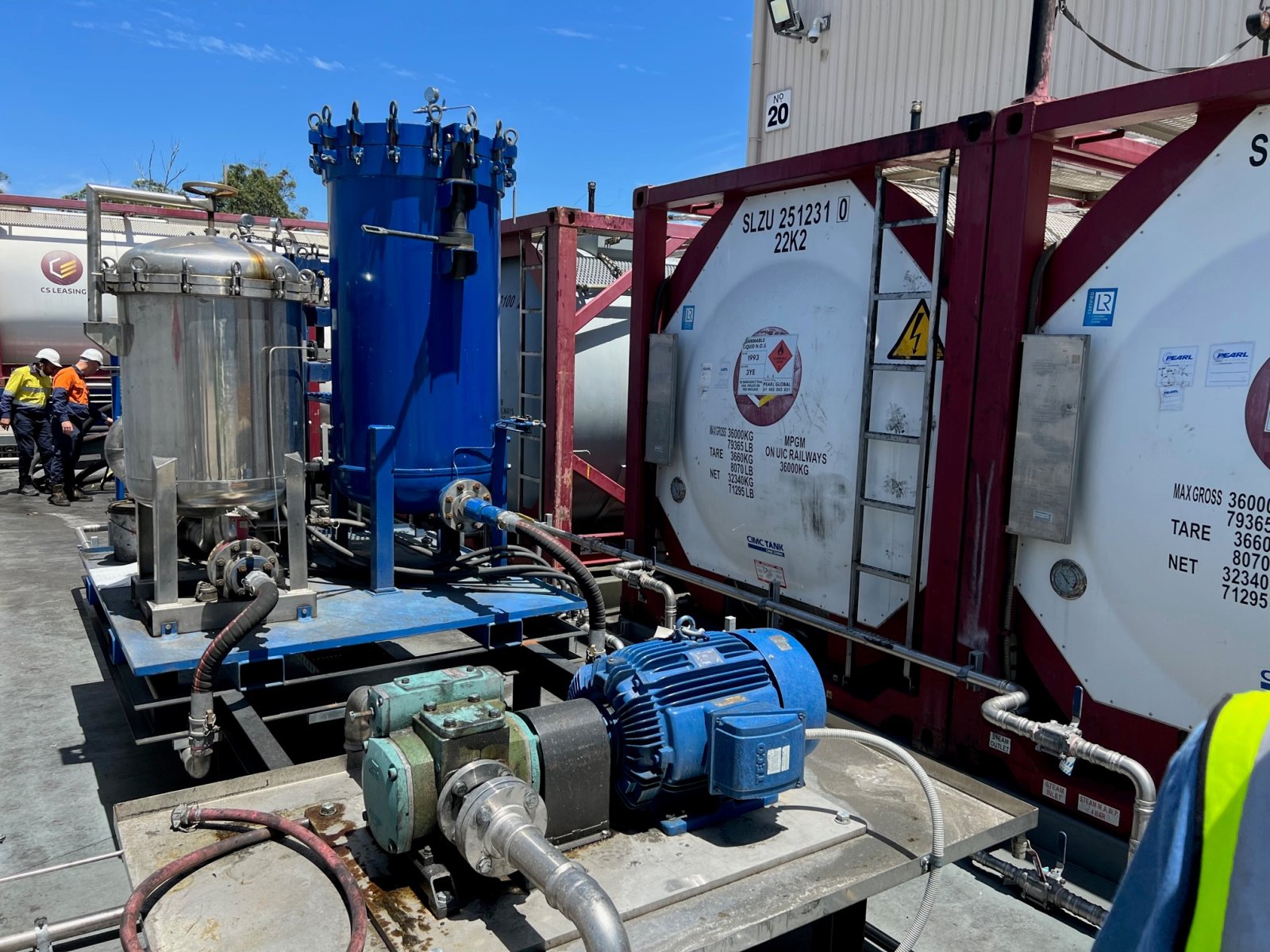
Clean oil is a pressure-control measure, not just a housekeeping task. Hydraulic fluid maintenance for plastic injection moulding machines should include oil sampling once per quarter as a general industry recommendation, alongside cleanliness checks matched to the machine’s components. Contamination can contribute to wear, pressure losses, reduced efficiency and valve blockage, putting consistent production at risk.
Visible leaks and performance changes are not the only warning signs. Particles, water and oxidation residues can affect hydraulic components before a problem becomes obvious. Maintaining fluid cleanliness helps support reliable pressure and component life.
This guide explains how contamination affects machine performance, how to set cleanliness expectations for valves and other components, and which maintenance practices help protect the hydraulic system. It also covers when oil analysis, filtration or flushing may help address fluid condition and reduce the risk of avoidable disruption.
Key Takeaways
- Match oil cleanliness targets to the most sensitive valves and components in the system.
- Use particle-count results and oil condition monitoring to guide filtration and maintenance decisions.
- Protect components during installation by keeping pipes, hoses and cleaned parts sealed against dirt.
- Consider BioKem Oil Services’ fluid maintenance, flushing, varnish mitigation or dehydration support when oil condition needs attention.
Effects of contamination on system performance and pressure
When moulding performance changes, consider whether hydraulic fluid condition could be a factor. Contamination can affect pressure, component wear and production consistency.
Keep used hydraulic oil and contaminated filters contained and separate from general waste. Follow the disposal requirements that apply in your Australian state or territory, and prevent oil from reaching drains, soil or stormwater.
-
Assess Performance and Component Wear
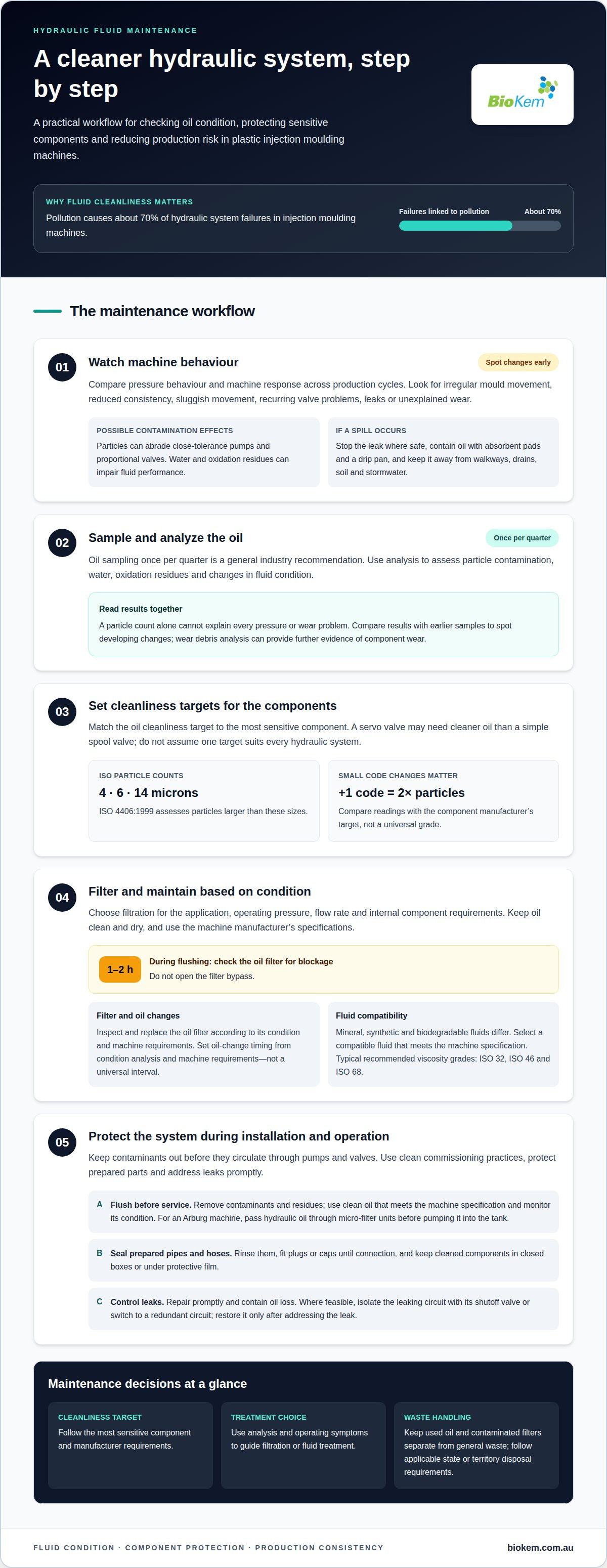
Compare pressure behaviour and machine response across production cycles, noting irregular mould movement or reduced consistency. Particles can abrade close-tolerance pumps and proportional valves, while water and oxidation residues can impair fluid performance. Pollution causes about 70% of hydraulic system failures in injection moulding machines. Treat unexplained pressure loss or component wear as a reason to investigate fluid condition, not simply adjust machine settings.
-
Analyze Contaminants and Additives
Use oil analysis to assess particle contamination, water and oxidation residues, as well as changes in the fluid’s condition. Review results together: a particle count alone cannot explain every pressure or wear problem. Compare results with earlier samples to spot developing changes and inform decisions about filtration or fluid treatment. Wear debris analysis can provide further evidence of component wear by examining material circulating in the oil.
-
Recognize Fluid Problems and Risks
Monitor for leaks, abnormal pressure, sluggish movement, recurring valve problems or inconsistent moulded parts. These signs can point to contamination, component damage or fluid deterioration. Continuing to operate may worsen wear and disrupt production. If oil spills, stop the leak where it is safe to do so and contain the fluid with absorbent pads and a drip pan. Keep it away from walkways and drains to reduce slip and environmental risks.
Cleanliness requirements for valves and hydraulic components
Set cleanliness targets according to the machine and component requirements, then use sampling and filtration to monitor oil condition. This helps support stable production and protect sensitive valves.
-
Check Oil Cleanliness and Dryness
Match the cleanliness target to the most sensitive component, since a servo valve may need cleaner oil than a simple spool valve. Particles, water and oxidation residues can affect component response and moulded-part consistency. Keep oil dry and clean, and use the machine manufacturer’s specifications rather than assuming one target suits every hydraulic system.
-
Filter the Hydraulic Oil
Choose filtration for the application, operating pressure, flow rate and internal component requirements. During flushing, check the oil filter every 1 to 2 hours for blockage, and don’t open the filter bypass. For support with filtration planning, discuss hydraulic oil filtration in relation to your system’s operating conditions.
-
Review ISO Cleanliness Readings
Use ISO 4406:1999 particle counts to assess particles larger than 4, 6 and 14 microns. A one-code increase represents a doubling of particle numbers, so even a small code change matters. Compare results with the component manufacturer’s target; don’t treat a general cleanliness grade as suitable for every valve.
-
Set Inspection and Change Intervals
Take a hydraulic oil sample once per quarter as a general industry recommendation. Inspect and replace the oil filter according to its condition and the machine requirements. Set oil-change timing from condition analysis and the machine requirements, rather than applying an unsupported universal interval. Mineral, synthetic and biodegradable fluids differ in formulation; select a compatible fluid that meets the machine specification. Typical recommended viscosity grades are ISO 32, ISO 46 and ISO 68.
Hydraulic component protection
Protect pumps, valves and pipework through clean commissioning, careful installation and prompt leak control. Each step helps limit the introduction of contaminants into the hydraulic system.
- Flush the hydraulic system before putting it into service to remove contaminants and residues that could circulate through pumps and valves. During commissioning, use clean oil that meets the machine specification and monitor its condition. For an Arburg machine, pass hydraulic oil through micro-filter units before pumping it into the tank.
- Prepare pipes and hoses before installation. Rinse them, then fit plugs or caps to keep out dirt until connection. Store cleaned components in closed boxes or under protective film while they await installation. This limits exposure to workshop dust and handling debris that could enter the system before operation.
- Repair hydraulic leaks promptly and contain any oil loss. Where feasible, isolate a leaking circuit by closing its shutoff valve or switching to a redundant circuit. This can limit fluid loss while protecting other operating circuits. Restore the affected circuit only after addressing the leak.
- Use condition monitoring to guide protection work. Clean hydraulic fluid helps prevent premature wear, extend critical component life and reduce maintenance costs. If fluid condition or system cleanliness needs attention, discuss hydraulic fluid maintenance with BioKem Oil Services. Increased operating exposure to dirt during installation or repair makes careful cleanliness controls especially important.
BioKem Oil Services: EHC Fluid Maintenance
BioKem Oil Services provides EHC Fluid Maintenance for operators managing hydraulic-fluid condition and component protection. Turn to this support when oil analysis or operating symptoms indicate contamination, water or varnish concerns that routine filtration alone may not address.
The right treatment depends on the fluid issue. Hot Oil Flushing can address contamination within a system, Vacuum Dehydration targets water in oil, and Varnish Mitigation is relevant when varnish deposits affect hydraulic equipment. Start by assessing the fluid condition and system requirements rather than applying the same process to every problem.
For support with hydraulic fluid condition, contact BioKem Oil Services.
Build Fluid Care Into Your Next Maintenance Plan
Make hydraulic fluid condition part of ongoing production planning, rather than waiting for performance changes. Recording oil condition, maintenance actions and machine behaviour can help teams identify patterns and make informed decisions during future shutdowns.
A structured approach to hydraulic fluid maintenance for plastic injection moulding machines also supports responsible resource use by helping operators assess fluid condition before deciding on the next maintenance action. Align that assessment with the machine’s operating needs and the condition of its hydraulic system.
For support with fluid maintenance, contact BioKem Oil Services to discuss your requirements. A considered plan can help keep maintenance decisions practical and production focused.
Frequently Asked Questions
How can hydraulic oil condition be tested, including water, particle contamination, viscosity and oxidation?
Use laboratory oil analysis to assess water, particle contamination, viscosity and oxidation indicators. Particle counts show cleanliness, while viscosity results can be compared with the oil’s original grade. A change exceeding 15% at 40°C warrants close monitoring. Trend results across samples, since a single test may not show whether fluid condition is stable or deteriorating.
What are the recommended ISO cleanliness codes and filtration requirements for injection moulding machine hydraulic systems?
Use the machine and component manufacturer’s cleanliness requirement as the target. Arburg recommends ISO 18/16/13, while Arburg Allrounder machines require purity class ISO 18/15/12, so these figures are not interchangeable defaults. Select filtration for the system’s application, operating pressure and flow rate, as well as its most sensitive components.
What are the step-by-step procedures for draining, flushing and refilling an injection moulding machine hydraulic system?
Follow the machine manufacturer’s procedure, since tank and circuit arrangements differ. In general, shut down and isolate the machine, drain the oil, then clean the tank with a solvent that dries easily. Use filtered air to remove solvent residue. Flush the system without opening the oil-filter bypass, then refill it with clean, suitably filtered oil that meets the machine specification.
What causes hydraulic fluid contamination and degradation in injection moulding machines, and how can it be prevented?
Particles, water and oxidation residues can enter or develop in hydraulic oil, while increased operating temperature accelerates oxidation. The stated oxidation rate doubles when oil temperature rises by 18°C (10°F). Keep fluid transfer and maintenance practices clean, protect open lines and components from dirt, and monitor oil condition so developing contamination or degradation can be addressed.
How much does hydraulic oil analysis, filtration and replacement cost in Australia?
The cost of BioKem’s onsite services depends on the project’s scope, duration and technical complexity. Laboratory analysis, onsite purification and equipment needs can each form part of the project scope. Contact BioKem Oil Services to request a quote, describing the equipment and work required.

Article by
James McAllister
James McAllister is an industry professional with BioKem Oil Services, specialising in lubrication reliability, oil filtration, contamination control and asset performance. Drawing on BioKem's extensive field experience across turbines, compressors, hydraulic systems and critical rotating equipment, James writes practical, insight-driven articles that help maintenance and reliability teams improve equipment performance, extend asset life and reduce operational risk.