

Choosing Noria qualifications for lubrication planning starts with the decisions each role must make. The most relevant training addresses the gap between a person’s current capability and the knowledge required to plan reliable work for equipment.
It’s understandable to look for a recognised credential when building confidence in a lubrication programme. But a qualification alone doesn’t determine whether someone can apply learning to equipment, procedures and maintenance priorities.
Match training to planning responsibilities by assessing the required knowledge, learning outcomes and practical experience. Consider how each qualification supports the team’s day-to-day lubrication decisions and reliable equipment operation.
Key Takeaways
- Match qualifications to the decisions each lubrication role must make, then identify the skills the role needs to develop.
- Build a lubrication program around practical resources, including sampling equipment and tools for applying training on the job.
- Use consistent lubrication practices to support equipment reliability and help prevent avoidable failures.
- Learn when oil analysis, hot oil flushing, varnish mitigation or vacuum dehydration can support lubrication and equipment maintenance.
Which qualifications support lubrication planning decisions?
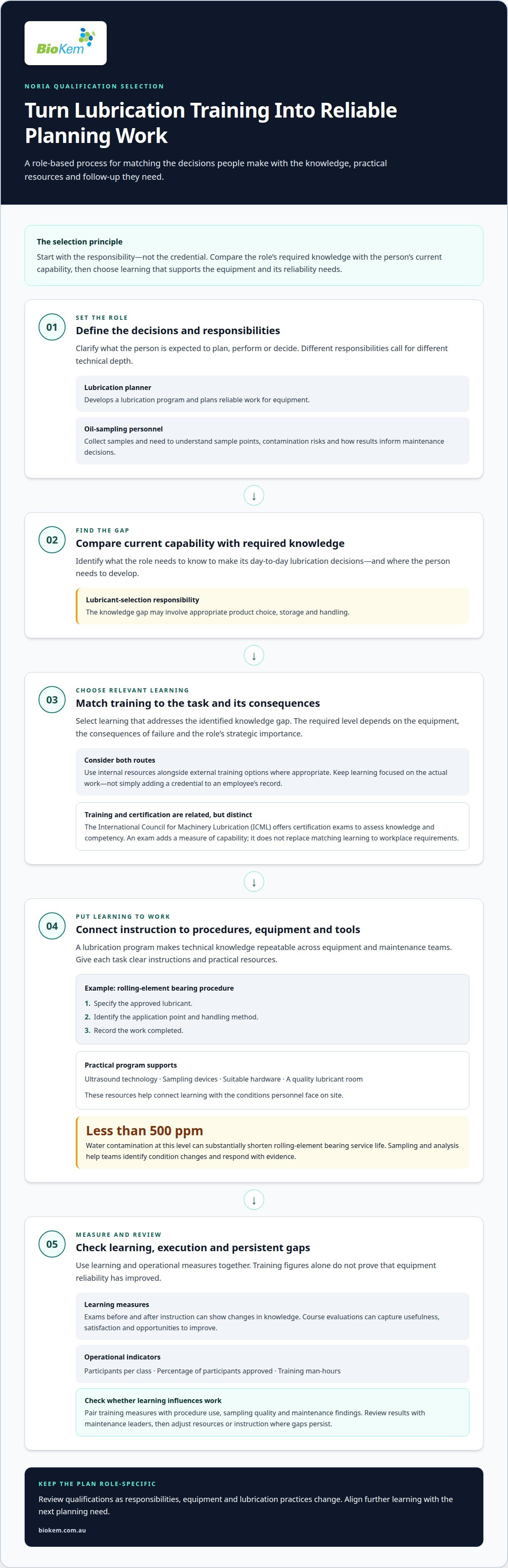
The right Noria qualification depends on the decisions assigned to each machinery lubrication role. First, define the role’s responsibilities, then compare its required knowledge with the person’s current capability. A planner developing a lubrication program needs different technical depth from personnel collecting oil samples. This gap-based approach keeps training relevant to the equipment, its condition and reliability needs.
For example, someone setting sampling practices needs to understand sample points, contamination risks and how results inform maintenance decisions. A person responsible for lubricant selection needs knowledge to support appropriate product choice, storage and handling. Training is most useful when it covers these specific tasks. A qualification should support practical work, not simply add a credential to an employee’s record.
Use a straightforward selection process: define the planning responsibility, identify the knowledge gap, then choose training that addresses it. Consider internal resources alongside external training options. The required level depends on the equipment, the consequences of failure and the role’s strategic importance. Maintenance and reliability leaders can also set performance measures, such as whether personnel follow procedures consistently and use analysis to inform decisions.
Training and certification are related, but distinct. The International Council for Machinery Lubrication (ICML) offers certification exams to assess knowledge and competency. An exam provides an additional measure, but it does not replace matching learning to workplace requirements. Staged development can turn general understanding into role-specific capability. Review qualifications as responsibilities, equipment and lubrication practices change, and align further learning with the next planning need.
Lubrication program
A lubrication program turns technical knowledge into repeatable work across equipment and maintenance teams. It relies on clear procedures for each task, from lubricant storage and transfer to sampling and application. For a rolling-element bearing, for example, a procedure should specify the approved lubricant, application point, handling method and work record. Consistent instructions help personnel follow practices correctly and make results easier to review.
Training needs practical resources as well as instruction. Useful supports include ultrasound technology, sampling devices, suitable hardware and a quality lubricant room. These tools connect classroom learning with the conditions personnel face on site. Water contamination also deserves attention: less than 500 parts per million can substantially shorten rolling-element bearing service life. Sampling and analysis help teams identify condition changes and respond with evidence.
Assess the program using learning and performance measures. Exams before and after instruction can show changes in participants’ knowledge. Course evaluations can capture feedback on usefulness, satisfaction and opportunities to improve. Operational indicators can include:
- Participants per class.
- The percentage of participants approved.
- Training man-hours.
These measures show whether training reaches personnel and supports consistent execution. They don’t, by themselves, prove that equipment reliability has improved. Pair them with procedure use, sampling quality and maintenance findings to understand whether learning is influencing work. Review the results with maintenance leaders, then adjust resources or instruction where gaps persist. For support aligning oil condition data with program decisions, discuss lubrication planning requirements.
General lubrication
Poor lubrication practices cause up to 70% of premature equipment failures. That makes routine work, including applying the correct lubricant and following procedures, central to reliability. A sound plan considers each asset’s function, operating condition and lubrication needs. For example, a bearing and a hydraulic system require procedures suited to their different functions, not one generic instruction.
Procedures matter because they turn technical knowledge into consistent action. A survey of Reliable Plant magazine readers identified lack of procedures as the largest reported category of factory failures, accounting for approximately 60% of failures. In the same survey, human error ranked second, and training ranked fourth, after equipment problems. These findings point to a practical priority: make lubrication tasks clear, repeatable and supported by role-appropriate instruction.
For each critical asset, define the work steps and the records needed to show completion. A useful procedure can specify:
- The lubricant selection and where it is applied.
- How personnel store, handle and transfer the lubricant.
- What observations or analysis trigger a maintenance response.
Review procedures against the actual equipment and maintenance findings. If a recurring failure points to missed or unclear work, revise the instructions and address the related training need. Track procedure completion alongside equipment condition to see whether planned practices are being followed. This links lubrication tasks to reliability decisions instead of treating lubrication as an isolated activity.
For help connecting oil condition findings with maintenance planning, discuss your lubrication requirements.
BioKem Oil Services
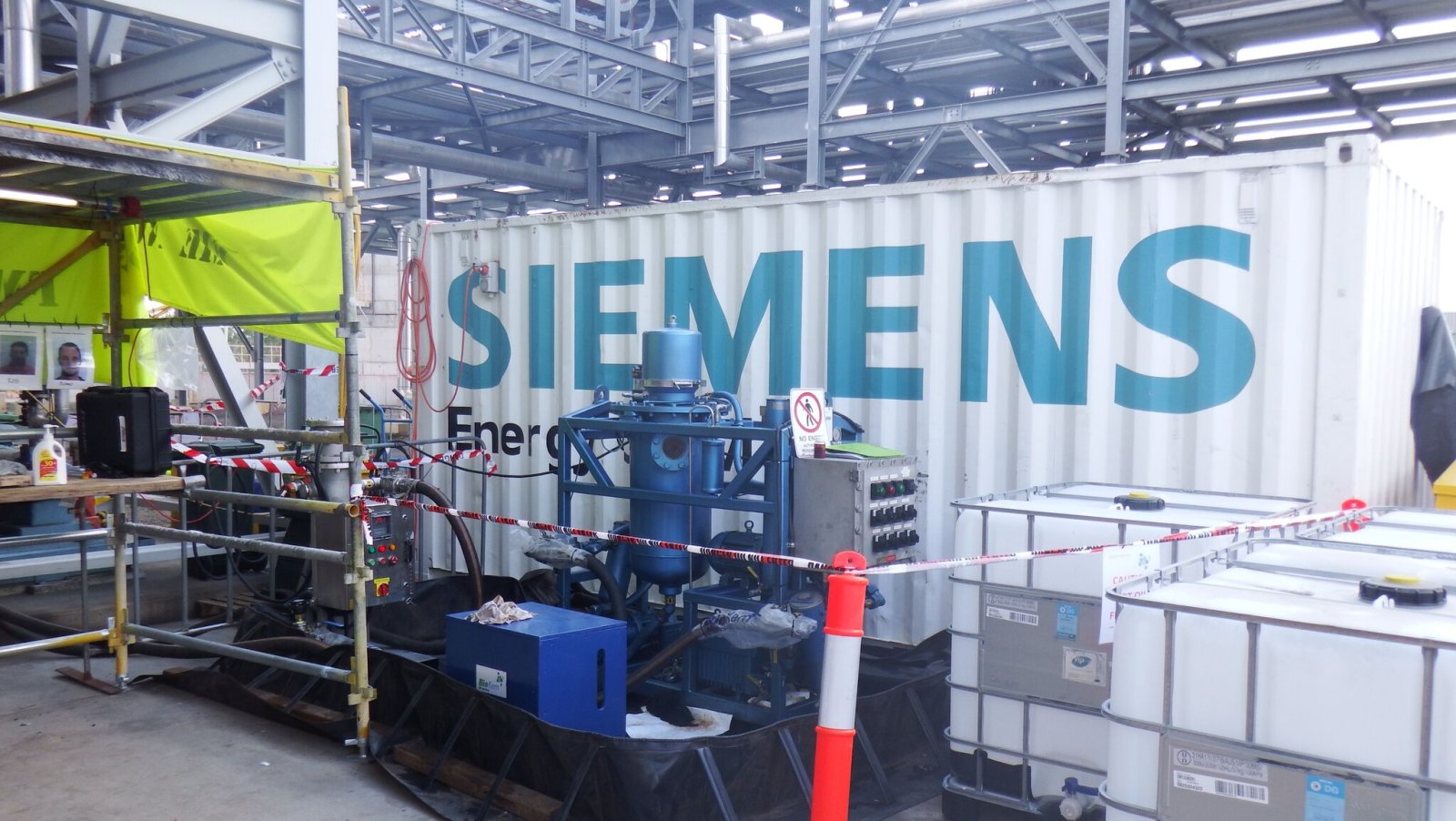
BioKem Oil Services supports lubrication decisions with oil analysis and services that address lubricant condition. Use these services when equipment findings or oil test results indicate a need for further investigation or corrective work. Oil analysis can help maintenance teams assess oil condition, while hot oil flushing, varnish mitigation and vacuum dehydration address specific lubricant or system-maintenance needs.
These services complement role-based training; they do not replace the technical knowledge required to select procedures or plan maintenance. They provide practical support when a lubrication program identifies an issue that needs oil assessment or treatment. The appropriate service depends on the equipment concern and the available findings.
For support with an oil condition or lubrication maintenance requirement, contact BioKem Oil Services.
Turn training priorities into the next planning step
Identifying the Noria qualifications that matter for lubrication planning gives your team a clear basis for development. Connect that learning to the decisions maintenance personnel make every day. Set a practical objective, such as improving how the team interprets oil condition or applies lubrication procedures, then use it to guide future training and program reviews.
As equipment needs and maintenance priorities change, revisit whether current skills still support the work. This keeps learning connected to operational decisions rather than treating certification as an endpoint. For support with lubrication-related equipment needs, contact BioKem Oil Services to discuss your requirements. A clear plan can help your team turn knowledge into more consistent maintenance practice.

Article by
James McAllister
James McAllister is an industry professional with BioKem Oil Services, specialising in lubrication reliability, oil filtration, contamination control and asset performance. Drawing on BioKem's extensive field experience across turbines, compressors, hydraulic systems and critical rotating equipment, James writes practical, insight-driven articles that help maintenance and reliability teams improve equipment performance, extend asset life and reduce operational risk.