

A visible leak, damaged hose or unusual vibration deserves attention, but approaching the equipment to investigate can create a greater hazard. Knowing the Risks and What to Check First helps you distinguish an observable warning sign from a confirmed fault without exposing workers to pressurised fluid or moving equipment. Hydraulic systems can cause serious injury, so don’t touch suspected leaks or begin intrusive checks while equipment is operating.
A clear first step is to observe from a safe position, record what has changed and follow site procedures. This safety-first checklist explains how to review signs such as leaks, heat, noise and fluid-condition changes, and when to stop and escalate to a competent person. It also explains how oil cleanliness concerns fit into a wider system assessment. When findings point to an oil issue, filtration and oil analysis can help inform follow-up.
Key Takeaways
- Separate a visible hazard from its possible consequences, then consider whether the change needs immediate assessment.
- Use the Risks and What to Check First checklist to review operating context and observe the system externally before deciding on next steps.
- Record what has changed and follow site procedures; intrusive inspection requires safe isolation and competent personnel.
- Escalate concerns according to their urgency, and treat oil cleanliness evidence as one part of the wider system assessment.
Hydraulic system risks: recognise warning signs before they escalate
A hazard is a potential source of harm, such as pressurised fluid, hot surfaces or moving plant. A consequence is what could happen, including an injection injury, burn or equipment damage. Risk depends on the likelihood and severity of harm in the specific operating context, so it needs assessment rather than assumption. This distinction makes the Risks and What to Check First more useful: an observation signals a concern, but doesn’t establish its cause or severity.
Which hydraulic system warning signs should prompt closer attention?
From a safe position, watch for fresh fluid around hoses, fittings or cylinders, unusual noise, unexpected heat, slower or less consistent movement, and changes in fluid appearance or filter indicators. A sharp pressure-related noise or sudden movement may warrant prompt attention. Hydraulic shock describes a pressure surge that can occur when fluid flow changes abruptly. Treat these signs as reasons to assess the system, not proof of a particular failure.
One symptom can flag a concern, but it cannot confirm a hydraulic fault or identify its cause. A change in equipment response, for example, may have several explanations. Consider it alongside operating conditions and other available evidence.
Keep initial observations external and non-intrusive. From a safe position, note visible leaks and changes in sound or movement. Read an indicator only if you can do so without opening guards or approaching hazardous components. Don’t touch suspected leaks or inspect parts that may be pressurised, hot or moving. Checks involving access, sampling, filters or components require the equipment to be made safe under site procedures and assessed by competent personnel.
Fluid condition also needs context. Discolouration or a filter warning can prompt further assessment, but visual appearance alone does not establish cleanliness or system health. Where oil concerns are supported by evidence, hydraulic oil filtration systems and suitable oil analysis can inform follow-up. Interpret those findings alongside equipment behaviour and operating history.
What to check first in a hydraulic system: a safe initial checklist
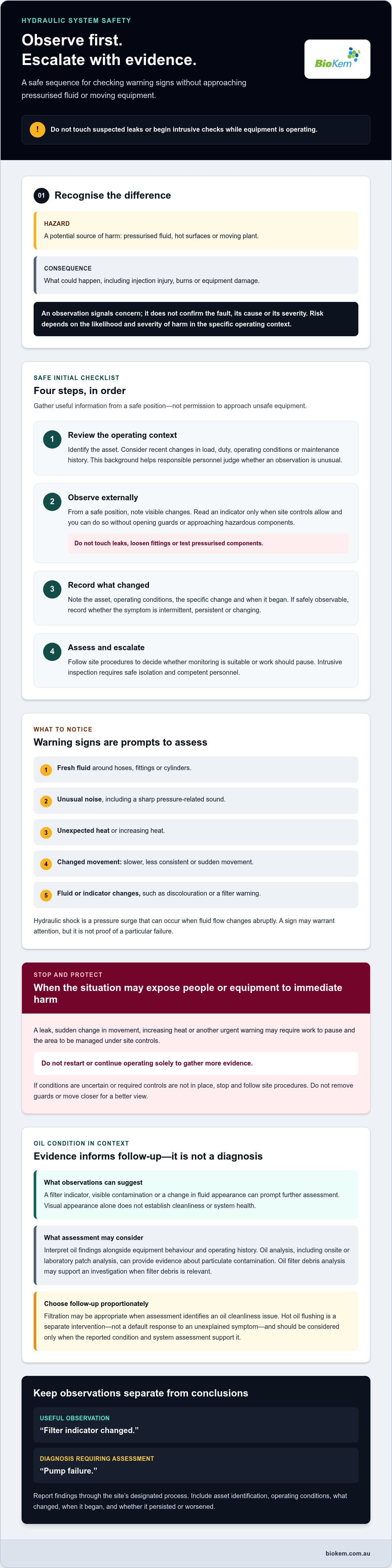
Use the Risks and What to Check First as a sequence for gathering information, not as permission to approach equipment that may be unsafe. Follow site procedures, and stop if conditions are uncertain or the required controls aren’t in place.
- Review the operating context. Identify the asset and consider recent changes in load, duty, operating conditions or maintenance history. This background helps responsible personnel assess whether an observation is unusual.
- Observe externally. From a safe position, note visible changes and read indicators only where site controls allow. Don’t touch leaks, loosen fittings or test pressurised components.
- Record what you see. Note the asset, operating conditions, the specific change and when it began. If you can observe it safely, record whether the symptom is intermittent, persistent or changing.
- Assess and escalate. Follow site procedures to determine whether monitoring is suitable or work should pause. Intrusive inspection requires safe isolation and competent personnel.
How can you check symptoms without creating additional risk?
Stay outside hazardous areas and use only observation methods permitted by site-specific controls. Don’t remove guards or move closer to operating equipment for a better view. If checking requires access, sampling or component inspection, leave it to competent personnel after the system has been isolated and made safe under site procedures. A safe initial check should gather useful information without adding exposure.
Keep oil-condition observations in context: an indicator or visible change prompts assessment but doesn’t establish a diagnosis. If findings point to an oil cleanliness concern, lubrication oil filtration may be appropriate, depending on the system evidence. BioKem Oil Services provides oil filtration services and can help assess oil-related observations alongside wider fluid reliability needs.
What to do after the first hydraulic system checks
Once you’ve recorded an observation, report it through the site’s designated process. Include the asset identification, operating conditions, what changed, when it began, and whether it has persisted or worsened. Keep observations separate from conclusions: “filter indicator changed” is useful evidence; “pump failure” is a diagnosis that needs further assessment.
Assess urgency against site procedures and the potential consequences. If a minor change is stable, responsible personnel can decide whether scheduled monitoring is suitable. A leak, sudden change in movement, increasing heat or another sign that could expose people or equipment to immediate harm may require work to pause and the area to be managed under site controls. Don’t restart or continue operating solely to gather more evidence.
When do oil filtration or specialist analysis become relevant?
Oil-condition evidence can help explain a concern, but it is only one input to system diagnosis. A filter indicator, visible contamination or change in fluid condition should be interpreted alongside operating history and equipment behaviour. BioKem’s onsite and laboratory patch analysis can provide evidence about particulate contamination. Oil filter debris analysis can also support an investigation when filter debris is relevant. Consider contamination control as part of the system’s wider reliability approach.
Filtration may be appropriate when an assessment identifies an oil cleanliness issue. Hot oil flushing is a separate intervention and should be considered only when the reported condition and system assessment support it, not as a default response to an unexplained symptom. The Risks and What to Check First should lead to proportionate follow-up based on documented observations and competent assessment, rather than an assumed cause or treatment.
Turn observations into a safer next step
A useful first check starts a decision-making process; it is not a reason to assume a fault or continue operating. Make your observations available to the people responsible for the equipment so follow-up can account for its condition and operating context. The Risks and What to Check First matter most when they lead to proportionate action and clearer reliability decisions.
BioKem provides services for hydraulic systems in fixed and mobile plant, with onsite and laboratory patch analysis available to help assess oil-related evidence as part of the wider picture.
Frequently Asked Questions
What are the most common risks in a hydraulic system?
Common risks include high-pressure fluid injection, burns from hot oil, fire, and crushing or impact injuries from moving equipment or unexpected load movement. Exposure can change during operation, maintenance or fault-finding. The Risks and What to Check First depend on the task and system, so consider who could be exposed and how the equipment is being used.
Is it safe to inspect a hydraulic system while it is operating?
Only observe operating equipment from a position and through indicators approved by site procedures. Don’t enter guarded areas, approach moving parts or perform physical checks while the system is running. If inspection requires access or contact with components, wait until competent personnel have isolated the equipment and made it safe under the site’s process.
What should I do if I find a hydraulic oil leak?
Keep clear of the leak and alert the site’s responsible personnel. Don’t use a hand or tool to locate the source: pressurised oil can penetrate skin, even when an injection wound appears small. Follow site procedures to control access and arrange an assessment. Authorised, competent personnel should handle any isolation, repair or clean-up using the required controls.
Can contaminated oil cause hydraulic system problems?
Yes. Particles in oil can contribute to component wear and interfere with close clearances, potentially affecting valves or actuator response. Contamination is a possible cause, not a diagnosis: symptoms can have other explanations. Oil analysis or patch analysis can help assess fluid evidence, while filtration may be considered when findings and system requirements support it.
Discuss your hydraulic system and oil-condition concerns with BioKem to consider an appropriate next step.

Article by
James McAllister
James McAllister is an industry professional with BioKem Oil Services, specialising in lubrication reliability, oil filtration, contamination control and asset performance. Drawing on BioKem's extensive field experience across turbines, compressors, hydraulic systems and critical rotating equipment, James writes practical, insight-driven articles that help maintenance and reliability teams improve equipment performance, extend asset life and reduce operational risk.