

When water appears in turbine oil, removing it is only part of the response. “Water in Turbine Oil: Where Is It Coming From and How Do I Remove It?” starts with two questions: how did moisture enter the system, and is it free, emulsified or dissolved?
Treatment alone may not prevent contamination from returning if the source remains. The right response depends on the water’s state, the oil’s condition and the turbine’s requirements.
This guide covers common routes for water ingress, how sampling and oil assessment can inform the investigation, and when Vacuum Dehydration (VDOPS) may be suitable. It also explains how to check results after treatment and monitor for recurrence.
Key Takeaways
- Investigate possible entry routes, including cooler leaks, condensation, seals, breathers and exposure during maintenance.
- Confirm the observation with a representative sample and assess the oil before choosing a removal method.
- Use test results, oil condition and equipment requirements to guide whether Vacuum Dehydration (VDOPS) or another treatment approach is suitable.
- Address the confirmed ingress cause, then use post-treatment sampling and condition monitoring to assess results against the applicable client or OEM specification.
Water in turbine oil: identify the likely source before treating it
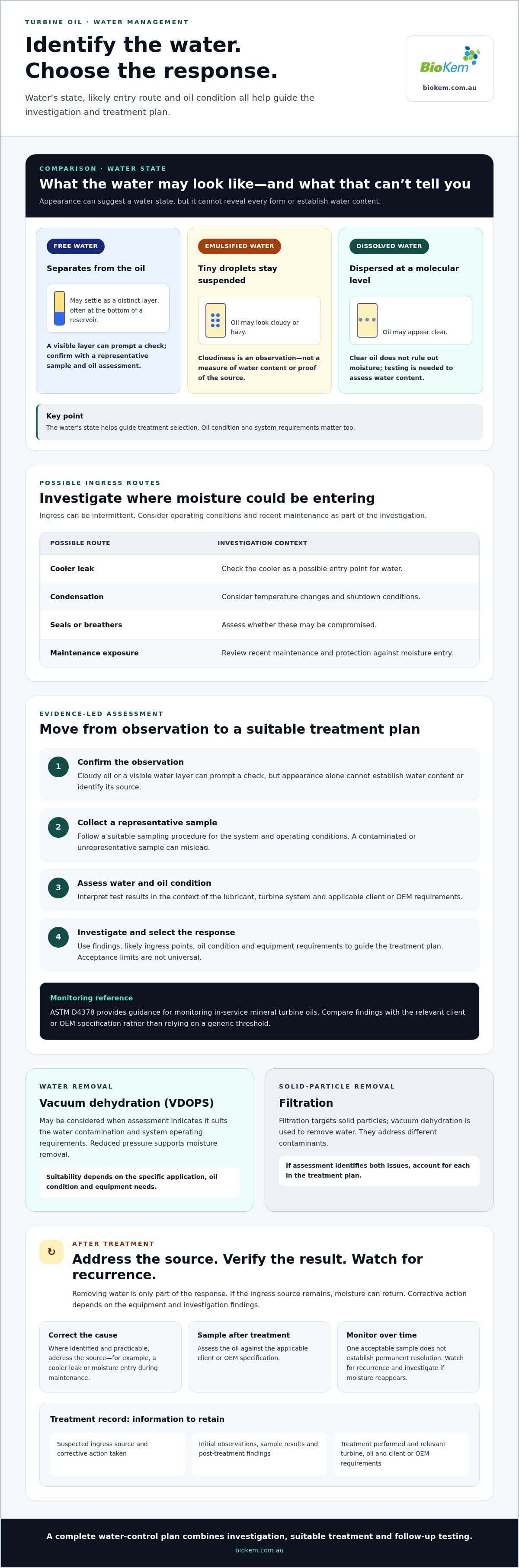
Water can enter or accumulate in turbine lubricating oil through several routes. A leaking cooler, condensation during temperature changes or shutdown, compromised seals or breathers, and exposure during maintenance are all possibilities. Because ingress can be intermittent, consider operating conditions and recent maintenance when investigating.
Cloudy oil or a visible water layer can prompt a check, but appearance alone cannot establish the water content or identify its source. Some moisture may not be visible, so use oil assessment alongside a visual inspection.
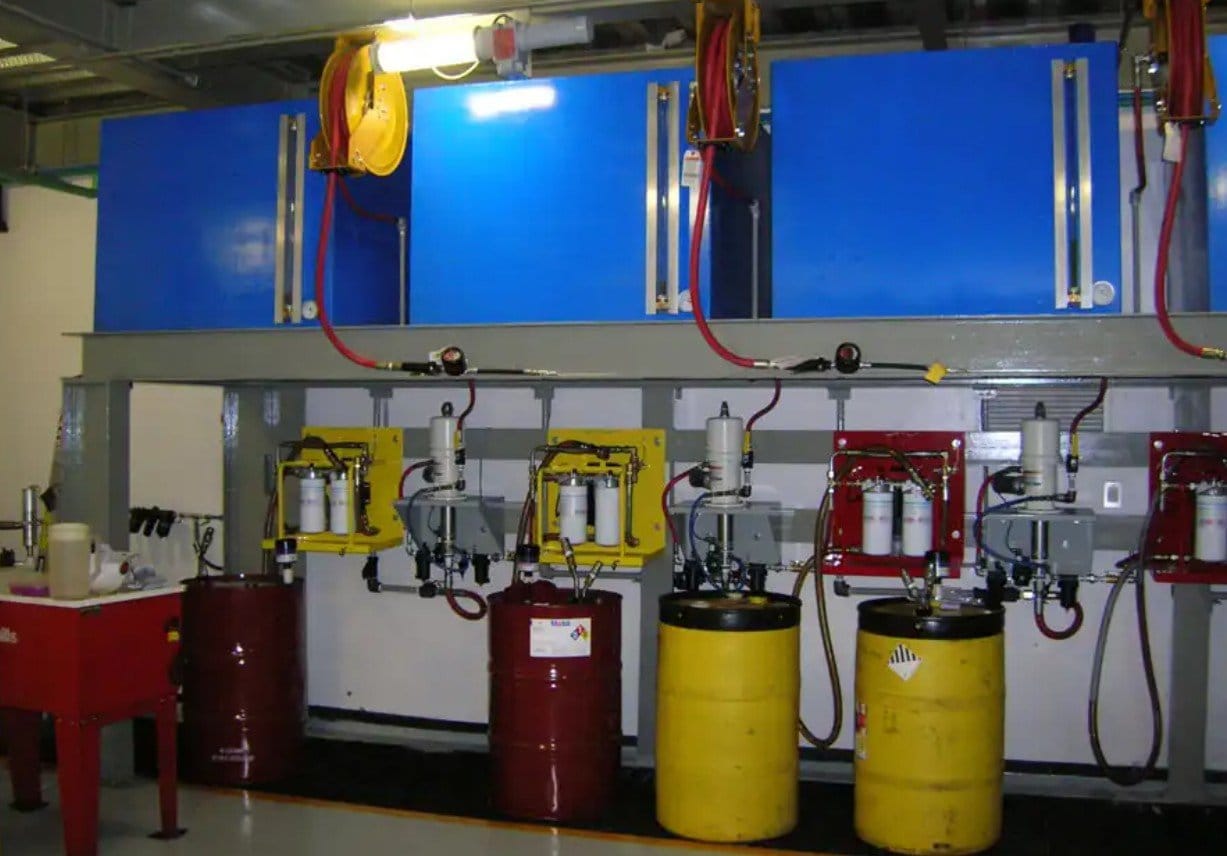
See a turbine-oil purification system in operation:
How free, emulsified, and dissolved water differ
Free water separates from the oil and may settle as a distinct layer, often at the bottom of a reservoir. Emulsified water remains suspended as tiny droplets, which can make oil look cloudy or hazy. Dissolved water is dispersed at a molecular level, so the oil may appear clear. Appearance can suggest the water’s state, but it cannot reveal every form or establish the water content.
The water’s state helps guide treatment selection. The oil’s condition and the system’s requirements matter too. For more context, explore this oil contamination control guide and this overview of oil purification techniques, including approaches used to remove contaminants from industrial oils.
How to diagnose water in turbine oil and choose a removal method
Base the response on evidence, not appearance alone. Confirm the observation, collect a representative oil sample, assess water content and oil condition, then investigate likely ingress points. Follow a suitable sampling procedure for the system and operating conditions: a contaminated or unrepresentative sample can give a misleading picture of the oil in service.
Interpret results in the context of the lubricant, turbine system and applicable client or OEM requirements. The ASTM D4378 standard practice provides guidance for monitoring in-service mineral turbine oils. Acceptance limits are not universal, so compare findings with the relevant specification rather than relying on a generic threshold.
When vacuum dehydration may be considered
Vacuum dehydration may be considered when assessment indicates that it suits the water contamination and the system’s operating requirements. The treatment uses reduced pressure to support moisture removal. Selection should also account for oil condition and equipment needs, with the process suited to the specific application.
Moisture removal and particle filtration address different contaminants. Filtration targets solid particles, while vacuum dehydration is used to remove water. If assessment identifies both issues, the treatment plan should account for each. BioKem Oil Services provides oil and fuel filtration services as well as Vacuum Dehydration (VDOPS).
For turbine-oil assessment and treatment planning, find BioKem Oil Services’ contact details.
After removing water from turbine oil: prevent recurrence and verify results
Removing water is only part of the response. If the ingress source remains, moisture can return. Where the investigation identifies a cause, address it where practicable. This may mean dealing with a cooler leak or improving protection against moisture entry during maintenance. The right corrective action depends on the equipment and findings.
After treatment, take another sample and assess the oil against the applicable client or OEM specification. Condition monitoring helps track results over time. One acceptable sample does not establish that the issue is permanently resolved, so watch for signs of recurrence and investigate if moisture reappears.
What to document after treatment
Keep a clear record to help interpret future results. Include:
- The suspected ingress source and corrective action taken.
- Initial observations, sample results and post-treatment findings.
- The treatment performed and relevant turbine, oil and client or OEM requirements.
Correcting the source and checking the result through follow-up testing provides a sound basis for managing turbine-oil reliability.
BioKem provides Vacuum Dehydration (VDOPS), Condition Monitoring and onsite and lab-based patch analysis. These services support the assessment and treatment of oil in line with equipment requirements. Explore the vacuum dehydration oil purification system or learn more about BioKem’s turbine-oil services.
Keep turbine oil reliable with a complete water-control plan
Managing water involves more than removing visible moisture. Investigate likely ingress routes, use representative sampling and testing to understand the oil’s condition, and select treatment to suit the turbine and its requirements. Addressing the confirmed source is essential too, since dehydration alone will not stop water from returning.
A complete response includes checking the results. Post-treatment sampling and condition monitoring help assess the oil against the applicable client or OEM specification and identify signs of recurrence. BioKem supports turbine-oil requirements Australia-wide with Vacuum Dehydration (VDOPS), Condition Monitoring, and onsite and lab-based patch analysis.
Discuss your turbine-oil water contamination requirements with BioKem to consider an assessment and response suited to your equipment.
Frequently Asked Questions
Can water in turbine oil damage equipment?
Water contamination can affect lubricant condition and turbine-system reliability. The specific risk depends on the amount present, whether it is free, emulsified or dissolved, the oil and the equipment. There is no single damage threshold for every turbine. Investigate the ingress source, test the oil and assess the results against the applicable client or OEM requirements.
How do I tell whether water in turbine oil is dissolved or free?
Free water may separate from the oil or appear as a visible layer, while dissolved water can be present in oil that looks clear. A visual check cannot quantify all moisture or confirm the oil’s condition. Use suitable oil testing to assess water content and inform treatment selection rather than relying on appearance alone.
Does filtration remove water from turbine oil?
Not necessarily. Particle filtration and water removal are different processes, so do not assume filtration will remove moisture. The suitable approach depends on the water’s state, oil condition and system requirements. Vacuum dehydration may be considered for water removal, but its suitability depends on the application. Investigate and address the ingress source as well, or water may return.
How can water get into a turbine lubrication system?
Possible routes include cooler leakage, condensation, seal or breather pathways, and exposure during maintenance. The cause varies with the installation and operating conditions, so do not assume a route based on appearance alone. Review system and maintenance history, inspect relevant components, and use appropriate oil assessment to help confirm whether water is present and guide the investigation.

Article by
James McAllister
James McAllister is an industry professional with BioKem Oil Services, specialising in lubrication reliability, oil filtration, contamination control and asset performance. Drawing on BioKem's extensive field experience across turbines, compressors, hydraulic systems and critical rotating equipment, James writes practical, insight-driven articles that help maintenance and reliability teams improve equipment performance, extend asset life and reduce operational risk.