

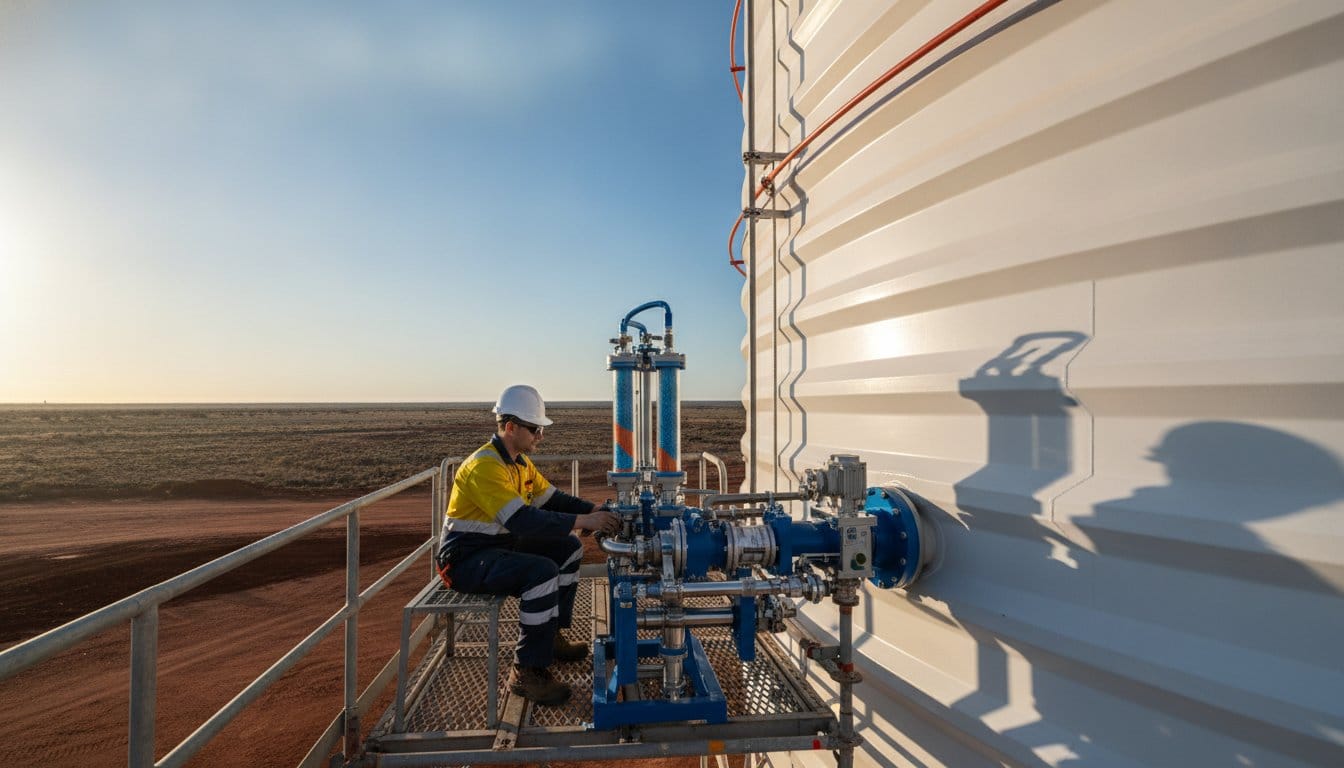
What if the greatest threat to your industrial fuel system isn’t a mechanical failure, but the very air surrounding your storage facility? Most operators assume their systems are hermetically sealed, yet moisture remains a persistent and destructive intruder. Understanding How Water Enters Industrial Fuel Storage Tanks is essential because even trace amounts of H2O can trigger catastrophic injector failures or promote the rapid spread of microbial growth, commonly known as diesel bug. These invisible pathways lead to unscheduled downtime that halts production and compromises the integrity of your critical assets.
You likely already know that keeping fuel dry is a constant battle against the elements and operational physics. With the average cost of remediating a contaminated tank system reaching approximately $154,000, the stakes for your operational budget are high. This article explores the specific mechanisms of water infiltration, from thermal cycling and atmospheric breathing to seal degradation. You’ll discover professional strategies to identify vulnerabilities in your setup and learn why advanced remediation, such as vacuum dehydration, provides a more sustainable and effective result than traditional tank draining. We will examine the technical reality of moisture saturation to help you maintain long-term asset reliability through precision filtration and proactive analysis.
Key Takeaways
- Understand why water is the primary chemical contaminant in industrial fuels and how it triggers the rapid proliferation of “diesel bug” colonies that compromise tank integrity.
- Identify the physical processes behind How Water Enters Industrial Fuel Storage Tanks, specifically through atmospheric respiration and thermal cycling during daily temperature shifts.
- Differentiate between free, emulsified, and dissolved water to better understand the specific risks each state poses to high-precision fuel injectors and pumps.
- Learn to implement proactive prevention strategies, such as using desiccant breathers and Filters S.p.A. products to strip moisture from incoming air before it reaches the fuel.
- Discover why vacuum dehydration is the industrial gold standard for total moisture removal, offering a superior alternative to basic tank draining for maintaining asset reliability.
The Critical Impact of Water Contamination in Industrial Fuel
Water is frequently dismissed as a secondary issue, yet it acts as the primary chemical contaminant in industrial fuel and lubricant systems. While solid particles cause abrasive wear, moisture initiates complex chemical reactions that fundamentally alter the fluid’s molecular properties. Understanding How Water Enters Industrial Fuel Storage Tanks is the first step in preventing a cascade of mechanical failures, ranging from pump cavitation to catastrophic turbine bearing damage. These issues don’t just affect performance; they threaten the structural integrity of the entire fuel delivery network.
Ignoring moisture accumulation creates a cycle of significant hidden costs. Component replacement and emergency repairs far exceed the investment required for proactive purification. When water exists in a system, it doesn’t just sit; it reacts, degrades, and facilitates biological life that consumes your assets from the inside out. For instance, according to industry remediation data, the average cost of cleaning up a leaking underground tank with extensive contamination is approximately $154,000, illustrating the severe financial impact of neglected storage integrity.
Chemical Degradation and Additive Depletion
Water presence triggers hydrolysis, a chemical process that breaks down essential additives such as antioxidants, detergents, and anti-wear agents. These additives are designed to protect the fuel and the machinery, but moisture renders them ineffective, leaving metal surfaces vulnerable to corrosion. Additionally, dissolved and emulsified moisture accelerates oil oxidation and promotes the formation of sticky varnish deposits that can seize valves and clog tight-tolerance components. In high-voltage applications, water is equally destructive, significantly reducing the dielectric strength of insulating oils and increasing the risk of electrical arcing. Implementing a varnish removal system becomes a critical necessity once these chemical shifts begin to manifest in the fluid.
Microbial Growth and System Blockages
The interface where fuel meets water provides a perfect breeding ground for specialized bacteria and fungi. This biological activity, often referred to as Microbial contamination of diesel fuel, leads to the rapid proliferation of “diesel bug” colonies. These organisms feed on the hydrocarbons and produce acidic byproducts that actively corrode tank walls and fuel lines, leading to localized pitting and eventual leaks.
As these microbes die and accumulate, they form a thick, gelatinous biomass or sludge. This biomass moves through the system, causing several operational failures:
- Rapid filter blinding and significantly reduced flow rates.
- Fuel injector fouling that leads to poor combustion efficiency and increased emissions.
- Complete system blockages that necessitate extensive hot oil flushing to restore operational flow.
Knowing How Water Enters Industrial Fuel Storage Tanks allows operators to stop this biological cycle before it forces an unscheduled facility shutdown. Proactive monitoring and analysis are the only ways to ensure long-term asset health in environments prone to high humidity or temperature fluctuations.
The 5 Primary Mechanisms of Water Entry
Industrial storage tanks are dynamic environments that interact constantly with their surroundings. While many operators focus on physical leaks in the tank shell, the most common pathways for moisture are often invisible and tied to the laws of physics. Understanding How Water Enters Industrial Fuel Storage Tanks requires a shift in perspective; you must view the tank as a breathing organism rather than a static container. Moisture infiltrates through atmospheric changes, physical seal failures, and even the fuel delivery process itself.
Tank Breathing and Atmospheric Respiration
The most persistent source of moisture is the expansion and contraction of the air headspace as ambient temperatures fluctuate. During the heat of the day, the air inside the tank expands and is pushed out through the vents. As temperatures drop at night, the air contracts, creating a vacuum that draws in moisture-laden ambient air from the outside environment. Atmospheric respiration is a primary moisture source for bulk storage that operates continuously without a single mechanical failure. Once this moist air is inside, it reaches its dew point against the cool metal walls of the tank, condensing into liquid water that settles at the bottom of the fuel column.
Physical seepage and ingress represent more direct vulnerabilities. Vents that lack proper shielding, degraded manway gaskets, and worn seals on floating roofs allow rainwater or wash-down water to enter the system. Managing Underground Storage Tanks threats is particularly challenging because external water pressure from high water tables can force moisture through microscopic cracks or loose fittings that would otherwise remain dry. Regular inspection of these entry points is the first line of defense against environmental contamination.
Supply Chain Contamination and Delivery Risks
The “last mile” of the fuel supply chain is a high-risk period for moisture transfer. Fuel often picks up water during transport in tankers that haven’t been properly maintained or during high-flow transfers at regional terminals. High-velocity fuel transfers are especially problematic because the resulting turbulence agitates settled water at the bottom of the delivery vehicle, suspending it into the fuel column as it is pumped into your storage. Testing fuel quality upon delivery, before it enters your main storage, is a critical step in ensuring you aren’t importing a pre-existing contamination problem.
To mitigate these risks during transfer, many facilities integrate high-performance Filters S.p.A. products to strip moisture and particulates before they can settle. Finally, human error remains a significant factor. Leaving hatches open during inspection, using contaminated sampling equipment, or failing to secure vent caps after maintenance provides an easy path for moisture. How Water Enters Industrial Fuel Storage Tanks is often a combination of these factors, requiring a multi-layered approach to prevention and monitoring.
Understanding the Three States of Water in Fuel
Water doesn’t always manifest as a distinct puddle at the base of a tank. To manage your assets effectively, you must recognize that moisture exists in three distinct physical states: free, emulsified, and dissolved. Each state presents unique challenges for filtration and asset protection. Understanding the physical transitions of moisture is as vital as knowing How Water Enters Industrial Fuel Storage Tanks in the first place.
Free water is the most visible form. It separates from the fuel due to density differences and settles at the low points of the system. While it’s the easiest to detect through manual sampling, it’s also the primary driver for microbial colonies at the fuel-water interface. Emulsified water occurs when moisture is subjected to high-shear forces, such as passing through a pump. These microscopic droplets are suspended within the fuel, giving it a cloudy appearance. Unlike free water, emulsions won’t settle out over time, making them particularly dangerous for high-pressure components.
Dissolved water is the most insidious form. Much like humidity in the air, dissolved water is chemically bound to the fuel molecules. The fuel remains clear and bright, yet it can be saturated with moisture that’s ready to precipitate as soon as conditions change.
The Saturation Point Challenge
The amount of moisture a fuel can hold in a dissolved state is defined by its saturation point. This threshold is heavily influenced by temperature; warmer fuel can hold significantly more dissolved water than cold fuel. When a tank cools overnight, the saturation point drops, and the excess moisture “falls out” as emulsified or free water. This is a critical aspect of How Water Enters Industrial Fuel Storage Tanks; the water was already present in an invisible state, only becoming a visible threat when the environment shifted. Standard centrifuges often fail to remove this dissolved moisture because they rely on density differences that don’t apply to chemically bound molecules.
Emulsification and Industrial Reliability
Modern diesel fuels often contain surfactants and bioderived components that stabilize emulsions. These additives make it increasingly difficult for water to separate naturally, leading to stable emulsions that pass through primary filters. In high-pressure common rail (HPCR) systems, these droplets cause localized steam explosions upon contact with hot injector tips, leading to pitting and premature failure. Maintaining reliability requires more than just checking for a bottom layer of water. It demands a strategy that accounts for all three states, often involving patch test kits or laboratory filter ferrogram analysis to identify the true extent of contamination before it reaches critical tolerances.

Prevention and Monitoring Strategies for Industrial Assets
Preventing moisture infiltration is significantly more cost-effective than remediating a contaminated system. While understanding How Water Enters Industrial Fuel Storage Tanks is a prerequisite for system design, implementing active barriers and monitoring protocols is what ensures long-term reliability. A robust defense strategy combines physical hardware upgrades with a rigorous schedule of sampling and analysis. These measures don’t just protect the fuel; they safeguard the high-precision components of turbines, compressors, and engines from the corrosive effects of H2O.
Desiccant Breathers and Headspace Management
The first line of defense against atmospheric moisture is the installation of high-quality desiccant breathers. These units replace standard vent caps and use silica gel or similar hygroscopic media to strip moisture from the air before it enters the tank’s headspace. As the tank “breathes” during thermal cycles, the breather ensures that only dry, clean air reaches the fuel surface. In high-humidity Australian environments, the return on investment for desiccant breathers is realized almost immediately through the significant reduction in moisture-related filter changes and injector replacements. For facility managers looking to upgrade their hardware, utilizing specialized Filters S.p.A. products provides a reliable barrier against environmental humidity.
Beyond breathers, physical maintenance of the tank structure is essential. Seals and gaskets on manways and inspection hatches must be inspected for UV degradation and mechanical wear. For larger bulk storage, floating suction lines are a critical asset; they ensure that fuel is drawn from the top of the fuel column, furthest away from any free water that may have settled at the bottom. This simple mechanical solution prevents the most contaminated fuel from ever reaching your critical machinery.
Active Monitoring and Oil Analysis
Monitoring is the only way to verify the effectiveness of your prevention strategies. Regular tank floor testing and bottom-sampling allow operators to detect free water early. However, for dissolved moisture that escapes visual detection, laboratory analysis is required. The industry standard for this is Karl Fischer titration, which provides an exact measurement of water content in parts per million (ppm). This level of precision is necessary to set “caution” and “critical” limits tailored to specific asset types; for example, a high-pressure common rail engine has a much lower tolerance for moisture than a stationary backup generator.
Real-time moisture sensors are also becoming a standard for critical turbine and hydraulic systems. These sensors provide continuous data on the water saturation level, allowing for immediate intervention if a seal fails or a delivery is contaminated. This data-driven approach predicts potential failures long before visible signs of water appear in the fuel. Establish a robust monitoring program today with professional oil analysis to protect your industrial assets from invisible moisture threats.
Industrial Remediation: Removing Water from Bulk Storage
Simple tank draining is a reactive and fundamentally incomplete solution for high-reliability industrial systems. While opening a drain valve might remove a visible layer of free water, it leaves behind the emulsified and dissolved moisture that causes the most damage to high-precision components. Because you now understand How Water Enters Industrial Fuel Storage Tanks through processes like atmospheric respiration, it’s clear that moisture is often distributed throughout the fuel column rather than just at the bottom. True remediation requires a technical approach that addresses every state of water contamination.
Coalescing filtration serves as an effective first step for the rapid removal of bulk free water. These systems use specialized media to force small water droplets to collide and form larger drops that settle out of the fuel. However, for industrial assets like turbines and compressors, coalescing alone is insufficient. It cannot address the moisture that has become chemically bound or microscopic. For these critical applications, a more sophisticated separation technology is required to restore the fuel to a safe, dry state.
The Science of Vacuum Dehydration
Vacuum dehydration stands as the industrial gold standard for removing both dissolved and emulsified water. By reducing the atmospheric pressure within a controlled vacuum chamber, the boiling point of water is lowered significantly. This allows moisture to “boil off” and be removed as vapor at temperatures well below the fuel’s flash point. This process is exceptionally safe for the chemical integrity of the fuel and its complex additive packages because it eliminates moisture without subjecting the fluid to high thermal stress. Integrating this technology with hot oil flushing and filtering ensures that the entire system, from the storage tank to the furthest delivery lines, is purged of moisture and particulate matter.
Comprehensive Tank and System Cleaning
There are instances where moisture has been present long enough to facilitate microbial growth or the formation of sticky varnish deposits. When this occurs, you must move beyond simple filtration to a full tank clean and varnish mitigation program. BioKem’s onsite services utilize advanced purification techniques to restore fuel to stringent ISO 4406 cleanliness standards. This ensures that your critical assets operate within the precise tolerances defined by the original equipment manufacturer.
In complex industrial environments, such as those requiring heat transfer systems maintenance, the remediation process must be thorough. Cleaning the tank is only half the battle; the internal surfaces of the entire network must be free of the biomass and corrosion products that water entry facilitates. By choosing professional remediation over simple draining, you protect the long-term ecological and operational health of your facility. Understanding How Water Enters Industrial Fuel Storage Tanks is the beginning of the journey, but professional remediation is what ensures the journey doesn’t end in a catastrophic asset failure.
Securing Your Industrial Fuel Integrity
Maintaining fuel reliability requires a transition from reactive draining to a proactive, science-based management strategy. Understanding How Water Enters Industrial Fuel Storage Tanks through atmospheric respiration and supply chain vulnerabilities is the foundation of this approach. By identifying the specific physical states of moisture within your system, you can implement targeted barriers like desiccant breathers and high-precision monitoring to stop contamination before it triggers a system-wide failure.
BioKem Oil Services supports your operational health as the sole Australian distributor for Filters S.p.A. high-performance hardware. For systems already facing moisture saturation, our specialized vacuum dehydration units are available for national onsite deployment to restore your assets to OEM cleanliness standards. It’s this commitment to technical excellence that ensures your critical turbines and compressors remain protected from the invisible threat of water. Take the next step in asset protection and request a technical consultation for your fuel storage reliability. Proactive fluid management is the most sustainable path to long-term industrial success.
Frequently Asked Questions
How much water in a diesel tank is too much for industrial engines?
Most industrial engine manufacturers set a maximum water limit of 200 parts per million (ppm) for diesel fuel. However, modern high-pressure common rail (HPCR) systems often require levels below 100 ppm to prevent injector damage. Any amount of visible free water at the bottom of a tank is considered a critical failure. Regular oil analysis is the only way to accurately measure these microscopic levels and ensure they remain within safe operational tolerances.
Can fuel additives completely remove water from a storage tank?
Fuel additives cannot physically remove water from a storage tank; they only change how the water interacts with the fuel. Emulsifiers suspend water droplets, while demulsifiers help water settle at the bottom for manual draining. Neither method eliminates dissolved moisture. For high-reliability systems, professional vacuum dehydration is the only effective way to remove all states of water without altering the chemical integrity of the fuel or its additive package.
What is the difference between a water separator and a coalescing filter?
A water separator typically uses centrifugal force or simple mesh screens to remove bulk free water. In contrast, a coalescing filter uses specialized media to force microscopic water droplets to merge into larger drops that then settle out of the fuel. While coalescers are more efficient at removing smaller droplets, neither technology can address dissolved moisture. This technical distinction is important when diagnosing How Water Enters Industrial Fuel Storage Tanks and selecting remediation hardware.
How often should I test my industrial fuel tank for water contamination?
You should conduct manual bottom-sampling for free water at least once a month. For critical industrial assets like turbines or compressors, quarterly laboratory oil analysis using Karl Fischer titration is the professional standard. If your facility is located in an area with high humidity or frequent temperature swings, real-time moisture sensors provide the best protection. These sensors offer continuous data, allowing you to intervene before moisture levels reach their saturation point and cause damage.
Will water in my fuel tank cause the ‘diesel bug’ to grow?
Water is the essential catalyst for microbial proliferation, commonly known as the diesel bug. These bacteria and fungi live in the water layer and feed on the hydrocarbons at the fuel-water interface. Without the presence of free or emulsified water, these organisms cannot survive or reproduce. Preventing moisture entry is the most effective way to stop the formation of biomass sludge that clogs filters and corrodes the internal surfaces of your storage system.
What happens if I ignore dissolved water in my turbine oil?
Ignoring dissolved water leads to accelerated oil oxidation and the depletion of critical anti-wear additives. As the oil degrades, it forms varnish deposits that can seize control valves and cause catastrophic bearing failure. Even if the oil appears clear, dissolved moisture remains a chemical threat that reduces the lubricating film strength. Implementing regular vacuum dehydration is a sustainable way to maintain turbine reliability and prevent the long-term ecological impact of premature oil disposal.
Is it possible to remove water from fuel without draining the entire tank?
It is entirely possible to remove water without draining the tank by using onsite vacuum dehydration or high-performance coalescing filtration. These systems operate in a kidney-loop configuration, drawing fuel from the tank, stripping all states of moisture, and returning the clean, dry fuel to the system. This process is highly efficient and eliminates the need for costly fuel disposal or hazardous waste transport, making it the preferred choice for maintaining asset reliability.
How do desiccant breathers help prevent water entry in bulk storage?
Desiccant breathers replace standard vent caps to strip moisture and particulates from the air as the tank breathes during thermal cycles. When the headspace air cools and contracts, it pulls ambient air through the silica gel media, ensuring only dry air enters the system. This is a primary defense mechanism when considering How Water Enters Industrial Fuel Storage Tanks, as it prevents atmospheric humidity from reaching its dew point inside the tank and condensing.