

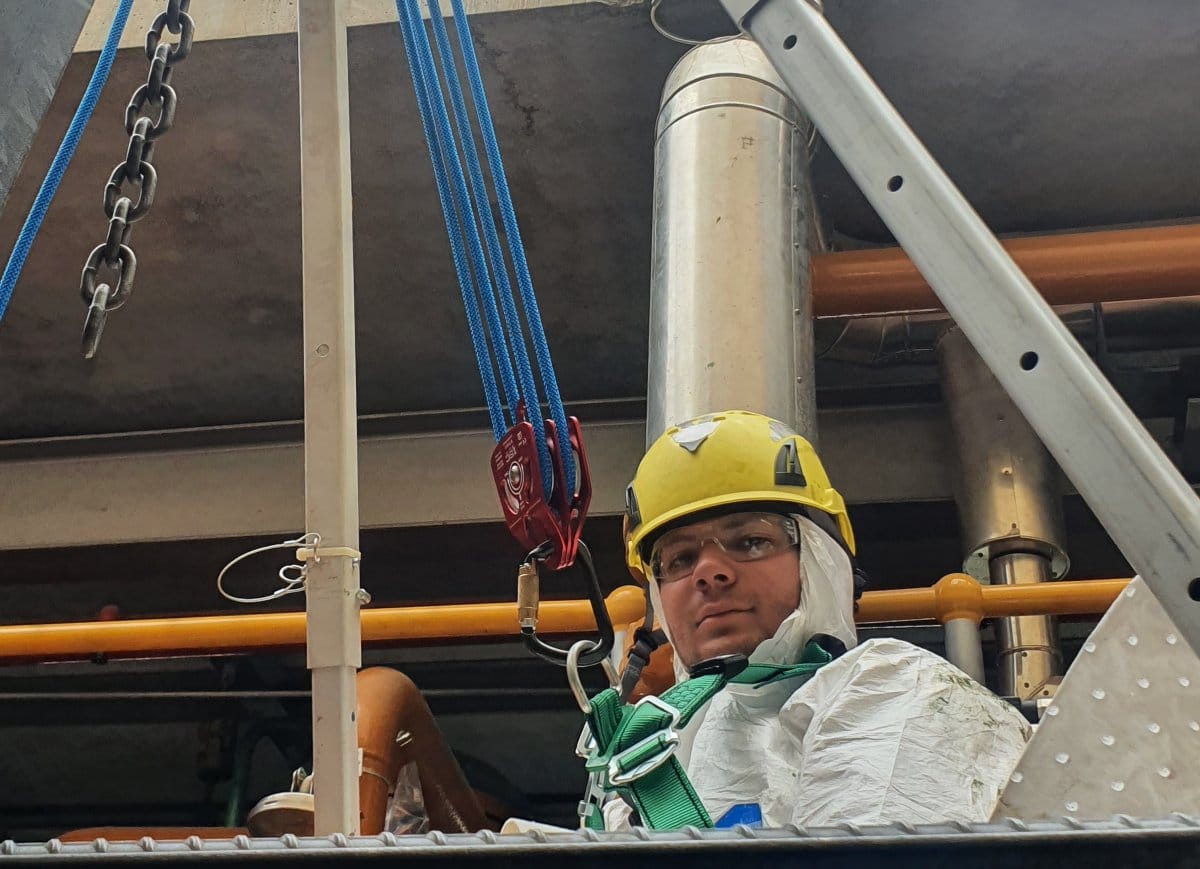
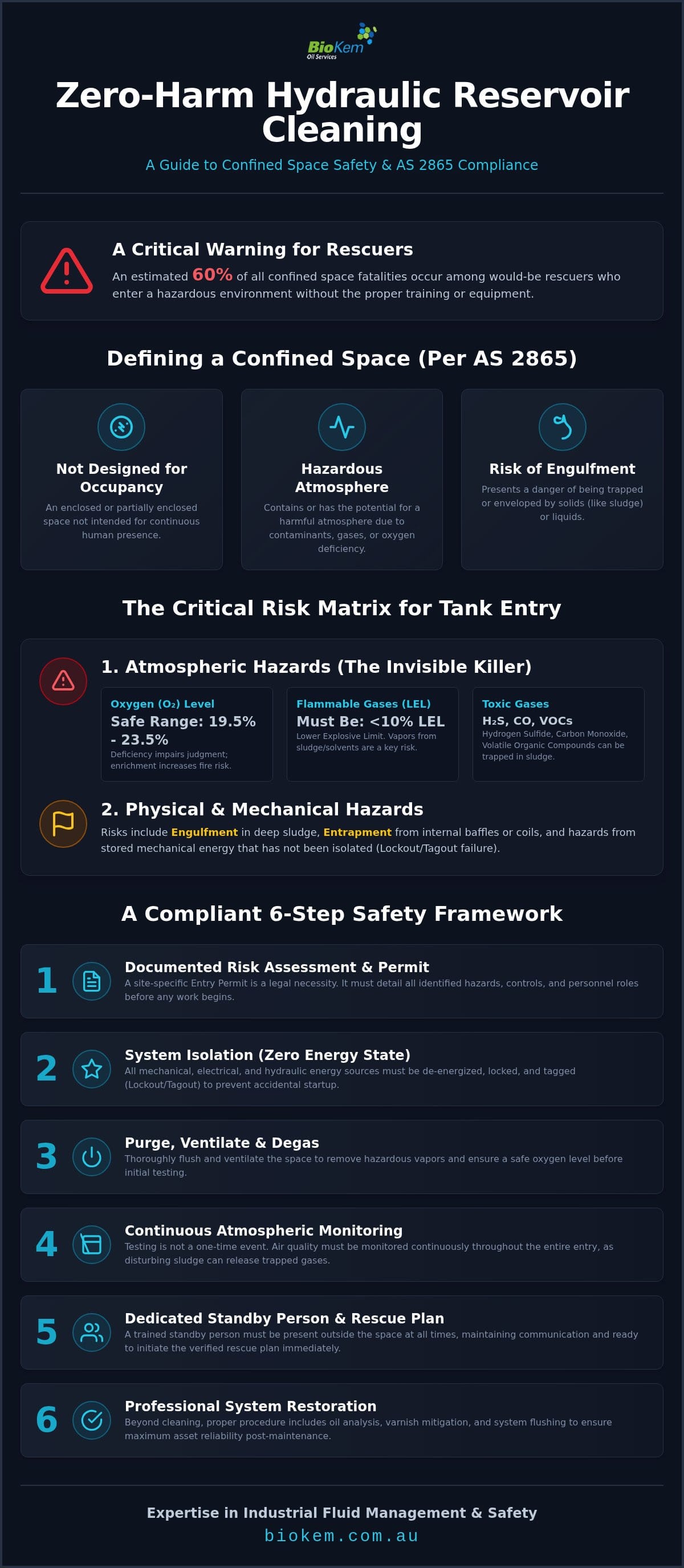
Approximately 60% of confined space fatalities occur among would-be rescuers who lack the specialized training or equipment to manage an emergency. In the high-pressure environment of Australian industrial maintenance, a single lapse during a hydraulic reservoir cleaning procedure can turn a routine service window into a tragic site event. It’s a sobering reality that underscores why safety isn’t just a checkbox; it’s the foundation of technical excellence. You likely find that managing residual chemical hazards in oil systems while staying compliant with AS 2865 is becoming increasingly complex as standards evolve and environmental expectations rise.
We’re committed to helping you bridge the gap between rigorous safety and maximum asset reliability. This 2026 guide outlines the essential protocols and regulatory updates, including the latest GHS Revision 7 requirements, to ensure your operations remain zero-harm. We’ll examine the critical steps for atmospheric testing, the role of specialized equipment hire in risk mitigation, and how to achieve a restored oil system cleanliness that meets the highest standards. By the end of this article, you’ll have a clear, logical strategy to navigate the complexities of tank maintenance with quiet confidence and professional authority.
Key Takeaways
- Align your maintenance windows with current Australian safety frameworks, specifically AS 2865, to ensure full regulatory compliance.
- Discover the technical sequence of a compliant hydraulic reservoir cleaning procedure, prioritizing atmospheric safety and hazard isolation.
- Master the critical risk matrix to identify and mitigate oxygen deficiency, toxic gases, and mechanical energy hazards before entry.
- Define the essential administrative controls, including the legal necessity of entry permits and the vital role of the Standby Person.
- Explore how integrating professional oil analysis and varnish mitigation transforms routine cleaning into a strategic asset reliability investment.
Defining Confined Space Hazards in Industrial Oil Reservoirs
Industrial oil reservoirs are often underestimated in safety planning because they lack the obvious toxicity of chemical vats or the drowning risk of large-scale water tanks. However, Defining a Confined Space involves more than just physical dimensions or restricted access. Under the Australian Standard AS 2865, a confined space is any enclosed or partially enclosed area not intended for human occupancy where the atmosphere may be hazardous or where there’s a risk of engulfment. For a technician performing a hydraulic reservoir cleaning procedure, this definition extends beyond the primary tank to include associated sumps, pits, and large gearbox housings that can trap stagnant, heavy gases.
The Legal Definition and AS 2865 Standards
The AS 2865:2009 standard remains the mandatory benchmark for Australian industry. It requires a rigorous hierarchy of controls that starts with attempting to eliminate the need for entry altogether. Employers and contractors share a joint responsibility to ensure no worker crosses the threshold until a site-specific risk assessment is documented. You can’t rely on a generic permit for these tasks. Every reservoir has unique internal geometry and residual chemistry that dictates the safety protocol. If the cleaning requires human entry, the standard mandates a dedicated standby person and a verified rescue plan. Ignoring these administrative controls doesn’t just risk safety; it exposes the business to significant legal liability under national Work Health and Safety (WHS) laws.
Why Oil Systems Require Specialized Safety
Industrial oil tanks present unique atmospheric challenges that water storage facilities don’t encounter. Residual lubricants and accumulated sludge are not inert materials. Over time, thermal degradation and oxidation lead to the formation of varnish. This sticky byproduct can off-gas volatile organic compounds (VOCs) when the surface is disturbed during a hydraulic reservoir cleaning procedure. These vapours can quickly displace oxygen or reach flammable concentrations, even in tanks that have been drained.
A tank that appears empty can still harbour pockets of toxic gases within the sludge layers. This makes professional varnish mitigation and oil analysis essential precursors to any manual entry. A compliant procedure must account for these hidden risks by incorporating thorough degassing and continuous atmospheric monitoring. While some facilities attempt manual cleaning to manage costs, the high incident rate in confined spaces suggests that technical expertise and specialized equipment are the only reliable ways to ensure a zero-harm maintenance window.
The Critical Risk Matrix for Tank Entry and Cleaning
A successful hydraulic reservoir cleaning procedure requires more than just mechanical skill; it demands a comprehensive understanding of the risk matrix associated with confined spaces. While many operators focus on the immediate physical task, the most significant threats are often invisible. Atmospheric hazards represent the leading cause of fatalities in these environments. These include oxygen deficiency, which can occur as oil oxidizes and consumes oxygen in the headspace, or the buildup of toxic gases like hydrogen sulfide and carbon monoxide that settle in low points of the system.
Beyond the air quality, physical and chemical hazards present constant variables. Engulfment is a genuine concern in large reservoirs where deep layers of sludge can trap a technician. Entrapment risks are also high due to internal baffles and cooling coils that restrict movement. From a chemical perspective, residual fluids and reactive sludge can release volatile organic compounds (VOCs) when agitated. This is why following global safety benchmarks, such as OSHA confined space standards, is critical for establishing a baseline for safety, even when operating under Australian AS 2865 protocols.
Atmospheric Monitoring and Gas Testing
Testing is not a one-off event. It’s a continuous requirement throughout the maintenance window. Before any entry, technicians must verify that the Lower Explosive Limit (LEL) is below 10% and oxygen levels are between 19.5% and 23.5%. However, air quality can shift as cleaning progresses and sediment is disturbed. Using advanced diagnostic tools like the Particle Pal range provides essential context for fluid health, helping identify the presence of contaminants that might lead to off-gassing. If you’re unsure about your site’s specific hazards, consulting with a specialist for technical oil analysis can provide the necessary data to proceed safely.
Isolation and Energy Control (LOTO)
Mechanical energy is the final piece of the risk matrix. Lock-out Tag-out (LOTO) procedures are non-negotiable for every pump, agitator, and valve connected to the reservoir. It’s not enough to simply turn off a switch. Every energy source must be physically isolated and tagged. We always recommend the ‘try-start’ method: attempting to activate the equipment after isolation to verify that no residual energy remains. This ensures a zero-energy state before a technician enters the space, preventing accidental activation that could lead to catastrophic injury. Environmental factors like heat stress and noise amplification within the metal housing also require mitigation to ensure the technician remains alert and capable throughout the procedure.
Regulatory Compliance: Permits and Administrative Controls
Compliance with Australian safety standards isn’t just about avoiding a fine; it’s about establishing a rigorous framework where safety is the prerequisite for technical precision. The administrative controls for a hydraulic reservoir cleaning procedure serve as the legal and operational guardrails for the entire project. Under AS 2865, these controls ensure that every variable is accounted for before a single bolt is turned. This starts with the formal appointment of a Competent Person to oversee the risk assessment and ends with a detailed post-entry debriefing that feeds into your site safety audits. In the high-stakes environment of heavy industry, these documents are your primary defense against workplace fatalities.
Central to this framework is the role of the Standby Person, often referred to as the ‘Hole Watch.’ This individual’s duties are strictly defined: they must remain outside the space, maintain constant communication with those inside, and initiate emergency protocols if required. They don’t perform other tasks that could distract them from their primary responsibility. Furthermore, as of 2026, training requirements have become more stringent, requiring all personnel to be familiar with the latest GHS Revision 7 updates for chemical labeling and Safety Data Sheets (SDS). This ensures that every team member understands the specific toxicological risks of the residual fluids they’re handling.
The Entry Permit System
The Confined Space Entry Permit is a non-negotiable legal document that serves as a checklist for safety. It must detail the specific hazards identified, the isolation points confirmed through LOTO, and the results of the initial atmospheric testing. These permits aren’t open-ended; they’re typically valid only for the duration of a shift or a specific task. If conditions change or the work is suspended, the permit must be re-evaluated. Integrating these permits into a broader hot oil flushing and filtering program ensures that safety protocols and technical maintenance goals remain perfectly aligned.
Specialized PPE for Oil Tank Cleaning
Standard personal protective equipment is rarely sufficient for the unique challenges of oil-saturated environments. When executing a hydraulic reservoir cleaning procedure, technicians require chemical-resistant suits and gloves that won’t degrade when exposed to synthetic or mineral oils. Respiratory protection is equally vital. Depending on the VOC levels detected during monitoring, this may involve supplied-air respirators or Self-Contained Breathing Apparatus (SCBA) to ensure a clean air supply. Because visibility is often poor and noise levels are amplified within metal tanks, we also utilize specialized intrinsically safe communication systems to maintain a constant link between the technician and the standby person.
Step-by-Step Safety Procedures for Confined Space Entry
Executing a hydraulic reservoir cleaning procedure requires a transition from administrative planning to physical precision. Before the tank is opened, the exterior must be cleaned and the perimeter secured with physical barriers to prevent unauthorized access. This initial housekeeping ensures that no external debris enters the system during the maintenance window. Once the site is prepared, the focus shifts to atmospheric preparation, where the air inside the vessel is exchanged or treated to meet the safety thresholds required under AS 2865. This stage is the most critical link between a safe entry and a potential incident.
Ventilation and Purging Techniques
Atmospheric preparation relies on two primary methods: purging and ventilation. Purging involves using an inert gas to displace flammable or reactive vapours before air is introduced. This is a vital step when dealing with degraded oils that have released volatile organic compounds (VOCs). Once the atmosphere is stable, continuous ventilation is required throughout the work duration. We distinguish between dilution ventilation, which provides a steady flow of fresh air, and local exhaust ventilation, which removes contaminants at the source. It’s vital to position fans to eliminate dead spots, especially in the corners of rectangular reservoirs or behind internal baffles where heavy gases tend to settle.
Safe Cleaning Methods for Oil Reservoirs
Entry and execution demand a disciplined approach to tool selection and movement. Only non-sparking tools and intrinsically safe, low-voltage lighting should be permitted inside the tank to eliminate ignition sources. Technicians must manage sludge removal carefully; disturbing these layers can release trapped gases, necessitating constant gas monitoring. This manual phase is often the precursor to more advanced technical restoration. For example, preparing the internal surfaces for hot oil flushing ensures that the subsequent fluid purification is as effective as possible. If your facility lacks the specialized gear required for these high-risk environments, consider utilizing our industrial equipment hire for compliant safety and filtration tools.
The procedure concludes with a formal exit protocol. This isn’t merely a headcount. It’s an accounting of all tools, rags, and equipment to prevent Foreign Object Debris (FOD) from remaining in the system. Only after the supervisor confirms the tank is empty and all personnel are safe can the permit be closed and the system returned to service. This structured flow ensures that technical cleanliness never comes at the expense of human safety, reflecting our commitment to zero-harm operations and asset reliability.
Professional System Restoration: Beyond Manual Cleaning
Manual cleaning is a critical baseline, but true restoration goes beyond simply removing visible sludge. A professional hydraulic reservoir cleaning procedure is a strategic investment in the long-term reliability of your industrial infrastructure. At BioKem, we view the process as a transition from mere regulatory compliance to proactive asset management. By addressing the chemistry of the entire system alongside physical debris, we prevent the rapid re-contamination that often follows basic manual intervention. This holistic approach incorporates varnish mitigation to eliminate the sub-micron contaminants and sticky residues that manual scrubbing cannot reach, ensuring your surfaces are chemically clean.
Integrating Safety with Oil Cleanliness
Restoring a tank is only effective if the rest of the fluid circuit is equally clean. We advocate for moving from a ‘clean tank’ mindset to a ‘clean system’ philosophy. This is achieved through hot oil flushing, which utilizes high-velocity, turbulent flow to dislodge contaminants from internal pipework and remote components. Once the physical cleaning is complete, we utilize rigorous oil analysis to verify that the system health meets or exceeds ISO 4406 cleanliness standards. This data-driven approach provides the transparency needed for stakeholders to confirm that the maintenance window has achieved its technical objectives without incident. BioKem’s national presence allows us to deploy these specialized services across Australian industrial sites, ensuring local expertise is always available to solve regional challenges.
Specialized Equipment for Industrial Sites
For sites that manage their own safety protocols but require high-performance hardware, we offer comprehensive equipment hire options. This includes access to Filters S.p.A. products, which are engineered for the most demanding industrial environments found in Australian mining, oil, and power generation sectors. Our rental fleet provides immediate access to vacuum dehydration units, which are essential for removing dissolved water that can lead to rapid oil oxidation and component corrosion. We also provide specialist oil filters that maintain fluid integrity over the long term, reducing the frequency of oil changes and the associated environmental waste.
Beyond hardware, we provide technical consulting on complex tank designs and maintenance access, helping you optimize your hydraulic reservoir cleaning procedure for future cycles. This combination of local regulatory knowledge and global technical standards ensures your oil systems operate at peak efficiency with a minimized ecological footprint. By choosing a partner that understands both the safety risks and the technical requirements of oil systems, you turn a high-risk maintenance task into a reliable operational result.
Securing Future Operational Reliability
Adhering to a rigorous hydraulic reservoir cleaning procedure is no longer just a regulatory obligation; it’s a strategic choice for businesses that value human safety and asset longevity. By mastering the risk matrix of AS 2865 and integrating administrative controls like the entry permit system, you ensure that every maintenance window remains a zero-harm event. We’ve explored how moving beyond manual cleaning to include hot oil flushing and varnish mitigation creates a chemically clean system that prevents rapid re-contamination. This holistic approach ensures your industrial oil systems operate at peak efficiency while meeting the stringent environmental standards of 2026.
As the sole Australian distributor for Filters S.p.A. and experts in vacuum dehydration and oil analysis, BioKem is your partner in solving complex fluid challenges. Whether you need comprehensive on-site services or specialized equipment hire to manage your own safety protocols, our technical expertise provides the quiet confidence your operations require. It’s time to elevate your maintenance standards and protect your most valuable assets. Contact BioKem for Professional Tank Cleaning and Oil Services today to discuss your next system restoration project. We look forward to helping you achieve a cleaner, safer, and more reliable industrial future.
Frequently Asked Questions
What is the Australian Standard for confined space tank cleaning?
AS 2865:2009 is the current Australian Standard that governs all work in confined spaces. This standard outlines the mandatory requirements for risk assessments, entry permits, and atmospheric monitoring. It serves as the primary safety framework for any industrial maintenance activity where restricted access or hazardous atmospheres are present, ensuring that every operation meets national compliance benchmarks.
Do I need a standby person for every tank entry?
Yes, a dedicated standby person is a mandatory requirement for all permit-required confined space entries under Australian law. This individual must remain outside the space at all times to monitor the safety of the entrants and initiate emergency protocols if required. They can’t perform other tasks that would distract them from their primary duty of maintaining a constant communication link with the team inside.
How often should gas testing be performed during cleaning?
Gas testing must be performed continuously throughout the duration of the work. While an initial test is required for permit sign-off, atmospheric conditions can change rapidly as sludge is disturbed or ventilation patterns shift. Continuous monitoring ensures that any spikes in volatile organic compounds or drops in oxygen levels are detected immediately, allowing for a safe and timely evacuation if thresholds are breached.
Can I use a standard respirator for oil tank cleaning?
No, a standard particulate respirator is insufficient for protecting against the volatile organic compounds (VOCs) found in oil reservoirs. Technicians require specialized respiratory protection, such as chemical-cartridge respirators or supplied-air systems, depending on the concentration of vapours. The choice of equipment must be based on the specific chemical profile of the residual fluids and the results of the atmospheric risk assessment.
What are the specific hazards of varnish in oil tanks?
Varnish presents both a technical and a safety hazard because it is a sticky, oxidized byproduct that can trap toxic gases. When disturbed during a hydraulic reservoir cleaning procedure, these deposits can release concentrated vapours that displace breathable air. Additionally, varnish acts as a catalyst for further oil degradation, making its removal essential for both system health and technician safety.
What happens if a worker becomes incapacitated inside a tank?
The standby person must immediately initiate the pre-planned rescue procedure without entering the space themselves. This typically involves using non-entry rescue equipment like tripods and recovery winches to extract the worker safely. Rescuers should only enter the tank if they are specifically trained, equipped with self-contained breathing apparatus, and supported by a secondary standby team as part of a formal, documented rescue plan.
Is a confined space permit required for a tank with the lid off?
Yes, removing the lid doesn’t automatically reclassify a vessel as a non-confined space. If the tank’s geometry still restricts natural ventilation or poses a risk of engulfment or atmospheric hazards, it remains a confined space under AS 2865. A formal risk assessment is the only way to determine if the hazards have been sufficiently mitigated to waive the permit requirements for the duration of the work.
How does hot oil flushing differ from manual tank cleaning?
Manual cleaning focuses on removing visible debris from the reservoir, whereas hot oil flushing cleans the entire fluid circuit, including pipework and valves. While a hydraulic reservoir cleaning procedure addresses the primary storage vessel, flushing uses high-velocity turbulent flow to dislodge contaminants that manual scrubbing can’t reach. Combining both methods is the only way to ensure the entire system achieves high-level ISO cleanliness standards.