

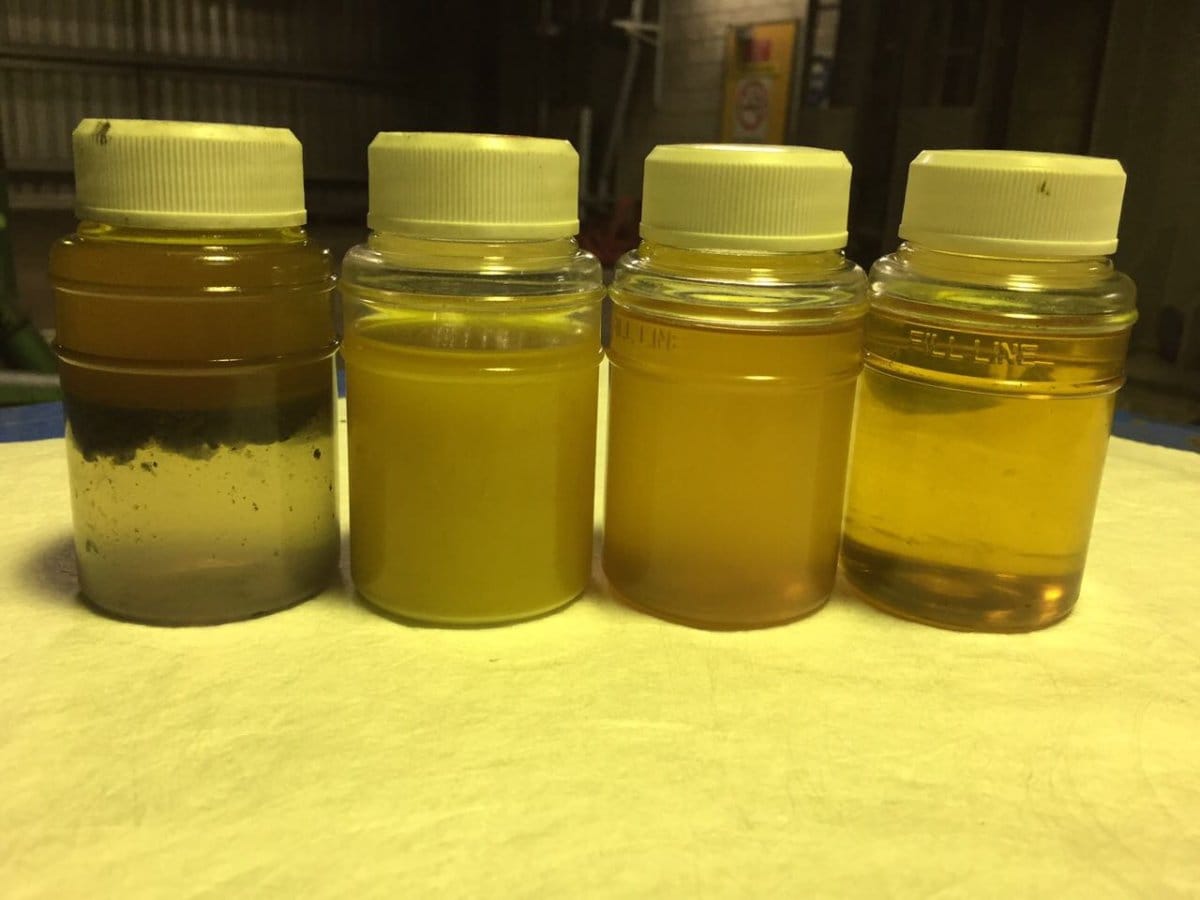
You might think a biocide is the silver bullet for the thick slime in your reservoir, but you cannot simply kill your way out of a biological infestation. Lube Oil Microbial Contamination – the bug is fundamentally a mechanical problem disguised as a biological one. If you’re currently battling rapid filter plugging, sticking valves, or the pungent scent of rotten eggs near your oil reservoirs, you’re seeing the results of microbes that have become metabolically active in trace amounts of water.
It’s a common misconception that turbine systems are too dry to support life. However, recent industry guidelines like ASTM D8506-23 emphasize that even minimal moisture leads to significant biodeterioration and out-of-specification oil. This article teaches you how to identify these contaminants, restore your oil’s chemical health, and prevent future growth. We will preview a proactive strategy that moves beyond synthetic interventions to focus on mechanical remediation, including tank cleaning and hot oil flushing, to ensure your system remains compliant with the latest ASTM D6439-23 standards and avoids catastrophic equipment failure.
Key Takeaways
- Identify the three primary bacterial culprits—SRB, GAB, and APB—to understand the specific chemical threats to your industrial lubricants.
- Recognize how Lube Oil Microbial Contamination – the bug alters oil viscosity and triggers microbiologically influenced corrosion (MIC) on internal components.
- Evaluate why mechanical remediation like hot oil flushing is essential for removing the resilient biofilms that biocides cannot fully eliminate.
- Implement a proactive prevention strategy using vacuum dehydration to remove the moisture required for microbial metabolism.
Understanding Lube Oil Microbial Contamination: The “Bug” Explained
Lube Oil Microbial Contamination – the bug refers to the proliferation of microscopic organisms within industrial lubrication systems. While we often view oil as a sterile, harsh environment, it actually provides a perfect habitat for specialized bacteria and fungi. These organisms don’t just survive; they thrive by metabolizing the hydrocarbons and chemical additives found in modern lubricants. It’s a living ecosystem that can quickly overwhelm your system’s filtration capacity.
To better understand how these oil-eating organisms function at a microscopic level, watch this helpful video:
This biological activity is fueled by the very chemistry designed to protect your machinery. Modern oil formulations often contain high concentrations of nitrogen and phosphorus. While these elements serve as essential anti-wear or extreme pressure additives, they also act as high-energy nutrients for microbial colonies. When temperatures stabilize between 25°C and 50°C, your reservoir effectively becomes a bioreactor. Identifying these threats early through professional oil analysis is the first step in maintaining system integrity.
The Biological Players: SRB, GAB, and APB
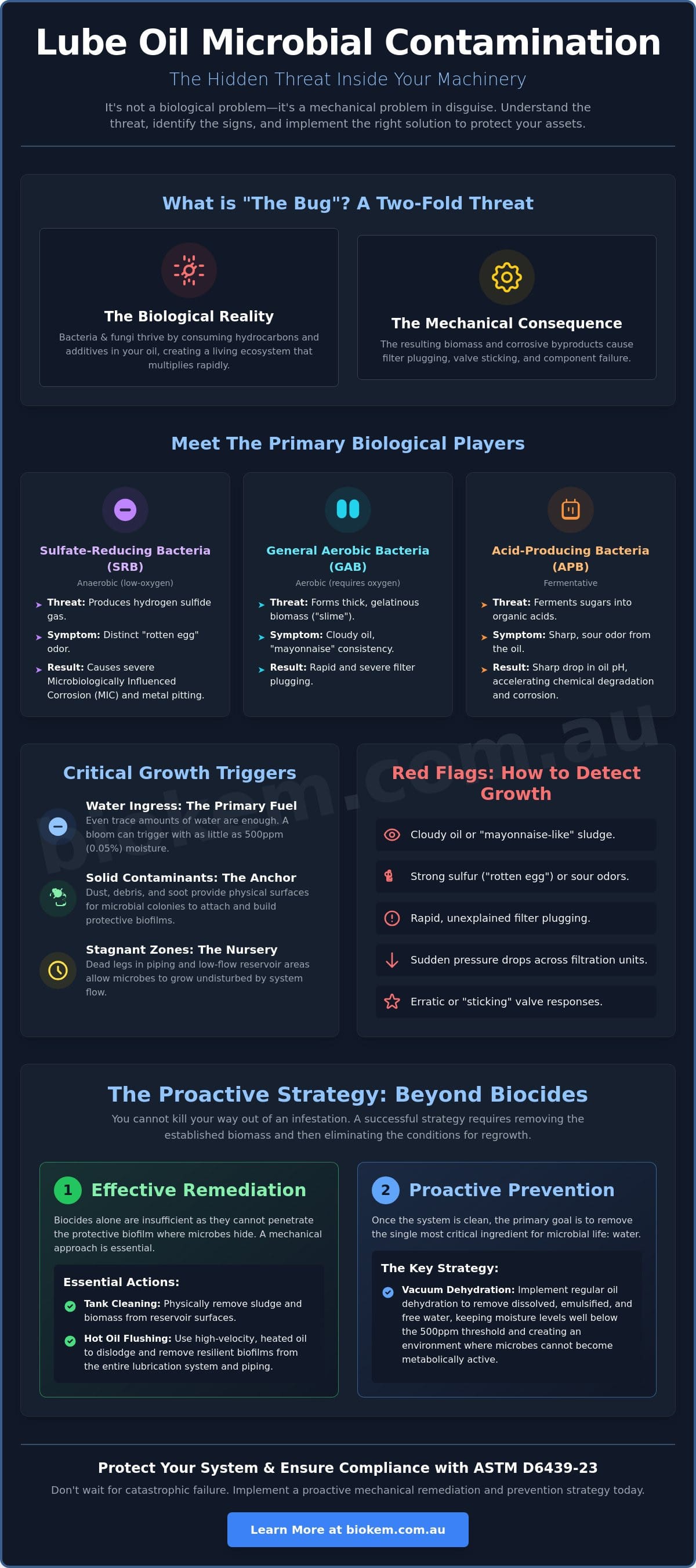
The ecosystem within a contaminated system is usually comprised of three primary groups. Sulfate-Reducing Bacteria (SRB) are arguably the most destructive. These anaerobic organisms thrive in low-oxygen environments, such as underneath existing sludge layers. They produce hydrogen sulfide gas, which creates a distinct “rotten egg” odor and leads to Microbiologically Influenced Corrosion (MIC). This process results in rapid metal pitting that can breach tank walls or damage precision bearings.
General Aerobic Bacteria (GAB) represent the visible face of the infestation. These require oxygen and are responsible for the thick, gelatinous biomass or “slime” that plugs filters. Finally, Acid-Producing Bacteria (APB) ferment sugars and alcohols into organic acids. This activity causes a sharp drop in the oil’s pH, accelerating chemical degradation and compromising the oil’s ability to protect metal surfaces.
Conditions That Promote “The Bug”
Microbial growth requires a specific set of environmental triggers, with water ingress being the most critical factor. Even a concentration as low as 500ppm, which is often invisible to the naked eye, is sufficient to trigger a massive bloom. Water provides the essential medium for metabolic processes and allows microbes to transport nutrients across cell membranes. Without moisture, the microbes remain dormant.
Solid contaminants also play a vital role through particulate nucleation. Dust, wear debris, and soot provide the physical “anchors” where colonies can attach and begin building protective biofilms. Once established, these colonies migrate to stagnant zones. Dead legs in piping and low-flow areas in large reservoirs serve as nurseries where Lube Oil Microbial Contamination – the bug can grow undisturbed by the high-velocity flow of the main system.
Identifying the Symptoms: How to Detect Microbial Growth
Detecting Lube Oil Microbial Contamination – the bug requires a combination of sensory observation and analytical data. It’s not always a hidden threat. Often, the first signs are visible in the reservoir or on a dipstick during routine inspections. If the oil appears cloudy or has a thick, “mayonnaise-like” consistency, you’re likely looking at an advanced infestation. These visual cues are often accompanied by a distinct olfactory signature. A strong sulfur or “rotten egg” smell indicates active Sulfate-Reducing Bacteria (SRB), while a sharp, sour odor suggests Acid-Producing Bacteria (APB) are fermenting the oil’s hydrocarbons.
Mechanical symptoms often manifest before the oil’s chemical health completely fails. You might notice sudden, unexplained pressure drops across your filtration units. If your maintenance team is replacing filters at an accelerated rate due to rapid plugging, the culprit is frequently biomass rather than inorganic particulate. Erratic valve response or “sticking” in hydraulic circuits can also signal that the bug’s gelatinous secretions are interfering with precision tolerances. These operational disruptions aren’t just inconveniences; they’re precursors to system failure.
Onsite vs. Laboratory Detection
While laboratory confirmation is the gold standard for compliance, waiting for a remote report can be costly in terms of equipment wear. Technicians can achieve rapid field assessment using Patch Test Kits. By drawing a small oil sample through a specialized membrane, you can visually identify biomass and sludge that wouldn’t appear in a standard particle count. The BioKem Oil Services approach bridges the gap between suspicion and action, allowing for immediate intervention based on visible evidence of contamination.
For a definitive diagnosis, a Filter Ferrogram Analysis provides a microscopic view of the contaminants. This specialized laboratory test distinguishes between metallic wear debris and organic matter, identifying fungal hyphae or bacterial clusters. When reviewing these reports, pay close attention to the Total Bacteria Count (TBC). A high TBC combined with fungal markers confirms that the system’s chemical balance has shifted from a lubricant to a biological medium, requiring a structured remediation plan.
Operational Red Flags
Monitor your system’s performance metrics for subtle shifts that indicate microbial activity. A sudden increase in the Total Acid Number (TAN) often correlates with APB activity, while viscosity changes suggest the microbes are consuming the oil’s base stock. Additionally, watch for a spike in wear metals in your reports. This occurs because the protective boundary layer of the lubricant is being compromised, allowing for metal-to-metal contact. If you notice these red flags, performing a comprehensive Filter Ferrogram Analysis can confirm the presence of the bug before it causes catastrophic failure.
The Operational Risks of Untreated Biomass
Ignoring the presence of biomass leads to a cascade of mechanical and chemical failures that extend far beyond simple filter changes. Lube Oil Microbial Contamination – the bug effectively transforms a protective lubricant into a corrosive agent. As microbes consume specific hydrocarbon chains, they alter the oil’s molecular structure. This results in a significant loss of viscosity, which breaks the vital boundary layer between moving metal parts. Without this hydrodynamic protection, your machinery experiences accelerated wear and premature component fatigue.
The risks aren’t limited to the fluid itself. Once colonies establish themselves, they create protective biofilms that shield them from the flowing oil. Underneath these layers, the concentration of metabolic acids increases, leading to Microbiologically Influenced Corrosion (MIC). This localized attack causes deep pitting in stainless steel and yellow metal components, often resulting in structural failures that standard maintenance can’t easily detect. Left unchecked, this process turns a high-value asset into a liability.
Operational costs also escalate through rapid filter exhaustion. When biomass enters the system, it doesn’t just sit on the surface of a filter; it penetrates the media, creating an impermeable layer. Many operators find themselves replacing expensive elements every few days, a practice that is both financially unsustainable and environmentally wasteful. Additionally, dead biomass often accumulates in low-flow areas, mimicking the behavior of chemical varnish. This leads to hydraulic valve sticking and sluggish governor response, which can compromise the safety of the entire plant.
Chemical Degradation of the Lubricant
Modern lubricants rely on a delicate balance of additives to prevent oxidation and wear. Microbes view these chemicals as a nutrient source, systematically depleting the additive package. This biological consumption leaves the base oil vulnerable to rapid thermal breakdown. Simultaneously, microbial byproducts act as powerful emulsifiers. These substances prevent water from separating from the oil, making it impossible for centrifugal purifiers or settling tanks to remove moisture. This creates a self-sustaining cycle where the oil remains perpetually wet, fueling further growth.
Mechanical Failure Modes
High-precision components are particularly vulnerable to biological debris. Orifice and spool blockages in servo valves can occur when gelatinous biomass is forced through tight tolerances. This leads to erratic control signals or total system trips. Furthermore, biomass acts as a potent insulator when it coats the internal surfaces of heat exchangers. This fouling reduces thermal transfer efficiency, causing system temperatures to rise. Overheating then accelerates the chemical degradation of the oil, completing a destructive feedback loop that threatens the operational life of the equipment.
Effective Remediation: Why Hot Oil Flushing is Essential
Many operators mistakenly believe that adding a biocide is the final solution for Lube Oil Microbial Contamination – the bug. While chemical treatments effectively terminate active colonies, they create a secondary problem: “biological corpses.” Dead biomass remains within the system, continuing to plug filters and foul heat exchangers. To achieve true system health, you must address the fact that approximately 90% of the microbial population resides in biofilms attached to internal pipe walls, not in the fluid itself. Simply changing the oil or adding chemicals leaves these resilient structures intact, ready to re-infect the new charge.
The BioKem Oil Services strategy employs a rigorous four-step remediation protocol to ensure complete system recovery: Kill, Flush, Filter, and Dehydrate. This sequence begins by neutralizing the biological threat, followed by the mechanical removal of debris. We utilize high-velocity Hot Oil Flushing to strip the stubborn biofilms from the pipework. This process is far more effective than a standard oil change, which fails to disturb the established colonies lurking in low-flow areas and dead legs identified during the diagnostic phase.
The Hot Oil Flushing Advantage
Achieving a high Reynolds Number is essential for successful remediation. By inducing turbulent flow, we create the mechanical energy needed to scrub the internal surfaces of the lubrication circuit. Increasing the oil temperature during this process further aids remediation by thinning the gelatinous biomass, allowing it to be carried away by the high-velocity flow. Technicians monitor the progress using Paddle Flushing Screens, which provide a physical record of the organic debris being extracted from the system. This verification ensures that the pipework is returned to its original, clean state.
Final Purification and System Sterility
After the mechanical flush, the system requires sterilization and high-efficiency filtration to remove microscopic remnants. Standard filters often lack the capacity to capture the fine biological silt produced during a flush. We integrate specialist filtration products to ensure the oil returns to its specified purity levels. Additionally, treating the “dry” surfaces of the reservoir and internal components is a critical step. This prevents the immediate re-inoculation of the new oil, ensuring the system remains sterile. To restore your system’s operational integrity, contact us for a professional hot oil flushing consultation.
Proactive Prevention: Stopping the Bug from Returning
Prevention is the final phase of asset integrity management. After successfully removing established colonies through mechanical flushing, the focus must shift to environmental control. Lube Oil Microbial Contamination – the bug cannot persist in a system where the primary life-support mechanism, water, is strictly managed. Water management isn’t just about responding to visible leaks; it’s about a total exclusion strategy that begins at the reservoir breathers. If you don’t control the environment, the biological threat will inevitably return.
High-performance air breathers serve as the first line of defense. These units prevent the intake of atmospheric moisture and airborne fungal spores that naturally circulate in industrial environments. By keeping the headspace dry, you prevent the condensation that creates the water-oil interface where microbes thrive. Real-time visibility into these conditions is now achievable with the Particle Pal, which provides immediate data on moisture levels and particulate counts. This technology allows for rapid intervention before biological activity can resume, moving your site away from reactive maintenance cycles.
The Role of Vacuum Dehydration
While traditional centrifugal purifiers are effective for removing bulk water, they often fail to address dissolved moisture. Vacuum Dehydration is the only reliable method for maintaining oil moisture levels well below the saturation point. This process works by exposing the oil to a vacuum, which lowers the boiling point of water and allows it to evaporate at temperatures that don’t damage the oil’s additive package. By stripping dissolved water from the lubricant, these systems ensure the environment remains hostile to microbial metabolism. Integrating permanent Oil Filtration Systems equipped with dehydration capabilities provides a continuous safeguard against reaching the microbial “bloom” threshold.
Quality Filtration as a Shield
The choice of filtration media significantly impacts a system’s resilience. BioKem Oil Services recommends utilizing Filters S.p.A. products for critical industrial assets. These specialist filters provide the high-capture efficiency required to remove the fine particulates that microbes use as anchors for colony formation. Removing these nucleation sites makes it much harder for a biofilm to establish itself on internal surfaces.
However, hardware is only effective when supported by a robust schedule. Transitioning to a proactive maintenance strategy involves regular oil analysis and trend monitoring. Scheduled analysis should include specific tests for microbial markers, such as ATP bioluminescence, especially in systems with a history of contamination. This data-driven approach allows you to adjust your filtration intervals and dehydration run times based on actual system needs. This level of precision is the hallmark of a truly sustainable and reliable industrial operation.
Secure Your System Integrity Against Biological Threats
Managing Lube Oil Microbial Contamination – the bug requires shifting from a reactive “kill” mindset to a proactive “clean and dry” strategy. Effective remediation depends on the mechanical removal of established colonies through high-velocity flushing followed by rigorous moisture control. By maintaining oil health well below the microbial bloom threshold, you protect your high-precision components from the devastating effects of microbiologically influenced corrosion and valve sticking. This approach doesn’t just treat the symptoms; it restores the fundamental chemical health of your lubricant.
BioKem provides the specialized technical expertise needed to restore and maintain your lubrication systems. As the sole Australian distributor for Filters S.p.A. products, we combine world-class filtration technology with advanced Filter Ferrogram Analysis capabilities to identify organic threats before they lead to system failure. Our expert onsite technicians are available for national deployment to execute comprehensive remediation and prevention protocols tailored to your specific operational environment.
Contact BioKem for a professional Microbial Contamination Audit to ensure your assets remain reliable and efficient. Taking responsibility for your system’s biological health today prevents the costly mechanical failures of tomorrow.
Frequently Asked Questions
Can I just use a biocide to kill the “bug” in my lube oil?
No, a biocide is not a standalone solution. While it terminates living organisms, it leaves behind “biological corpses” that continue to plug filters and foul system components. Total remediation requires a mechanical approach. You must use hot oil flushing to physically strip the dead biomass and resilient biofilms from the internal pipework to prevent immediate re-contamination.
How does water get into a sealed lubrication system?
Water primarily enters through atmospheric breathing. As the oil reservoir heats and cools during operation, it draws in humid air. This moisture then condenses on the cooler internal metal surfaces of the tank. Other common entry points include leaking heat exchangers, degraded seals, and contaminated top-up oil. Controlling this moisture is your primary defense against biological growth.
What does microbial contamination smell like?
The most common scent is a pungent “rotten egg” odor. This is caused by hydrogen sulfide gas produced by Sulfate-Reducing Bacteria (SRB). Other bacterial strains, such as Acid-Producing Bacteria (APB), can create a sharp, sour, or vinegary smell. If you notice these olfactory changes near your reservoir, it indicates advanced metabolic activity that requires immediate investigation.
Is microbial contamination more common in synthetic or mineral oils?
It occurs in both oil types, though modern mineral turbine oils are frequently targeted due to their specific additive chemistry. Lube Oil Microbial Contamination – the bug thrives wherever moisture and nutrients like phosphorus or nitrogen are available. The base oil chemistry is less important to the microbes than the presence of a stable water-oil interface.
How often should I test my oil for microbial growth?
You should include microbial testing in your quarterly oil analysis schedule as a baseline. For systems in high-humidity environments or those with known water ingress issues, monthly testing is a safer protocol. Early detection through specialized laboratory ferrogram analysis allows you to implement remediation before the biomass causes a significant pressure drop across your filters.
Can microbial contamination cause my hydraulic valves to stick?
Yes, microbial secretions are a leading cause of valve sticking. The gelatinous biomass produced by these colonies behaves similarly to chemical varnish. It accumulates in the tight tolerances of servo and directional valves, leading to sluggish response or total mechanical seizure. This often necessitates a combination of varnish mitigation and high-velocity flushing to restore system control.
Will a standard 10-micron filter remove bacteria?
A standard 10-micron filter is generally ineffective for removing individual bacteria, which typically measure between 0.5 and 5.0 microns. While the filter may capture large clumps of biomass, individual cells pass through easily. To achieve biological sterility, you need to utilize specialist oil filters with much higher capture efficiencies or implement sub-micron filtration strategies.
What is the most effective way to remove biofilm from pipework?
High-velocity hot oil flushing is the only reliable method for removing established biofilms. This process utilizes turbulent flow to create the mechanical energy needed to scrub the internal surfaces of the piping. Standard oil changes or chemical flushes lack the velocity and heat required to detach the resilient “slime” layers that 90% of the microbial population calls home.