

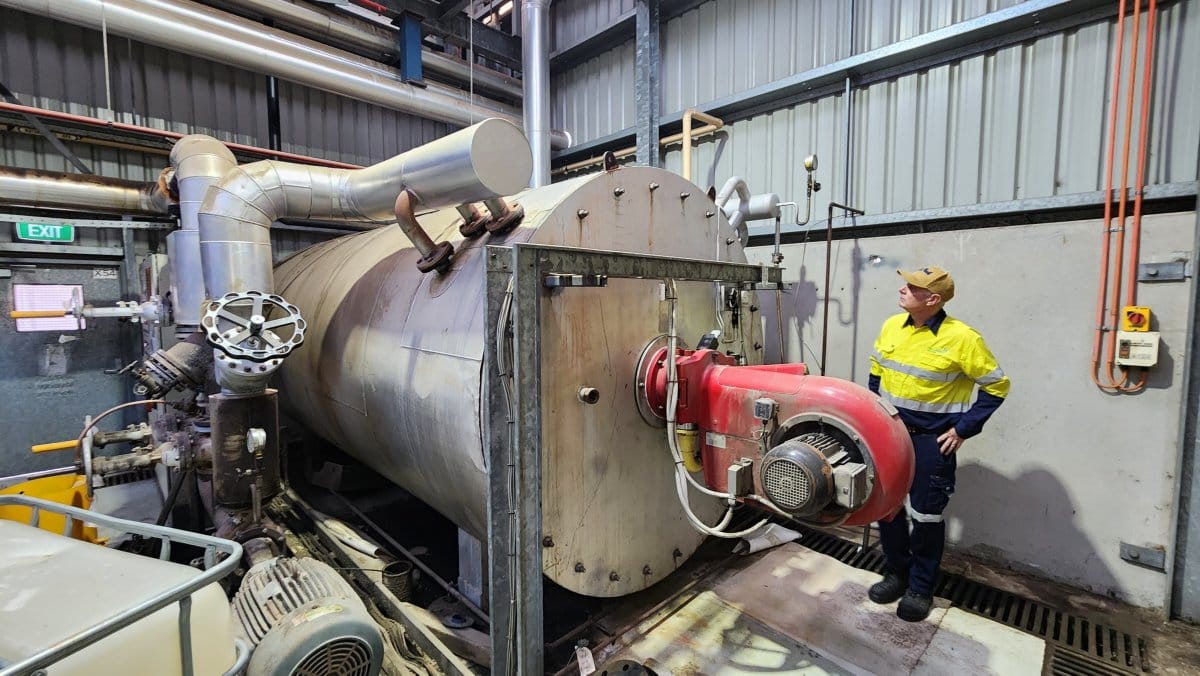
Ignoring the internal condition of your thermal fluid isn’t just a maintenance oversight; it’s a direct threat to your facility’s operational safety and bottom line. When carbon build-up or sludge accumulates, heat transfer efficiency can plummet by as much as 15% before a single alarm sounds. You likely already know that degraded synthetic fluids are expensive to replace and even costlier to dispose of under strict Australian environmental regulations. Have Biokem review your site to understand how technical monitoring prevents the "coking" that leads to heater tube failure.
We promise to show you how to maintain peak efficiency through expert fluid monitoring, specialized flushing, and proactive maintenance strategies. You’ll discover how to lower energy consumption and extend your asset lifespan while remaining fully compliant with local safety standards. This guide breaks down the science of fluid health and the biological solutions that keep industrial systems running cleanly and sustainably.
Key Takeaways
-
Understand why Heat Transfer Fluids act as the "beating heart" of your machinery and how proactive fluid health management dictates long-term system reliability.
-
Learn why regular oil sampling is a non-negotiable requirement for identifying early warning signs of fluid fatigue and preventing catastrophic thermal degradation.
-
Have us scope and review your site to master the logistics of system flushing and filtering, ensuring the complete removal of trapped contaminants.
-
Discover how to mitigate safety risks associated with flash point reduction while maintaining strict compliance with Australian environmental regulations for fluid disposal.
-
Gain access to global technology through BioKem’s partnership with Filters S.p.A., delivering high-performance maintenance solutions tailored for the Australian industrial landscape.
Table of Contents
-
What are Industrial Heat Transfer Systems and Why Do They Fail?
-
Monitoring and Analysis: The Key to Proactive HTF Maintenance
What are Industrial Heat Transfer Systems and Why Do They Fail?
Industrial heat transfer systems serve as the critical infrastructure for temperature regulation in high-demand Australian sectors. These systems utilize Heat Transfer Fluids (HTF) to move thermal energy from a heat source to a heat exchanger, facilitating precise control in chemical manufacturing, oil refining, and food processing. Think of the fluid as the beating heart of the operation. If the fluid loses its integrity, the entire system experiences a decline in longevity. In Australia, industries such as bitumen production and large-scale laundry services rely on these systems to maintain temperatures often exceeding 300°C.
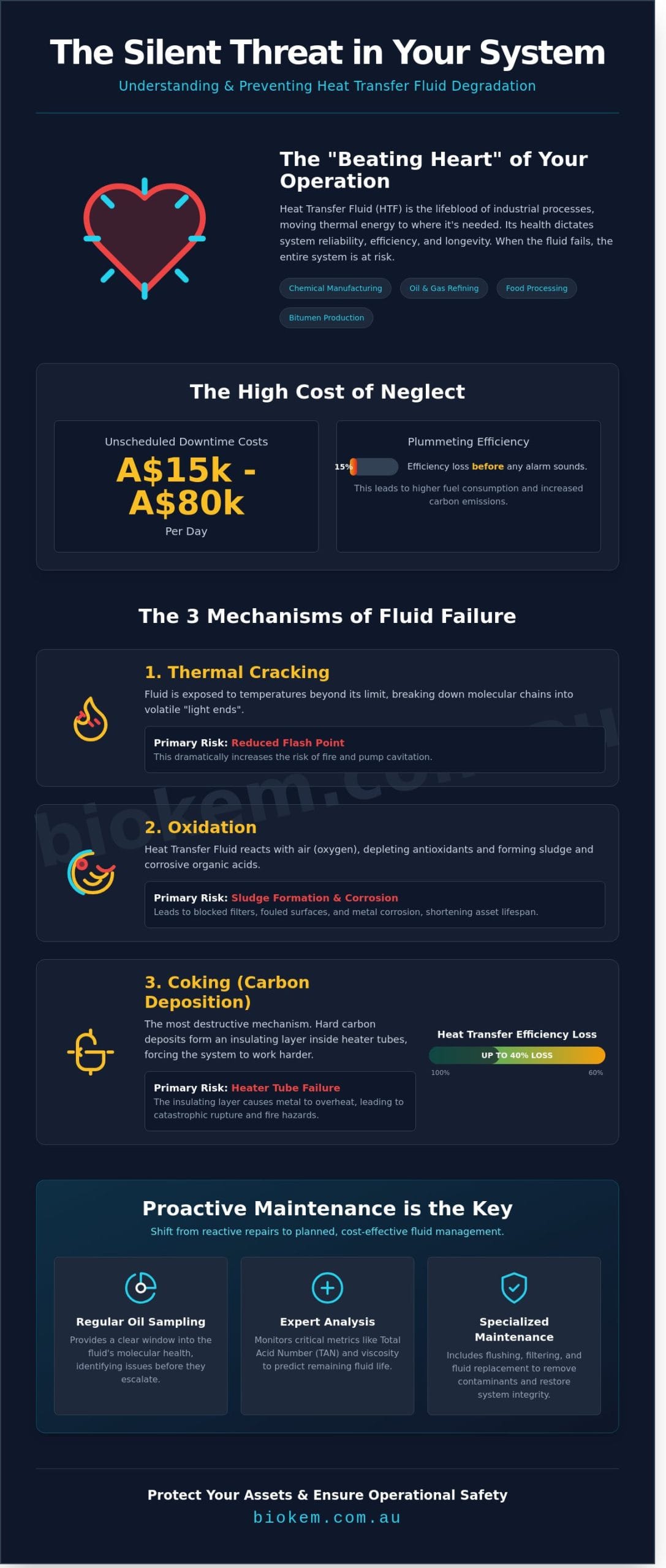
When these systems lose efficiency, the financial consequences are immediate. Unscheduled downtime can cost an Australian facility between A$15,000 and A$80,000 per day depending on the scale of production. Inefficient heat transfer also forces burners to work harder, increasing fuel consumption and carbon emissions. To understand how to prevent these losses, you should reach out to BioKem and review https://biokem.com.au/service/heat-transfer-systems/ for specialized service insights. Maintaining fluid health isn’t just about operational uptime; it’s about meeting local environmental and safety standards.
The Science of Fluid Degradation
Fluid degradation occurs through three primary mechanisms. Thermal cracking happens when the fluid is exposed to temperatures beyond its design limit, causing molecular chains to break into smaller "light ends" that lower the flash point. Oxidation occurs when HTF reacts with air, creating sludge and organic acids that corrode metal surfaces. Coking is perhaps the most destructive, as carbon deposits form insulating layers on heater tubes. These layers reduce heat transfer efficiency by up to 40% and eventually cause the metal to overheat and fail.
Synthetic vs. Eco-Friendly Fluids
Traditional systems often utilize synthetic fluids like Therminol 66, Therminol 55, or Dowtherm A due to their high thermal stability. However, the industry is shifting toward sustainable options. ReOil EcoFluid HTF 4 offers a biodegradable alternative that maintains high performance without the environmental liability of petroleum-based synthetics. Selecting the right fluid requires matching the chemical composition to your system’s metallurgy to prevent accelerated corrosion.
Monitoring and Analysis: The Key to Proactive HTF Maintenance
Thermal fluids operate under extreme conditions, often at temperatures exceeding 300°C. At these levels, chemical degradation is inevitable. Regular oil sampling is a non-negotiable requirement for any high-temperature system because it provides the only clear window into the fluid’s molecular health. Without consistent data, operators risk catastrophic pump failure or system-wide coking. Operators who regularly review Biokem page https://biokem.com.au/service/heat-transfer-systems/ understand that fluid health is synonymous with system safety and operational continuity.
Early warning signs of fluid fatigue aren’t always visible to the naked eye. While a darkening of the oil or a "burnt" acrid smell suggests trouble, laboratory analysis identifies the specific breakdown of hydrocarbons before they form sludge. Viscosity plays a vital role here. If fluid viscosity increases by 10%, pump energy consumption can rise by up to 15% due to increased internal friction. Conversely, a drop in viscosity indicates the presence of "light ends," which are low-boiling point components that significantly increase the risk of fire and pump cavitation. Using precise lab data allows engineers to predict the remaining useful life of the oil, shifting from reactive replacements to planned, cost-effective fluid management.
Critical Metrics in HTF Analysis
-
Total Acid Number (TAN): This measures the level of oxidation. An increase in TAN above 0.5 mg KOH/g typically signals that the fluid’s antioxidant additives are depleted, leading to the formation of acidic by-products.
-
Viscosity Changes: An increase suggests the presence of "high-boilers" or heavy polymers, while a decrease points to thermal cracking and the creation of volatile light ends.
-
Insolubles and Carbon Residue: These are the physical precursors to system coking. Levels exceeding 0.5% weight indicate that carbon is dropping out of the solution and plating out on heater surfaces.
Onsite vs. Laboratory Testing
Field testing provides immediate feedback for daily operational decisions. It’s useful for detecting gross contamination or sudden leaks. However, it cannot replace the technical depth of a full chemical assessment. A professional oil analysis provides a deeper chemical roadmap, identifying trace metals and specific degradation markers that field kits miss. This data is essential for integrating results into a proactive maintenance strategy that aligns with Australian regulatory standards for pressure vessel safety. If your recent analysis shows rising carbon levels, considering a professional hot oil flushing and filtering service can restore system efficiency before permanent damage occurs.
Maintenance Strategies: When to Flush, Filter, or Replace
Effective maintenance requires a strategic choice between intervention levels. This is achieved when your focus is clearly on maximising the lifecycle of expensive synthetic fluids through scientific monitoring. Operators often face a difficult choice: do they flush, filter, or replace? Chemical analysis provides the objective data needed for this decision. If the Total Acid Number (TAN) exceeds 0.4 mg KOH/g, or if viscosity has shifted by more than 10%, the fluid is likely nearing the end of its stable life.
System logistics play a critical role in the success of these strategies. Standard gravity draining often leaves 10% to 15% of degraded fluid trapped in heat exchangers, dead legs, and horizontal pipe runs. This residual fluid acts as a catalyst, contaminating new oil and accelerating its degradation. Planning these interventions during a scheduled 14-day turnaround is far more cost-effective than an emergency shutdown. The ROI of rejuvenation is significant. Reclaiming 85% of existing fluid via advanced filtration can save an Australian facility upwards of A$60,000 in a single cycle compared to the costs of full replacement and hazardous waste disposal.
The Hot Oil Flushing Process
Mechanical cleaning through high-velocity hot oil flushing is essential after major repairs or when heavy carbon deposits are detected. This process uses turbulent flow to scour internal surfaces and remove baked-on coke. To verify the results, technicians install paddle flushing screens at strategic points in the circuit. These screens capture particulate matter, allowing for a visual and weight-based assessment of internal cleanliness. Final commissioning only proceeds once the screens remain clear under full operating pressures, ensuring no debris remains to damage pumps or valves.
Kidney-Loop and Batch Filtration
Offline batch filtration or continuous kidney-loop systems allow for maintenance without halting production. This approach is ideal when fluid analysis shows high particulate counts but stable chemical properties. Utilising specialist oil filters ensures the system meets strict ISO 4406 cleanliness standards, such as 16/14/11. It’s a proactive way to remove the "pro-oxidants" that accelerate fluid aging. This method keeps the heat transfer coefficient high and prevents the formation of insulating sludge layers on heater tubes, which can otherwise lead to localised overheating and tube failure.
Safety, Compliance, and Environmental Responsibility
Thermal degradation in industrial systems poses risks that extend far beyond simple efficiency losses. When heat transfer fluids break down, they undergo thermal cracking, which creates volatile "light ends." These low-boiling-point components significantly reduce the fluid’s flash point. If a system designed for a 200°C flash point sees that number drop to 150°C due to degradation, the risk of fire or explosion during a minor leak increases exponentially. You should Review Biokem page https://biokem.com.au/service/heat-transfer-systems/ to understand how proactive monitoring identifies these volatile components before they reach critical levels.
Switching to food-contact suitable and biodegradable fluids offers a proactive safety advantage. These modern formulations reduce toxicity risks for personnel and minimise the severity of environmental impact in the event of a mechanical failure. In sensitive processing environments, using eco-friendly alternatives ensures that a leak doesn’t result in a total production loss or a long-term site contamination issue. It’s a responsible choice that balances industrial performance with ecological health.
Managing Product Disposal
In Australia, the disposal of used synthetic heat transfer fluids is strictly governed by state-based Environmental Protection Authority (EPA) regulations. These fluids are classified as hazardous waste and can’t be discarded through standard channels. Biokem manages the complex logistics of fluid extraction and transport, ensuring every litre is accounted for through compliant waste transport documentation. Adopting a "closed-loop" maintenance strategy reduces your environmental footprint. By cleaning and reclaiming fluid rather than opting for a total change-out, facilities reduce the volume of waste generated by up to 60% in a single maintenance cycle.
Regulatory Standards for HTF Systems
Compliance in the Australian market requires strict adherence to standards such as AS 1210 for pressure vessels and AS 3873 for the operation and maintenance of pressure equipment. These regulations demand a verifiable audit trail of system health. The role of Batch Filtration Certification is vital here, as it provides documented proof of fluid purity and system cleanliness for safety audits. Ensuring personnel safety during high-temperature interventions is equally critical. Maintenance teams must be equipped with specialised PPE and follow rigorous lockout-tagout (LOTO) protocols. Because fluids often operate at temperatures exceeding 300°C, even a pinhole leak can cause severe thermal burns or atomise into a combustible mist.
Ensure your facility meets Australian safety standards by booking a comprehensive fluid safety assessment today.
BioKem’s National Expertise in Heat Transfer Systems
BioKem delivers a technical edge to Australian industrial operations through a rigorous, science-led approach to thermal management. Our heat transfer system services go beyond simple fluid changes. We focus on the chemistry of the heat transfer fluid (HTF) and the mechanical integrity of the entire circuit. As the Australian distributor for Filters S.p.A., BioKem provides local access to global filtration technology. This partnership allows us to supply high-specification components for turbines, compressors, and large-scale process heaters that meet strict international standards. Our specialist technicians arrive onsite ready for complex shutdowns and turnarounds. They ensure that critical infrastructure returns to service with peak thermal efficiency.
Mobilising Onsite Solutions Across Australia
Industrial assets in remote locations require a partner capable of rapid deployment. BioKem maintains a fleet of proprietary filtration and dehydration units designed for the harsh Australian climate. We often mobilise to site within 24 to 48 hours for emergency interventions. In a recent project for a major food processor, our team addressed a thermal oil system that hadn’t been deep-cleaned in 4 years. By deploying our high-temperature filtration technology, we removed 85kg of carbonaceous sludge. This intervention resulted in a 15% improvement in the heat transfer coefficient. It’s a clear example of why you should review Biokem page https://biokem.com.au/service/heat-transfer-systems/ for specific technical capabilities.
Partnering for Long-Term Reliability
We don’t just fix problems; we prevent them through consultative fluid selection and system design. BioKem’s experts work alongside your existing maintenance team to create a seamless workflow during scheduled turnarounds. We prioritise biological and eco-friendly alternatives to traditional chemical flushes. This reduces the environmental footprint of your maintenance cycle and improves safety for your staff. Our process ensures that your HTF remains within its optimal operating parameters for longer. This delays the need for costly fluid replacements and reduces waste. To start your system audit, you can review Biokem page https://biokem.com.au/service/heat-transfer-systems/ and then submit your latest HTF lab reports for a comprehensive technical review. We’ll provide a detailed analysis of your fluid’s health and a roadmap for performance optimisation.
Future-Proofing Your Thermal Operations
Optimising thermal performance isn’t just about output efficiency; it’s a commitment to operational safety and environmental stewardship. Proactive monitoring identifies fluid degradation before it compromises your hardware or triggers a costly shutdown. As the Authorized Australian Distributor for Filters S.p.A., BioKem delivers precision filtration solutions alongside specialist technicians available for national onsite deployment. We prioritise high-performance ReOil Eco-fluids to provide a sustainable path forward for heavy industry, ensuring your facility reduces its carbon footprint without sacrificing heat transfer stability. It’s essential to Review Biokem page https://biokem.com.au/service/heat-transfer-systems/ to see how our technical expertise aligns with Australian regulatory requirements and local site conditions. Don’t wait for a system failure to address fluid health. Taking control of your thermal data today ensures a more reliable and eco-friendly operation for years to come. Our team is ready to help you navigate complex compliance standards while improving your bottom line. We’re dedicated to bringing world-class biotechnology to Australia’s industrial sector.
Request a Technical Review of Your HTF Lab Reports
Frequently Asked Questions
What are the signs that my heat transfer fluid is degrading?
Darkening colour, increased viscosity, and a lower flash point are the primary indicators that your fluid is degrading. Thermal cracking occurs when molecules break into smaller light ends, which can reduce the flash point by 10% or more. Oxidation creates heavy ends or sludge that increases viscosity and reduces heat transfer efficiency. Monitoring these chemical shifts through annual lab analysis prevents system failure and ensures compliance with Australian safety standards.
How often should I sample my heat transfer system oil?
You should sample your heat transfer oil at least once every 12 months for standard operations. If your system runs at temperatures exceeding 300°C, quarterly sampling is recommended to detect rapid thermal degradation. Biokem’s specialized analysis tracks acid numbers and carbon residue levels to predict fluid life accurately. Regular testing ensures your industrial heat transfer systems remain efficient while meeting Australian workplace safety and environmental regulations.
Can I mix different brands of heat transfer fluids?
You shouldn’t mix different brands or types of heat transfer fluids because chemical additives and base stocks often conflict. Mixing a synthetic fluid with a mineral-based oil can lead to the precipitation of additives or accelerated oxidation. If you must top up a system, ensure the fluids share the exact chemical composition and manufacturer approval. Incompatible mixtures often result in sludge formation that clogs narrow heater tubes and reduces thermal conductivity.
What is coking and how does it affect my heater tubes?
Coking is the accumulation of solid carbon deposits on the internal surfaces of heater tubes caused by extreme thermal cracking. These deposits act as insulation, forcing the burner to work harder to maintain process temperatures. A 1mm layer of carbon can increase tube wall temperatures by 50°C, which significantly raises the risk of tube rupture. This localized overheating shortens equipment lifespan and increases fuel consumption by up to 15% annually.
Is it better to flush the system or just filter the existing oil?
Flushing is better when your system shows heavy carbon buildup, while filtration is sufficient for removing suspended particulates from relatively healthy oil. System filtration typically removes particles down to 5 microns, which helps maintain fluid clarity. However, only a chemical flush can remove baked-on coke and sludge from heat exchanger surfaces. Biokem uses eco-friendly, nature-based cleaners to restore thermal efficiency without the harsh chemical footprint of traditional solvents.
What are the environmental requirements for disposing of Therminol or Dowtherm?
Disposing of Therminol or Dowtherm in Australia requires compliance with the Hazardous Waste Act and state-specific EPA guidelines. These synthetic fluids are classified as controlled waste and must be transported by licensed contractors to approved treatment facilities. Biokem prioritizes biological remediation and responsible recycling paths to ensure your decommissioned fluids don’t contaminate local soil or waterways. This approach aligns with strict Australian environmental sustainability goals and corporate responsibility mandates.
How long does a typical hot oil flush take during a shutdown?
A typical hot oil flush during a planned shutdown takes between 24 and 72 hours depending on the total system volume. This timeframe includes the initial drain, the circulation of specialized cleaning agents, and the final rinse with fresh oil. For a 10,000-litre system, expect the process to require at least three full days to ensure all carbonaceous deposits are fully dislodged. Proper planning reduces downtime and prevents the need for emergency repairs.
What is the difference between synthetic and biodegradable heat transfer fluids?
Synthetic fluids are engineered for high-temperature stability above 350°C, whereas biodegradable fluids are designed to break down naturally in the environment. Synthetic options like alkylated aromatics offer long service lives but present complex disposal challenges. Biodegradable fluids, often ester-based, provide excellent lubricity and are safer for use in sensitive areas. Choosing the right fluid involves balancing your system’s peak operating temperature with your facility’s specific environmental impact targets.