

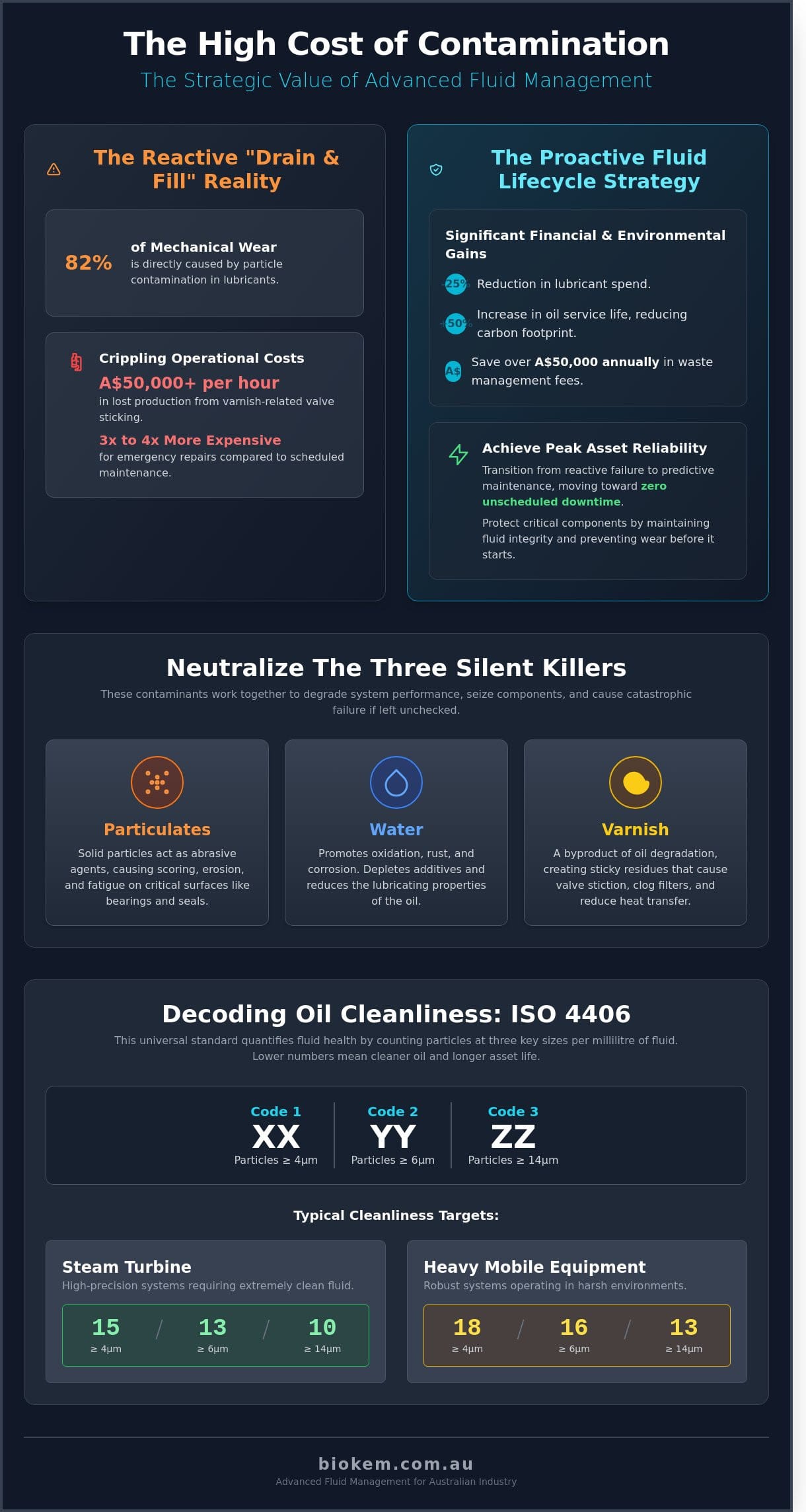
Research indicates that 82% of mechanical wear is directly attributable to particle contamination, yet many Australian sites still treat oil changes as a recurring tax on productivity. You likely feel the pressure of rising operational costs and the frustration of missing ISO 4406 cleanliness targets despite frequent maintenance cycles. Implementing advanced fluid management isn’t just about cleaner oil; it’s a strategic shift toward biological and technical precision that protects your bottom line. We understand that managing hydrocarbons in harsh environments requires more than just a filter swap; it demands a commitment to fluid integrity and environmental responsibility.
This guide demonstrates how these refined protocols extend asset life and eliminate the varnish related valve sticking that costs some operations over A$50,000 per hour in lost production. You’ll learn how to achieve zero unscheduled downtime while meeting strict Australian environmental regulations for waste oil disposal. We’ll provide a clear roadmap to help your facility reduce lubricant spend by up to 25% and transition toward a circular economy model. This technical framework outlines the exact steps needed to master fluid sustainability and ensure long-term reliability across your Australian operations.
Key Takeaways
- Shift from a reactive “drain and fill” mindset to a holistic lifecycle approach that prioritises proactive fluid purification and asset longevity.
- Understand the critical role of ISO 4406 cleanliness codes in identifying and mitigating the “three silent killers”: particulates, water, and varnish.
- Explore high-performance methodologies such as vacuum dehydration and high-velocity hot oil flushing to restore system integrity and operational efficiency.
- Utilise precision fluid analysis and wear metal trends to transform raw data into predictive maintenance strategies that prevent component failure.
- Learn how to implement a site-specific advanced fluid management strategy tailored to Australian industrial standards and sustainability goals.
What is Advanced Fluid Management in an Industrial Context?
Advanced fluid management represents a transition from traditional “drain and fill” maintenance toward a holistic, lifecycle-based approach for industrial lubricants. It integrates mechanical engineering precision with advanced chemical analysis to maintain fluid integrity indefinitely. By 2026, global industrial standards will mandate a shift toward predictive lubrication strategies to ensure grid stability and asset longevity. This methodology treats oil as a critical asset rather than a consumable expense.
To better understand how these practices impact operational efficiency, watch this helpful video:
Moving beyond reactive habits requires a deep understanding of fluid chemistry and contamination control. This approach focuses on proactive fluid purification, ensuring that lubricants remain within their original performance specifications for years rather than months. It’s a commitment to technical excellence that balances mechanical performance with environmental stewardship.
The Shift from Reactive to Proactive Maintenance
Emergency repairs in Australian power plants can cost 3 to 4 times more than scheduled maintenance interventions. Reactive approaches wait for failure; proactive strategies use precision monitoring to identify oxidation and particulate buildup before damage occurs. Understanding What is Oil Analysis allows technicians to detect microscopic wear before it manifests as a catastrophic breakdown. Proactive maintenance is the systematic elimination of root causes. Implementing tools like the Particle Pal range helps operators maintain ISO cleanliness codes without halting production.
The Environmental and Economic Imperative
Extending the service life of industrial oils by 50% significantly reduces the carbon footprint of power generation facilities. Advanced fluid management reduces oil procurement and disposal costs, providing a direct boost to the bottom line. A single facility can save over A$50,000 annually in waste management fees alone. These results align with Australian corporate sustainability reporting (CSR) requirements and tightening environmental benchmarks. By implementing a varnish removal system, plants achieve long-term ecological health while maintaining peak operational performance.
The Science of Fluid Contamination and ISO 4406 Standards
Reliability in power generation hinges on the precision of lubricant chemistry. Advanced fluid management focuses on neutralizing the Three Silent Killers: particulates, water, and varnish. These contaminants work in tandem to degrade system performance. Solid particulates act as abrasive agents, while water promotes oxidation and additive depletion. Varnish, a byproduct of oil degradation, creates sticky residues that seize valves. Understanding the dangers of fluid contamination is vital because even particles invisible to the naked eye can cause catastrophic component failure. When lubricants lose their chemical integrity, the resulting drop in lubricity leads to metal-on-metal contact, increasing maintenance costs across Australian power plants.
Decoding Oil Cleanliness with ISO 4406 Codes
The ISO 4406 standard provides a universal language for quantifying fluid health. It uses a three-tier code to represent the number of particles larger than 4μm, 6μm, and 14μm per millilitre of fluid. For example, a steam turbine might require a strict 15/13/10 target, while heavy mobile equipment often operates at 18/16/13. Achieving these levels requires constant monitoring. Maintenance teams can use patch test kits to gain immediate, site-level feedback on fluid condition before sending samples for laboratory analysis. This proactive approach prevents the 80% of hydraulic failures attributed to poor oil cleanliness.
Identifying and Mitigating Hydrocarbon Degradation
Hydrocarbon degradation begins when thermal and oxidative stress break down oil additives. This process creates soft contaminants that eventually transition into hard, baked-on varnish. Standard mechanical filtration typically fails to capture these sub-micron oxidation products because they’re smaller than 1 micron. Chemical health checks, such as Membrane Patch Colorimetry (MPC), are essential for detecting these precursors. Power stations that ignore chemical health risk valve sticking and cooler fouling. Implementing a varnish removal system ensures long-term operational stability and protects high-value assets from premature wear. Effective advanced fluid management requires looking beyond simple particle counts to address the molecular health of the oil.
Advanced Methodologies for Fluid Purification and System Recovery
Maximising the lifespan of industrial lubricants requires more than basic filtration. It demands a rigorous approach to advanced fluid management that addresses contaminants at a molecular level. By integrating high-energy mechanical cleaning with chemical purification, power generation facilities can avoid the A$100,000+ costs associated with unplanned turbine outages. These methodologies focus on restoring fluid properties to “as-new” condition, ensuring long-term asset reliability.
High-Velocity Hot Oil Flushing for System Decontamination
High-velocity hot oil flushing (HVHOF) is the primary method for removing internal pipe scale, welding slag, and construction debris from complex lubrication circuits. Unlike standard circulation, HVHOF relies on creating a state of extreme turbulence within the piping. Reynolds numbers above 4000 are essential for effective flushing. This high-energy flow creates the necessary shear force to dislodge particles that would otherwise remain trapped during laminar flow conditions.
Operators should deploy hot oil flushing during the initial commissioning of a plant or following a major component failure. This process continues until the system achieves a specific cleanliness rating. Reaching a target level defined by the ISO 4406:1999 Standard is a mandatory requirement for many Australian insurance providers and OEM warranty holders. Using external pump skids allows for flow rates up to 5 times the normal operating speed, significantly reducing the time required to reach these stringent standards.
Vacuum Dehydration and Varnish Mitigation Strategies
Moisture is a silent killer of turbine performance. Vacuum dehydration offers a sophisticated solution by removing dissolved, emulsified, and free water without subjecting the oil to thermal degradation. By lowering the internal pressure within a vacuum chamber, water boils at approximately 50°C. This allows for rapid dehydration while maintaining the integrity of the oil’s additive package. It’s an essential tool for maintaining water levels below 100 ppm, which is critical for preventing hydrogen embrittlement in high-speed bearings.
In the high-temperature environments of Australian power stations, varnish poses a distinct challenge. Varnish is a thin, sticky film that forms when oil degradation products precipitate out of the fluid. It leads to sticking valves and overheated bearings. Effective varnish removal involves:
- Utilising specialised ion-exchange resins to capture sub-micron oxidation products.
- Applying polar attraction technology to pull soft contaminants out of the fluid.
- Continuous sidestream processing to prevent the re-formation of deposits.
For high-volume fluid recovery, coalescing and centrifugal separation are the preferred methods. Centrifugal systems can process over 3,000 litres of fluid per hour, effectively stripping away heavy solids and bulk water. This multi-stage approach to advanced fluid management can extend the service life of a lubricant by up to 300%, providing a sustainable and cost-effective alternative to frequent oil changes.
Maximising Asset Lifecycle Through Precision Fluid Analysis
Effective advanced fluid management requires moving beyond simple oil changes based on calendar dates or hour intervals. Independent laboratory testing provides an objective, scientific baseline for lubricant health that internal checks often miss. By tracking wear metal concentrations, such as iron, copper, and lead, operators can identify abnormal wear patterns before they lead to catastrophic component failure. For example, a 15% increase in iron particles over a 500-hour interval often signals gear fatigue or bearing degradation. Integrating this historical data with real-time sensor outputs creates a holistic view of the asset’s internal environment. This data-driven strategy prevents the disposal of perfectly viable oil, reducing environmental waste and saving Australian power stations upwards of A$45,000 annually in unnecessary procurement and disposal costs.
The Role of Ferrography and Particle Characterisation
Standard ISO particle counts tell you how much debris is present, but they don’t reveal the “how” or “why” behind component wear. Utilising filter ferrogram analysis allows technicians to examine the morphology of contaminants under high magnification. This process distinguishes between cutting wear, which appears as sharp, curled ribbons, and sliding wear or fatigue particles. Identifying these shapes is critical; a low particle count of fatigue-related chunky debris is far more dangerous than a high count of benign atmospheric dust. Understanding particle shape ensures maintenance teams address the root cause, such as misalignment or overload, rather than just treating the symptom. It’s a precise way to ensure advanced fluid management protocols remain proactive rather than reactive.
Integrating Real-Time Monitoring and Filtration Hardware
Continuous asset protection relies on a combination of permanent and bypass filtration systems. While primary filters handle high-flow requirements, bypass systems provide ultra-fine cleaning without affecting system pressure. Selecting high-performance hardware from global leaders like Filters S.p.A. ensures that even sub-micron particles and soft contaminants are captured effectively. When these systems are paired with IoT-enabled sensors, operators gain 24/7 visibility into moisture levels and oxidation. In Australian industrial settings, this real-time data allows for immediate intervention if a seal fails or a cooler leaks. This level of visibility can extend the service life of critical fluids by up to 300%, ensuring compliance with local environmental standards while protecting the bottom line.
Optimise your asset reliability today by exploring our advanced real-time monitoring solutions.
Implementing an Advanced Fluid Management Strategy in Australia
Transitioning to an advanced fluid management framework begins with a rigorous audit of existing lubrication protocols. Industry data indicates that 75% of hydraulic system failures stem directly from fluid contamination. By evaluating current ISO 4406 cleanliness levels against OEM specifications, operators can pinpoint precise gaps in filtration and storage. A site-specific roadmap then outlines the transition from reactive maintenance to a proactive lifecycle model. This ensures every litre of oil delivers maximum utility before requiring reclamation.
BioKem Oil Services integrates onsite technical interventions with specialized equipment hire, including high-velocity flush rigs and vacuum dehydrators. This approach ensures strict compliance with Australian standards such as AS 1940:2017 for the storage and handling of flammable and combustible liquids. By focusing on mechanical and biological purification, we help facilities reduce the carbon footprint associated with waste oil disposal by up to 60%. It’s a strategy that prioritizes ecological health without compromising industrial output.
Tailored Onsite Solutions for Remote Industrial Operations
Logistical constraints in the Pilbara or Bowen Basin often result in high transport costs; these can exceed A$2.10 per litre for remote waste removal. BioKem Oil Services eliminates these overheads by bringing purification technology directly to your site. Onsite processing maintains fluid integrity without the risks of transit contamination or road-related delays. Our national footprint allows for a 24-hour response time during emergency interventions. This rapid deployment prevents costly downtime that can exceed A$50,000 per hour in large-scale power generation environments.
- Reduction in transport-related carbon emissions by processing fluids locally.
- Immediate restoration of fluid properties to meet or exceed NAS 1638 Class 6 standards.
- Access to high-tier filtration assets without the capital expenditure of outright purchase.
For facilities evaluating their 2026 maintenance budgets, industrial oil filtration equipment hire provides access to specialized vacuum dehydration units and high-flow flushing rigs without the burden of long-term ownership. This strategic approach allows operators to deploy expert-level purification technology while maintaining financial flexibility for other critical investments.
Partnering for Long-Term Equipment Health
A technical partnership transcends the traditional vendor model by embedding expertise into your daily operational culture. We focus on technician training to ensure local teams can interpret real-time data from sensors and patch tests accurately. This collaborative effort has been shown to extend component life by up to 300% in high-load environments. By moving away from simple supply transactions, we focus on the biological and technical health of your assets.
Final CTA: Contact BioKem Oil Services to schedule your fluid health audit and begin your transition to advanced fluid management.
Secure Your Operational Longevity Through Technical Precision
Maintaining peak operational efficiency depends on moving beyond reactive maintenance toward a model of technical excellence. Adhering to ISO 4406 cleanliness codes isn’t just a compliance task; it’s a financial necessity that can reduce equipment wear by over 50% in heavy industrial applications. By utilizing high-velocity hot oil flushing and targeted varnish mitigation, you’re protecting the intricate tolerances of your machinery from silent degradation. BioKem has been Australian owned and operated since 2011, delivering specialized engineering solutions that prioritize both performance and ecological responsibility. As the authorized Australian distributor for Filters S.p.A., we bring global filtration innovations directly to local sites.
Adopting a rigorous advanced fluid management strategy allows your facility to maximize asset lifecycles while minimizing costly downtime. It’s a proven path to securing long-term mechanical health and operational stability across the Australian mining, power, and manufacturing sectors. Optimise your industrial assets with BioKem’s advanced fluid management services to ensure your systems remain resilient and productive for years to come.
Frequently Asked Questions
What is the primary difference between basic oil filtration and advanced fluid management?
Advanced fluid management goes beyond simple filtration by addressing the chemical health of the lubricant, while basic filtration only removes large particulates. This holistic approach includes varnish mitigation and moisture removal to prevent oxidation. BioKem’s strategies target sub-micron contaminants that standard filters miss. By focusing on the entire fluid lifecycle, we extend component life by 40% compared to traditional reactive maintenance schedules.
How often should a high-velocity hot oil flush be performed on a hydraulic system?
You should perform a high-velocity hot oil flush every 5 to 7 years or during the initial commissioning of a system. This process is vital after major repairs to clear out welding slag or accumulated debris. To be effective, the flow must reach a Reynolds number above 4,000. This turbulence scours the internal pipework, ensuring the system starts with a cleanliness level that meets strict OEM requirements.
Can advanced fluid management actually restore oil to its original “virgin” specifications?
Advanced fluid management can restore used lubricants to their original ISO 4406 cleanliness specifications, often making them cleaner than new oil from a drum. Our processes remove 99.9% of solid contaminants and moisture. While we don’t replace base oil molecules, we can reduce particle counts from a dirty 22/20/18 to a pristine 14/12/9. This restoration saves companies up to 60% on lubricant procurement costs annually.
Is vacuum dehydration more effective than traditional centrifugal separation for water removal?
Vacuum dehydration is significantly more effective than traditional centrifugal separation because it removes dissolved water at a molecular level. Centrifuges only manage free and emulsified water through mechanical force. By operating under a vacuum, we boil off moisture at just 50°C, which prevents thermal degradation of the oil. This method reduces water content to 50 ppm, whereas centrifuges often leave 200 ppm or more behind.
How do ISO 4406 codes impact the warranty of my industrial equipment?
ISO 4406 codes serve as the primary metric for equipment warranties since manufacturers like Siemens and Caterpillar set strict cleanliness limits. If your oil exceeds a 16/14/11 rating, the OEM can legally deny a A$450,000 warranty claim for a failed pump. Since 75% of hydraulic failures are contamination-related, monitoring these codes is essential. It’s the only way to prove you’ve maintained the fluid to the required industrial standards.
What are the typical cost savings associated with a professional varnish mitigation program?
A professional varnish mitigation program saves Australian power stations between A$70,000 and A$160,000 per year in maintenance and lost production. Varnish causes valves to stick and reduces heat exchanger efficiency, leading to unplanned trips. By lowering the Membrane Patch Colorimetry (MPC) value from a dangerous 45 to a safe 15, we prevent these failures. One avoided day of downtime often pays for the entire mitigation program for three years.
Does BioKem provide onsite fluid management services for remote mining sites in Australia?
BioKem provides specialized onsite fluid management services for remote mining operations across the Pilbara and Bowen Basin. Our mobile teams arrive with self-contained rigs designed for harsh Australian conditions. We’ve managed over 1.2 million litres of fluid in remote areas since 2014, ensuring full compliance with local environmental regulations. Our technicians handle everything from oil analysis to high-volume filtration without the need for equipment to leave your site.
What is the benefit of using a distributor for Filters S.p.A. in Australia?
The main benefit of using an Australian distributor for Filters S.p.A. is the immediate availability of parts and local engineering support. You won’t face the 14-week shipping delays typical of direct European imports. BioKem ensures all Italian-made components comply with AS 1210 pressure vessel standards required for local operation. This local partnership reduces your emergency downtime by 80% and provides a direct line to technical expertise for complex system designs.