

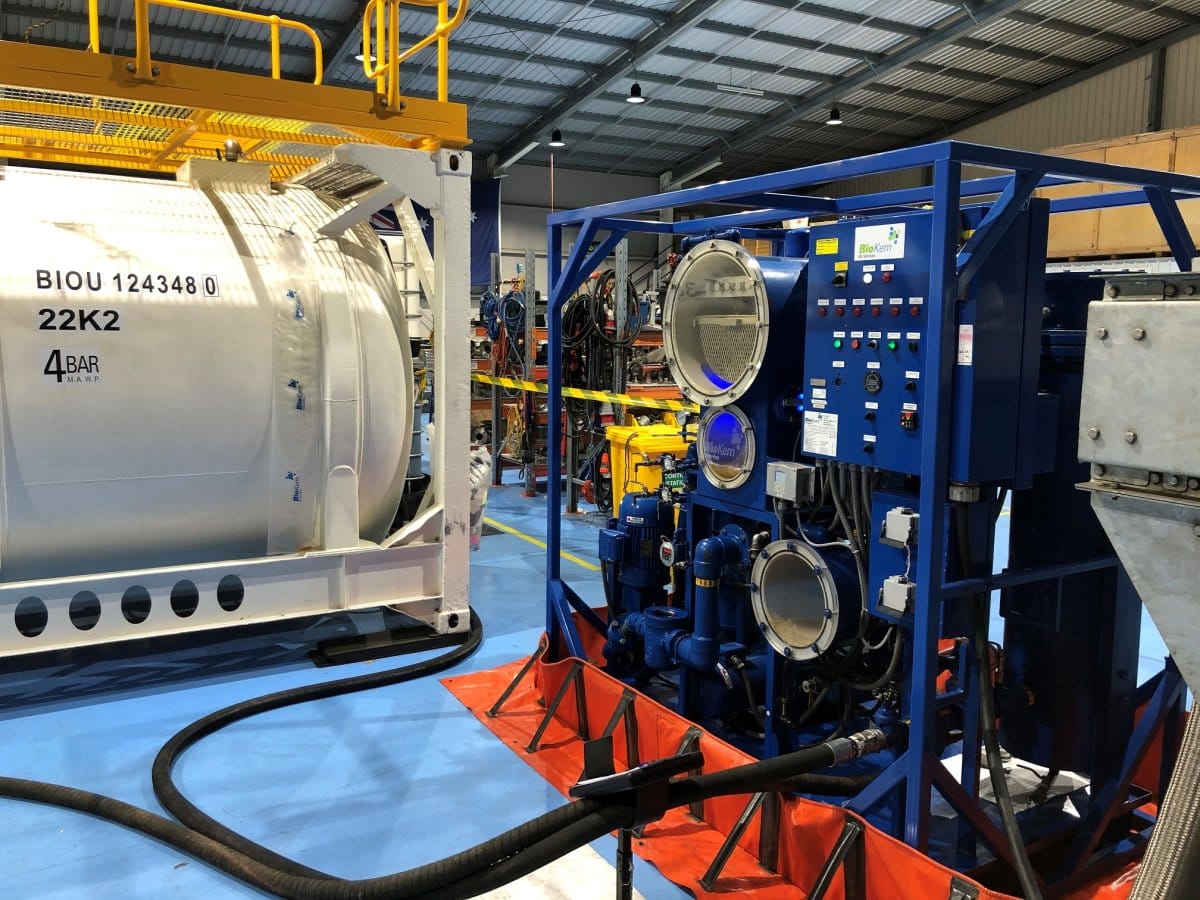
Recent 2024 industry data suggests that 82% of mechanical wear in Australian heavy industry is caused by particulate contamination. This reality makes industrial oil filtration equipment hire a critical tactical decision rather than just a temporary fix. You already know that even a microscopic breach in fluid integrity leads to catastrophic component failure and budget-breaking unscheduled downtime. It’s a constant pressure to maintain peak operational efficiency while managing tight capital expenditure budgets.
We understand that the high cost of purchasing specialized vacuum dehydration units or high-flow flushing rigs often doesn’t align with quarterly financial goals. This guide provides a strategic framework to select and deploy the right machinery to achieve your ISO 4406 cleanliness targets without the burden of long-term ownership. You’ll learn how to integrate expert-level purification technology into your 2026 maintenance schedule to protect your A$1 million plus assets. We’ll examine the technical specifications of modern filtration units, the logistics of site deployment, and how to leverage external expertise to eliminate the need for specialized internal training.
Key Takeaways
- Understand the strategic shift within the Australian market from capital-heavy ownership toward OpEx-driven models that reduce the total cost of hardware maintenance and calibration.
- Identify the technical advantages of industrial oil filtration equipment hire, specifically how vacuum dehydration and high-flow flushing rigs protect critical assets from dissolved water and particulates.
- Learn the essential selection criteria for deployment, including how to verify seal compatibility with specialized lubricants and calculate the required turnover time for your reservoir.
- Discover the benefits of an integrated service model where world-class purification hardware is supported by professional oil analysis to validate that target cleanliness codes are achieved.
- Evaluate how leveraging on-demand filtration technology helps your facility maintain strict Australian regulatory compliance while supporting long-term ecological and operational health.
Understanding Industrial Oil Filtration Equipment Hire in Australia
Industrial oil filtration equipment hire provides Australian facilities with on-demand access to technical purification units. These systems include vacuum dehydrators and high-flow flushing rigs designed to remove moisture and particulate matter from lubricants. Recent data from 2024 indicates that 68% of Australian mining and energy firms now prefer OpEx-based models over the A$250,000 capital expenditure required for permanent specialized hardware. This shift allows sites to maintain agility while ensuring their machinery operates with optimal fluid health.
It’s a strategic move toward sustainability. By utilizing mobile filtration, companies extend the lifecycle of their existing hydrocarbon assets, which reduces the environmental footprint of oil disposal. Maintaining strict ISO 4406 cleanliness standards is the primary goal. Achieving a target like 16/14/11 requires precision tools that many sites don’t need to own year-round. These rentals support a range of tasks, from emergency water removal after a seal failure to planned hot oil flushing services during major plant overhauls. Using high-tier hire equipment ensures that biological and chemical integrity is preserved without the burden of long-term asset depreciation.
When to Opt for Equipment Hire
Emergency response is a frequent driver for rentals. If a heat exchanger leaks, sudden moisture ingress can escalate to a catastrophic failure within hours. Hire units provide a rapid solution to restore oil clarity. Planned maintenance shutdowns also benefit from this model. During a 2026 turnaround, a site might require five times its usual filtration capacity to meet tight deadlines. Finally, hire allows teams to trial new technologies. This reduces the risk of investing in a permanent system that doesn’t perfectly suit the specific microbial or particulate challenges of the local environment.
Key Components of a Rental Fleet
A professional rental fleet consists of more than just a pump. It includes high-performance filter housings and integrated particle counters that provide real-time oil analysis. These counters allow technicians to verify cleanliness levels before the job is finished. The fleet also features ancillary hardware like heavy-duty hoses and paddle flushing screens to capture debris during high-velocity flushes. Having the right manifolds and connectors ensures the industrial oil filtration equipment hire integrates seamlessly with existing Australian infrastructure, preventing leaks and ensuring a closed-loop, eco-friendly process.
Core Technologies Available for Short-Term Deployment
Accessing specialized technology through industrial oil filtration equipment hire allows Australian site managers to resolve critical contamination issues without the A$45,000 to A$120,000 capital outlay required for permanent assets. These mobile systems are engineered for rapid deployment during emergency oil ingress or planned outages, ensuring fluid chemistry remains within OEM specifications. Utilizing hire equipment provides the flexibility to match the technology to the specific contaminant, whether it’s dissolved moisture, sub-micron varnish, or heavy particulate loads.
Vacuum Dehydration Units (VDU)
Vacuum dehydration is the primary method for extracting water and dissolved gases from lubrication systems. These units operate by creating a vacuum that lowers the boiling point of water to approximately 50°C. This allows moisture to boil off and be removed as vapour without damaging the oil’s additive package or causing thermal degradation. VDUs remove 100% of free and emulsified water and up to 90% of dissolved water. They’re essential for steam turbines, paper mill press sections, and large hydraulic presses where water contamination frequently exceeds 1,000 ppm. Operational requirements typically include a 415V/32A power supply and a dedicated footprint of approximately 2 square metres near the reservoir for safe operation.
Varnish Removal and Mitigation Systems
Varnish is a sub-micron contaminant that standard mechanical filters can’t capture. It’s a significant risk for gas and steam turbines, leading to sticking valves and bearing failures. Opting for a varnish removal system hire during a 14-day shutdown can reduce Membrane Patch Colorimetry (MPC) values from a critical 40+ down to a normal level below 15. These systems use ion-exchange or specialized resins to attract and remove polar oxidation by-products that are dissolved in the oil. Measuring success requires consistent MPC testing alongside the equipment hire to track the restoration of the fluid’s solvency.
For high-volume particulate challenges, high-flow filtration units are deployed to reach ISO 4406 cleanliness targets like 16/14/11 in reservoirs exceeding 10,000 litres. These systems often utilize absolute-rated microglass elements to strip out solid contaminants rapidly. Meanwhile, coalescing systems are utilized for bulk water separation in diesel fuel and low-viscosity hydraulic oils. They provide a faster throughput than vacuum units when free water is the primary concern. If you’re managing a complex contamination event, exploring tailored filtration services can help restore your assets to peak performance while maintaining strict environmental compliance.
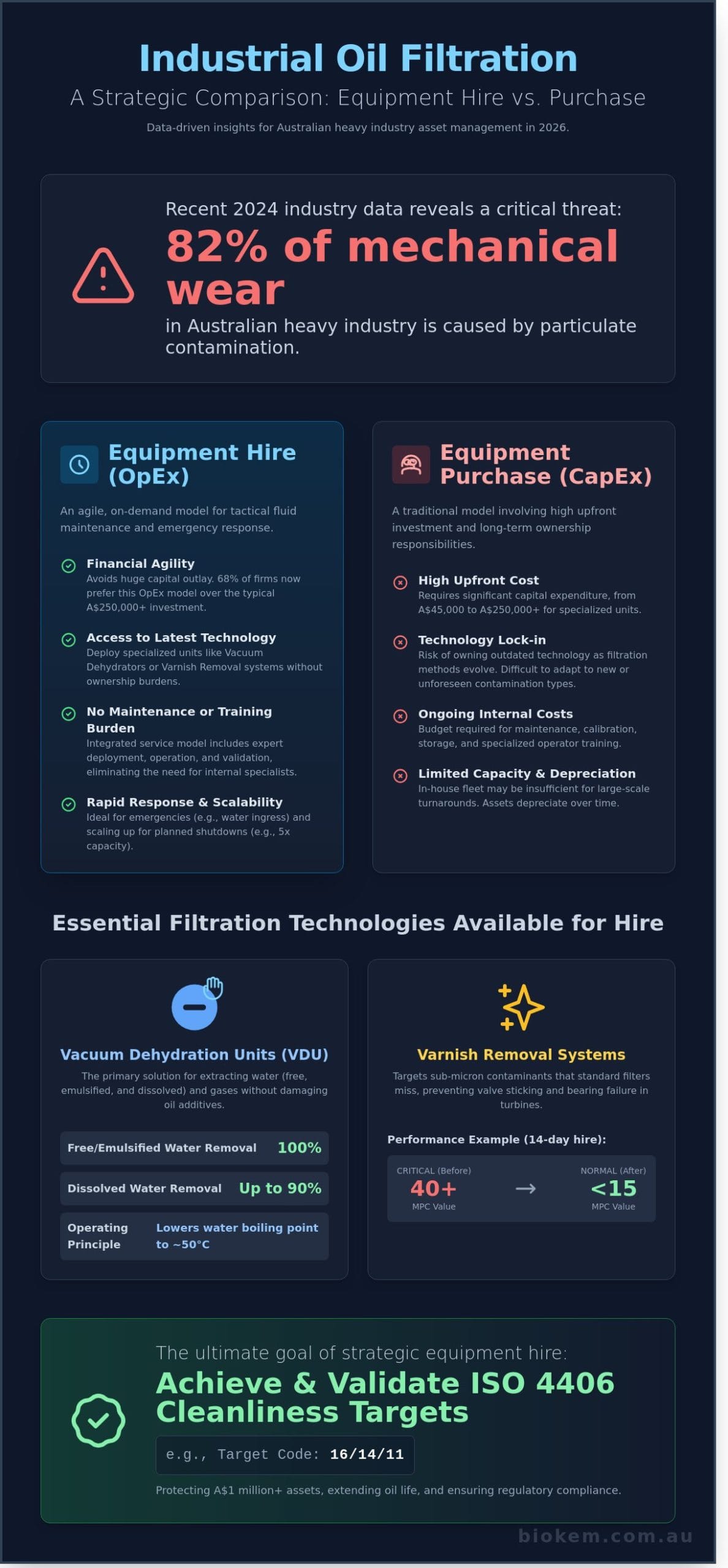
Hire vs. Buy: The Economic and Operational Comparison
Industrial operations in 2026 face a clear choice between capital ownership and service-based models. A high-performance filtration system requires a significant initial outlay, often exceeding A$95,000 for premium European hardware. This Capital Expenditure (CapEx) ties up liquidity that could be deployed into core production growth. Transitioning to an Operating Expenditure (OpEx) model through industrial oil filtration equipment hire allows for precise budget forecasting without the weight of long-term depreciation schedules.
The Total Cost of Ownership (TCO) for owned units frequently surprises site managers. Beyond the purchase price, you must account for specialized storage, which averages A$180 per square metre in Australian industrial hubs. Regular maintenance, sensor recalibration, and the replacement of high-efficiency elements add approximately A$7,200 to the annual ledger per unit. Hiring shifts these financial responsibilities to the provider, ensuring you only pay for the machine’s utility during its active service life.
The Financial Case for Rental
Relying on rental agreements eliminates the need for large upfront investments. Under current Australian tax frameworks, hire fees are generally treated as direct business expenses, providing immediate tax benefits over the multi-year depreciation cycles of purchased assets. For a 14-day shutdown period, industrial oil filtration equipment hire delivers a 42% reduction in total project costs compared to the mobilization and maintenance expenses of an owned asset. This financial agility is vital for maintaining healthy cash flow during fluctuating market cycles.
- Zero capital depreciation on the company balance sheet.
- Elimination of A$6,500 annual NATA-traceable calibration costs.
- Scalable costs that align directly with specific project revenue.
Operational Advantages of Professional Hire
The technical landscape moves fast. Owning equipment creates an ‘obsolescence risk’ where your hardware no longer meets the stringent ISO 4406 cleanliness standards required by 2026-spec machinery. Hiring provides immediate access to the latest Filters S.p.A. technology, ensuring your fluids are processed by the most efficient particulate and water removal systems available. You don’t have to manage the logistics of bulky units or the A$220 per hour cost of training internal staff on complex, specialized machinery.
Biokem provides pre-calibrated units that arrive ready for immediate integration. Every agreement includes technical support and operator guidance, which mitigates the risk of improper setup or system bypass. This approach ensures that flow rates are perfectly matched to your specific project volumes, whether you’re managing a 500-litre reservoir or a 60,000-litre industrial system. Professional hire removes the administrative weight of fleet management, letting your team focus on core production targets.
Selection Criteria: Choosing the Right Filtration Unit
Selecting the correct unit for industrial oil filtration equipment hire requires a precise alignment between the hardware and your specific lubricant profile. Fluid compatibility is the most critical technical hurdle. Using a unit with Buna-N seals for phosphate ester fluids will lead to seal degradation and total system failure within 48 hours. You must verify that pumps, hoses, and seals are rated for the chemical composition of your oil, whether it’s a standard mineral oil or a synthetic fire-resistant fluid.
Operational efficiency depends on calculating the correct turnover time for your specific reservoir. For a 5,000 litre tank, a flow rate of 40 to 60 litres per minute ensures the entire volume passes through the filter media three to five times per shift. This frequency is essential to achieve target cleanliness levels defined by ISO 4406 standards. Most OEM specifications for high-pressure hydraulic systems in 2026 demand a 16/14/11 rating to prevent accelerated component wear.
Technical Specifications to Scrutinize
You need to evaluate the Beta rating of the filter elements before committing to a hire. A rating of βx[c] ≥ 1000 indicates 99.9% efficiency at the specified micron level, providing the reliability required for sensitive machinery. High dirt-holding capacity is equally vital; it prevents frequent downtime for element changes during heavy contamination events. We recommend using specialist oil filters in all hired units to ensure the media can handle the specific varnish or particulate load of your system. Ensure the unit matches your site’s power requirements, typically 415V 3-phase for larger rigs, and confirm IECEx certification if operating in hazardous zones.
Safety and Compliance Standards
Australian safety regulations are stringent regarding pressure equipment and environmental protection. Every hired unit must comply with AS 1210 for pressure vessels and include calibrated relief valves to prevent over-pressurisation. Environmental compliance requires secondary bunding capable of holding 110% of the unit’s fluid capacity to prevent soil contamination. Operators must provide a Safe Work Method Statement (SWMS) before deployment. This ensures that the industrial oil filtration equipment hire process meets both WorkSafe and local environmental protection authority expectations for risk management.
Contact Biokem today to optimise your lubricant performance with high-spec filtration technology.
BioKem’s Strategic Approach to Equipment Hire
BioKem serves as the sole Australian distributor for Filters S.p.A., providing local access to world-class purification hardware that meets the highest international standards. This partnership ensures that our industrial oil filtration equipment hire fleet consists of high-performance machinery capable of handling the most demanding hydraulic and lubrication systems across the continent. We don’t just provide hardware; we deliver an integrated service model where every hire is supported by professional oil analysis. This data-driven approach allows us to verify cleanliness levels before, during, and after the filtration process, ensuring your assets are protected.
Our national deployment capabilities ensure we respond to critical system failures in remote or metropolitan areas within 24 to 48 hours. This rapid response is essential for minimizing costly downtime in sectors like mining, power generation, and heavy manufacturing. By focusing on high-efficiency purification, we help partners achieve 100% compliance with environmental regulations while extending the lifecycle of their lubricants. It’s a commitment to sustainable lubrication management that reduces waste and lowers the total cost of ownership for high-value machinery.
The BioKem Fleet Advantage
BioKem units feature the latest particle pal technology. This integration allows for instant, real-time reporting of ISO 4406 cleanliness codes and water content directly on-site. Our fleet includes customizable skid configurations designed for tight site constraints or specific flow rate requirements. We enforce rigorous pre-hire testing protocols, including a 12-point inspection and deep-clean cycle, to ensure zero cross-contamination between different oil types. You can trust that the equipment arrives ready to perform at peak efficiency from the moment it’s commissioned.
How to Secure Your Equipment Hire
The process begins with a technical consultation to understand your specific fluid challenges. We typically analyze a 100ml oil sample to determine the contamination profile before selecting the appropriate hardware for your industrial oil filtration equipment hire. Once the scope is defined, our logistics team coordinates national delivery from our regional hubs. You can expect mobilization to be completed within 3 to 5 business days for standard units, with full technical support provided during the installation phase. Contact BioKem for a tailored equipment hire quote to secure the hardware your facility requires for its next maintenance cycle.
Optimising Asset Reliability Through Strategic Fluid Management
Navigating the complexities of fluid maintenance in 2026 requires more than just reactive fixes. Transitioning to a model of industrial oil filtration equipment hire allows Australian operators to bypass significant upfront CAPEX while accessing world-class technology. By leveraging BioKem’s position as the sole Australian distributor for Filters S.p.A., facilities can implement advanced purification systems that reduce hydrocarbon waste and extend component life. Our data-driven approach includes NATA-aligned oil analysis reporting to ensure every litre of lubricant meets strict ISO 4406 cleanliness standards. This strategy doesn’t just protect your machinery; it supports your environmental compliance goals by minimizing unnecessary oil disposal. Whether you’re managing a scheduled shutdown or responding to a sudden contamination event, our 24/7 national emergency support ensures your site stays productive. We’ve designed our hire fleet to bridge the gap between technical excellence and fiscal responsibility. It’s time to shift from traditional disposal methods to a circular maintenance philosophy that prioritises long-term ecological health. We look forward to helping you achieve a more resilient and sustainable industrial operation.
Request a Technical Consultation and Hire Quote
Frequently Asked Questions
How much does it cost to hire an industrial oil filtration unit in Australia?
Daily hire rates for a standard unit range from A$250 to A$1,200 depending on the flow capacity and dehydration technology required. A basic kidney-loop system costs roughly A$350 per day, while a high-vacuum dehydrator for moisture removal typically exceeds A$950. Weekly rates offer a 15% discount. These costs exclude freight and the specific filter elements consumed during your project’s duration.
Can I hire filtration equipment for phosphate ester (EHC) fluids?
Yes, we maintain a dedicated fleet of stainless steel filtration units specifically engineered for phosphate ester and EHC fluids. These systems utilize Viton seals to prevent the chemical degradation that occurs with standard nitrile gaskets. Because EHC fluids are highly hygroscopic, our specialized units incorporate ion-exchange resins to maintain acidity levels below 0.10 mg KOH/g throughout the hire period. For comprehensive guidance on maintaining these critical fluids, consider implementing EHC fluid maintenance protocols that prevent costly turbine valve failures.
What is the typical lead time for emergency filtration equipment hire?
We guarantee a 24-hour dispatch for emergency industrial oil filtration equipment hire from our primary hubs in Perth, Brisbane, and Melbourne. For remote operations in the Pilbara or Bowen Basin, road freight transit typically requires 48 to 72 hours. We maintain a 98% stock availability rate for our core units to ensure rapid response when critical lubrication systems face contamination-related shutdowns.
Do I need a trained technician to operate the hired filtration unit?
You don’t need a BioKem technician on-site for standard operations because our units feature “plug-and-play” interfaces with integrated safety sensors. We provide a 30-minute technical induction for your maintenance team upon equipment delivery. However, for complex varnish removal or high-pressure bypass projects, 85% of our clients choose a supervised commissioning service to ensure they hit specific ISO 4406 cleanliness targets.
How do I determine which micron rating I need for my hydraulic system?
Your required micron rating depends on the most sensitive component in your hydraulic circuit, which is usually the servo valves or high-pressure piston pumps. Most modern systems require a 3-micron or 5-micron absolute rating to achieve an ISO 16/14/11 cleanliness code. We use calibrated laser particle counters to verify that the selected media achieves a Beta 1000 efficiency, removing 99.9% of targeted particulates.
Is it possible to hire equipment for a long-term (6+ months) project?
Long-term hire agreements for periods exceeding 6 months are available and include a 30% to 40% discount compared to standard daily rates. These extended contracts are ideal for ongoing site remediation or permanent bypass filtration programs. Every long-term industrial oil filtration equipment hire package includes quarterly performance audits and seal inspections to ensure the hardware maintains peak efficiency during its deployment.
Does BioKem provide the filter elements (consumables) with the hire?
We supply an initial set of high-efficiency filter elements with every hire, although these are billed as separate line items based on actual consumption. A typical 10-micron glass fiber element costs between A$85 and A$210. We maintain a local inventory of over 5,000 elements in our Australian warehouses, ensuring your team has immediate access to replacements during intensive system flushing.
What happens if the equipment breaks down during the hire period?
BioKem provides a 24-hour technical support line and will dispatch a replacement unit within 1 business day if a mechanical failure occurs. Our current fleet data shows a mean time between failures of 4,500 operating hours. If the breakdown results from component fatigue rather than site-based misuse, we cover all freight costs for the exchange unit to prevent project delays.