

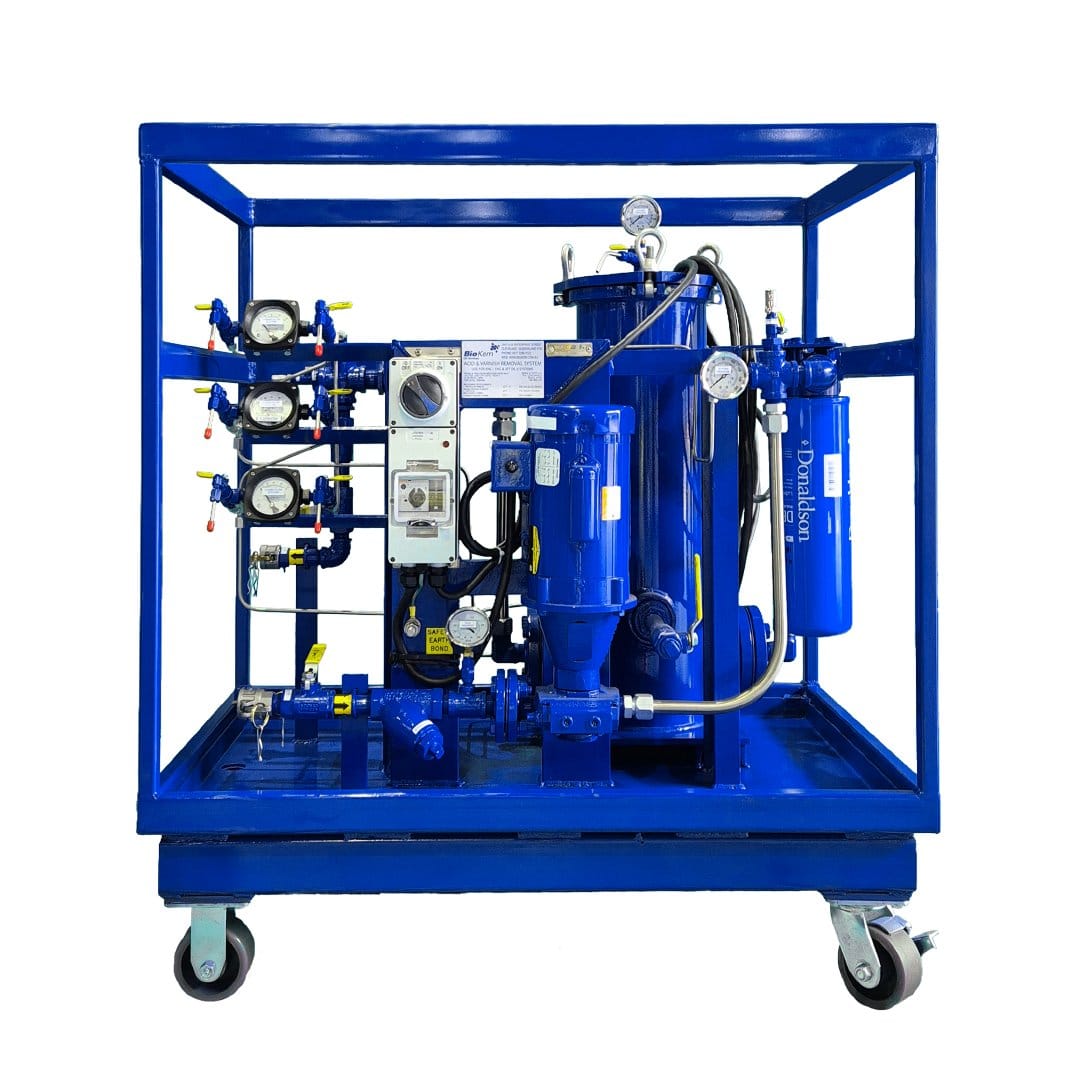
Did you know that a single unscheduled turbine trip caused by servo-valve failure can cost an Australian power generator upwards of A$250,000 per day in lost revenue? You’re likely familiar with the frustration of managing phosphate ester fluids that seem to degrade despite your best efforts. High acidity levels and moisture ingress are constant threats that lead to expensive fluid replacements and frequent valve sticking. Effective ehc fluid maintenance isn’t just a routine task; it’s a critical technical discipline that directly impacts your plant’s operational reliability and bottom line.
We’ll help you master the chemical protocols required to extend your fluid’s service life to 10 years or more while achieving zero unscheduled downtime. This guide explores the latest purification technologies and provides a clear strategy for preventing critical turbine valve failures. You’ll learn how to stabilise your system’s chemistry and meet Australian environmental standards without relying on frequent, chemical-heavy fluid changes. It’s time to move beyond reactive fixes and implement a sustainable, scientifically backed solution for your EHC system.
Key Takeaways
- Identify the chemical triggers of phosphate ester degradation, including the hydrolysis cycle and thermal deposit formation, to prevent critical turbine valve failures.
- Evaluate the performance differences between ion exchange and traditional adsorption technologies to optimize acid and water removal in your EHC system.
- Adopt a strategic 2026 ehc fluid maintenance framework that prioritises laboratory-grade analysis and continuous moisture control for long-term reliability.
- Explore onsite reclamation solutions and industrial equipment hire options tailored to Australian standards to extend fluid life and reduce replacement costs.
- Discover how proactive technical interventions minimise environmental impact by reducing chemical waste while ensuring peak operational efficiency.
What is EHC Fluid Maintenance and Why is it Critical?
Electrohydraulic Control (EHC) systems serve as the precision brain of modern steam turbines. These systems use high-pressure hydraulic fluid to actuate steam valves, managing the massive energy flow required for power generation. Effective ehc fluid maintenance is the difference between a reliable power supply and a catastrophic mechanical failure. Without rigorous monitoring, the chemical properties of the fluid shift, leading to system-wide instability that threatens both hardware and operational safety.
EHC fluid is the primary medium for turbine speed and load control. In the Australian power industry, where grid stability is paramount, any lag in valve response can lead to frequency excursions or forced outages. Maintaining this fluid requires a deep understanding of its chemical lifecycle and the environmental factors that accelerate its decay.
To better understand the complexities of these systems and the necessity of clean fluid, watch this helpful video:
The financial stakes are high for Australian operators. By 2026, the projected cost of unplanned downtime for a 500MW unit is expected to exceed A$320,000 per day in lost revenue and spot market penalties. A full fluid replacement for a standard reservoir can easily cost A$120,000, not including the labor for flushing and disposal. Investing in a proactive varnish removal system is a cost-effective alternative to these massive capital outlays.
The Role of Fire-Resistant Fluids
Mineral oils are unsuitable for steam turbines because their auto-ignition temperatures are lower than the operating temperature of steam pipes, which often exceed 530°C. EHC systems instead use Organophosphates, specifically tertiary triaryl phosphate esters, for their superior fire resistance. While these fluids provide safety, they are chemically vulnerable. They react with moisture in a process called hydrolysis, which creates acidic by-products that degrade the fluid’s lubricating properties and structural integrity.
Common Failure Modes in EHC Systems
Fluid degradation manifests through several critical failure modes. Valve sticking is the most frequent issue. As the fluid breaks down, it forms insoluble contaminants that settle in the tight tolerances of servo-valves. This leads to sluggish response times or "stiction," where the valve fails to move until pressure builds to a dangerous level.
Acidity acts as a systemic "silent killer" within the EHC loop. High acid numbers indicate that the fluid is actively attacking metal surfaces, leading to chemical corrosion of expensive components. This degradation directly impacts servo-valve reliability, often resulting in erratic turbine behavior or emergency trips that compromise the entire plant’s output. Regular ehc fluid maintenance prevents these chemical shifts before they become mechanical realities.
Understanding the Chemical Degradation of Phosphate Esters
Phosphate ester fluids are engineered for fire resistance, but their chemical stability depends on rigorous environmental control. When these fluids degrade, they don’t just lose performance; they actively damage system components. Effective ehc fluid maintenance begins with identifying the three primary pathways of degradation: hydrolysis, oxidation, and thermal breakdown. Each process alters the fluid’s molecular structure, leading to valve sticking and component failure. In Australia’s varied climate, managing these chemical shifts is the difference between 20 years of fluid life and a premature, expensive system flush.
Hydrolysis and Acid Formation
Hydrolysis is the most common failure mode in local power generation assets. Even trace amounts of moisture, often as low as 300 to 500 ppm, trigger a chemical reaction where the ester molecule reacts with water to form phosphoric acid. This reaction is self-catalyzing. Once the Acid Number (AN) begins to rise, the presence of existing acid accelerates the breakdown of remaining fluid. Operators should reference ASTM EHC Fluid Standards to ensure the fluid remains within safe operational limits. Utilizing professional oil analysis provides the necessary data to detect these chemical shifts before the AN exceeds the critical limit of 0.20 mg KOH/g.
Varnish and Insoluble Contaminants
Thermal degradation occurs when fluid is exposed to localized hot spots exceeding 200°C or through micro-dieseling. Micro-dieseling happens when entrained air bubbles collapse under high pressure, generating extreme temperatures that char the surrounding fluid. This creates sub-micron carbonaceous deposits. Because these particles are smaller than 0.5 microns, standard mechanical filters fail to capture them. Over time, these contaminants settle on cooler surfaces as a sticky film known as varnish. Varnish increases friction in servo valves and reduces heat transfer efficiency. If you’re noticing sluggish actuator response or higher operating temperatures, implementing a varnish removal system can restore fluid clarity and protect your hardware from seizing. Oxidation also plays a role, as aeration in the reservoir combines with heat to create insoluble polymers that further thicken the fluid and reduce its lubricating properties.
Purification Technologies: Comparing Acid and Water Removal
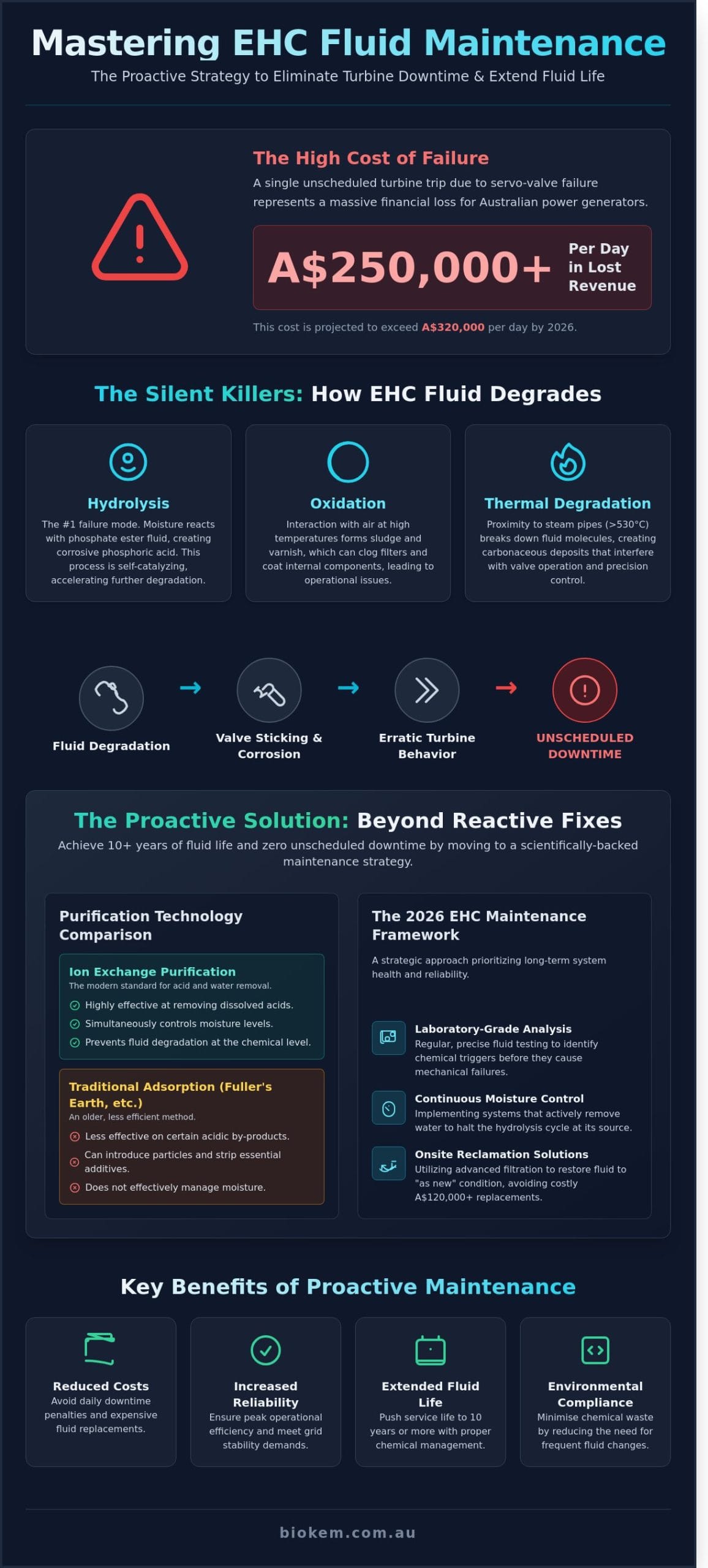
Effective ehc fluid maintenance relies on precision purification. Traditional methods often fall short in modern Australian power generation environments where reliability is non-negotiable. Modern systems must address both the chemical breakdown of phosphate esters and the physical contaminants that accelerate this process.
Choosing the right technology depends on the current Acid Number (AN) of the fluid. When the AN remains below 0.10 mg KOH/g, preventative ion exchange is usually sufficient. If the AN climbs above 0.20 mg KOH/g, operators require intensive filtration and vacuum dehydration to halt the rapid acceleration of fluid degradation.
Acid Removal: Ion Exchange vs. ICB
Traditional media like Activated Alumina or Fullers Earth often leach metallic soaps, such as calcium and magnesium, into the EHC circuit. These soaps are a primary driver of valve sticking and varnish formation. In contrast, high-capacity Ion Exchange (IX) and Ion Charge Bonding (ICB) resins remove acids without adding harmful minerals.
BioKem recommends specific oil filtration systems for acid control because they utilise non-leaching media. These systems offer up to five times the acid-neutralising capacity of legacy media. Using these resins ensures the fluid stays within Australian regulatory standards while protecting sensitive servo valves from chemical attack.
Water Removal via Vacuum Dehydration
Phosphate esters are hygroscopic, meaning they actively pull moisture from the surrounding atmosphere. This moisture triggers a hydrolysis cycle that creates a feedback loop of acid production. Maintaining water levels below 500 ppm is critical to stop this cycle before it causes permanent fluid damage.
The mechanism of vacuum dehydration involves boiling water at low temperatures under a vacuum. This process protects the oil from thermal stress while extracting moisture. Vacuum dehydration is the only effective method for removing dissolved water from phosphate esters.
- Dissolved Water: Cannot be removed by standard particulate filters or centrifugal separators.
- Hydrolysis Prevention: Reducing water content is the most cost-effective way to extend fluid life.
- System Stability: Dry fluid prevents the formation of gelatinous acidic by-products.
By integrating these technologies, facilities can shift from reactive fluid replacement to proactive ehc fluid maintenance. This approach reduces waste and ensures the long-term health of the turbine control system.
The 2026 EHC Fluid Maintenance Framework
Effective ehc fluid maintenance in 2026 requires a shift from reactive repairs to a structured lifecycle approach. This framework ensures phosphate ester fluids remain stable, preventing the high costs associated with servo-valve failure or unscheduled turbine trips. Within the context of Australian power generation, where ambient humidity and temperature fluctuations are common, a rigorous five-step process is essential for operational longevity.
Step 1 involves establishing a baseline through comprehensive laboratory analysis. We look beyond basic viscosity to identify the fluid’s chemical fingerprint, including existing antioxidant levels and phenolic content. Step 2 focuses on continuous moisture control and particulate filtration. Because phosphate esters are hygroscopic, maintaining water levels below 500 ppm is vital to stop the cycle of hydrolysis. Step 3 utilizes proactive acid management via bypass purification skids. These systems use specialized resins to keep the Acid Number (AN) below 0.10 mg KOH/g. Step 4 requires annual MPC testing to monitor varnish potential before deposits form on critical surfaces. Finally, Step 5 incorporates periodic hot oil flushing during major outages to clear the entire circuit of accumulated sub-micron contaminants.
Testing Protocols and Limits
Reliable ehc fluid maintenance depends on precise data. Reliability engineers should track ISO 4406 for particulate counts, aiming for a 14/12/9 cleanliness level. We monitor AN to detect fluid breakdown and water content to prevent acid formation. For immediate onsite visual confirmation, technicians use patch test kits to identify heavy carbon or silt loading. Base-load units typically require quarterly testing, while peaking units, which face more thermal stress from frequent start-stop cycles, should be sampled every 30 to 60 days.
Operational Best Practices
Maintaining system integrity starts at the reservoir. Use high-quality desiccant breathers to prevent ambient moisture from entering the tank. Ensure all seals and hoses are compatible with phosphate esters; using standard nitrile seals leads to rapid degradation and leaks. Temperature management is equally critical. Keep fluid temperatures between 40°C and 55°C. Exceeding 60°C doubles the rate of oxidation, significantly shortening the fluid’s lifespan and increasing the risk of varnish formation.
BioKem Solutions: Expert EHC Technical Interventions
BioKem Oil Services provides technical interventions that prioritize fluid longevity over disposal. We specialize in onsite reclamation, a process that extends the service life of phosphate esters without the expense of a total system flush. Replacing an entire reservoir can cost upwards of A$60,000 in fluid alone. Our reclamation services provide a fraction of that cost while maintaining fluid integrity. As the primary distributor for Filters S.p.A., we utilize high-performance elements specifically engineered for the chemical demands of EHC systems.
Our technical team recently demonstrated this capability by reducing a client’s Acid Number from 0.5 to 0.05 mg KOH/g within a single treatment cycle. This intervention prevented the fluid from reaching a critical state where component damage becomes inevitable. Professional ehc fluid maintenance requires this level of precision to ensure long-term reliability. We don’t just filter the oil; we chemically stabilize it. By using specialized media, we remove polar contaminants that standard filters miss.
Equipment Hire vs. Service Contracts
Maintenance managers must decide if they require short-term remediation or ongoing support. We offer specialized varnish removal systems for hire during critical outages. This allows for rapid decontamination without capital expenditure. BioKem Oil Services’ “Green” problem-solving approach focuses on restoring the chemical balance of the oil. It’s an efficient alternative to traditional, chemical-heavy cleaning methods. These systems are essential when varnish levels spike during peak operational periods.
National Service Capabilities
BioKem Oil Services operates across Australia, deploying expert teams to remote and metropolitan sites. We ensure all onsite purification processes comply with Australian regulatory standards for industrial fluid management. Our local presence means we understand the specific environmental challenges faced by Australian power generators. We provide the technical expertise needed to manage complex ehc fluid maintenance schedules effectively. This regional focus ensures a dependable response for critical infrastructure. Contact BioKem Oil Services today for a comprehensive EHC fluid health assessment.
Securing Power Generation Reliability Through 2026
Strategic ehc fluid maintenance is the primary defense against the chemical degradation that compromises turbine control systems. Australian operators must prioritize acid and water removal to prevent the varnish build-up that leads to unplanned outages. The 2026 EHC framework emphasizes a transition toward phosphate ester reclamation, reducing the environmental footprint of power generation while maintaining strict compliance with local standards. BioKem acts as the authorized distributor for Filters S.p.A. and Swift Filters, ensuring your facility has access to world-class purification hardware.
Our specialists manage the complexities of varnish mitigation and fluid health through onsite technical teams available for national deployment. We focus on extending the lifecycle of your existing assets, which minimizes the need for costly fluid replacements and chemical disposal. It’s a practical approach that balances operational efficiency with environmental responsibility. By adopting these technical interventions, you ensure your infrastructure remains resilient and ready for future energy demands.
Consult with BioKem’s EHC Specialists Today to protect your critical assets and ensure long-term system stability.
Frequently Asked Questions
How long does phosphate ester EHC fluid typically last?
Phosphate ester EHC fluid typically lasts between 5 and 10 years, though advanced maintenance can extend this lifespan beyond 15 years. Regular monitoring of the Acid Number and moisture levels is essential to prevent premature failure. Without proactive ehc fluid maintenance, the fluid can degrade in as little as 3 years due to thermal stress and hydrolysis. Maintaining fluid health reduces the need for expensive full system flushes and avoids the high cost of fluid replacement.
Can I use standard hydraulic filters for EHC fluid maintenance?
You can’t use standard hydraulic filters because phosphate ester fluids are chemically aggressive toward many common seal and media materials. Standard filters often use Buna-N seals or cellulose media which will swell or dissolve in EHC fluid. Effective ehc fluid maintenance requires specialized glass fibre media and Fluorocarbon seals. These materials withstand the fluid’s chemical properties and ensure the 3 to 5 micron filtration levels required for turbine control systems.
What is the maximum allowable Acid Number for EHC systems?
The maximum allowable Acid Number for most turbine EHC systems is 0.20 mg KOH/g according to ASTM D4293 standards. You should initiate corrective action when the level reaches 0.10 mg KOH/g to prevent accelerated degradation. Exceeding the 0.20 threshold often leads to servo valve sticking and irreversible damage to system components. Regular ASTM D974 testing ensures you catch these increases before they cause a forced outage or equipment failure.
How does water get into a sealed EHC system?
Water enters EHC systems primarily through atmospheric humidity and steam gland leakage. Even in dry environments, reservoir breathers pull in moist air during thermal cycling, which then condenses into the fluid. If steam turbine seals are worn, high pressure steam can migrate directly into the EHC reservoir. Keeping water levels below 500 ppm is critical; moisture acts as a catalyst for the formation of phosphoric acid which destroys the fluid’s lubricity.
Is it better to replace or reclaim degraded EHC fluid?
Reclaiming degraded EHC fluid is generally superior to replacement from both an economic and environmental perspective. New phosphate ester fluid in Australia can cost between A$20 and A$35 per litre, while reclamation services typically save operators 50% to 70% of that cost. BioKem’s ion exchange technology removes acids and varnish precursors without the waste generated by a full fluid change. This approach aligns with Australian sustainability goals by reducing hazardous waste volumes.
What is MPC testing and why is it important for EHC?
Membrane Patch Calorimetry (MPC) testing measures the varnish potential of your fluid by analyzing the colour of sub-micron contaminants on a filter patch. It’s a vital diagnostic tool because standard particle counts don’t detect dissolved soft contaminants. An MPC value above 30 Delta E indicates a high risk of varnish deposits forming on critical surfaces. Monitoring this value helps you schedule purification before sticky residues compromise turbine reliability or cause trip events.
Can BioKem provide onsite EHC purification during a turbine outage?
BioKem provides comprehensive onsite EHC purification services across Australia, specifically designed for execution during scheduled turbine outages. Our mobile units utilize vacuum dehydration and specialized resin technologies to restore fluid to “as new” specifications within 48 to 72 hours. This rapid turnaround allows power generators to maintain strict maintenance schedules without extending downtime. We ensure all processes comply with local environmental regulations and Australian safety standards.
What are the environmental considerations for disposing of phosphate ester?
Disposing of phosphate ester requires strict adherence to Australian hazardous waste regulations because it’s not readily biodegradable. It’s classified as a trackable waste in most states; this means you must use licensed liquid waste contractors for transport and destruction. Disposal fees can reach A$3.00 per litre depending on the location and contamination level. Choosing reclamation over disposal significantly lowers your facility’s environmental footprint and avoids these high regulatory costs and liabilities.